

Walking Tour: Stop K
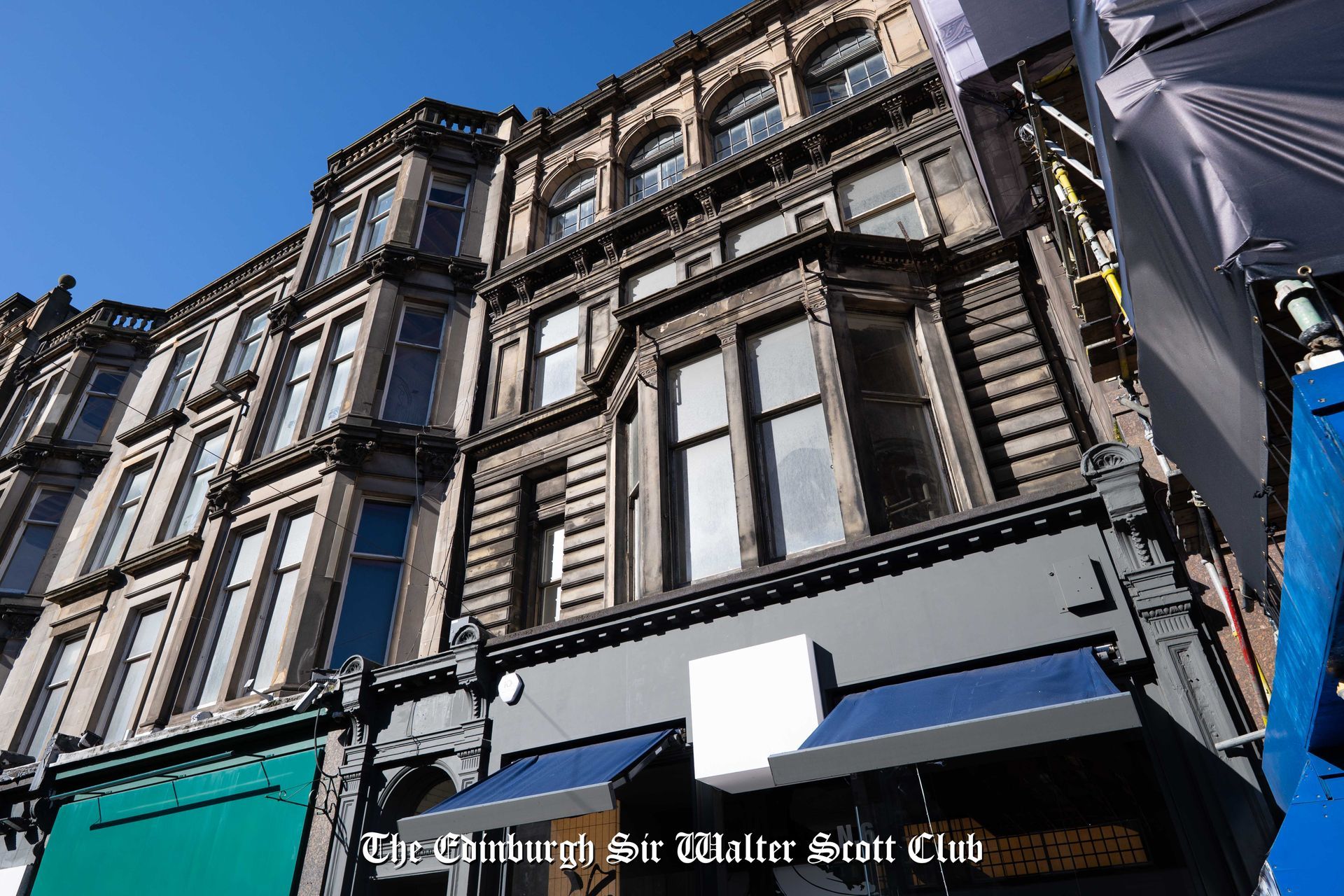
6 Shandwick Place
West End, EH2 4RN

West End lodgings used by Scott during the later years of his life after the financial crisis of 1826.
GPS Coordinates: 55°57'00.5"N 3°12'31.6"W
Scott Connection:
Residence taken by Sir Walter Scott in November 1827 at the house of Mrs Jobson, mother of his daughter-in-law Jane Scott.
Date Range Relevant to Scott:
1827–1828
Current Status:
Part of the nineteenth-century terrace at Shandwick Place within Edinburgh’s West End commercial district.
Accessibility:
Public street location. (Exterior viewing only.)
Why This Place Matters
The house at 6 Shandwick Place represents another stage in the unsettled domestic arrangements that followed the financial collapse of 1826. After leaving his long-established residence at 39 Castle Street, Scott relied on a series of temporary lodgings when staying in Edinburgh while the courts were sitting.
In November 1827 Scott took rooms at the house of Mrs Jobson, whose daughter Jane had married Scott’s son Walter. The arrangement provided convenient accommodation in the growing West End of the New Town during a period when Scott continued to divide his time between Edinburgh and Abbotsford.
These lodgings illustrate how Scott maintained his professional and social life in the capital despite the financial pressures that reshaped his circumstances during the final years of his career.
Historical Context
Shandwick Place forms part of the western extension of Edinburgh’s New Town, developed during the early nineteenth century as the city expanded beyond the original Georgian grid planned by James Craig.
By the 1820s the district represented a transitional zone between the established elegance of the central New Town and the emerging West End neighbourhoods. The terraces along Shandwick Place reflected the continuing growth of Edinburgh as a commercial and residential centre for the professional classes.
The area lay within easy reach of the legal quarter around Parliament House and the social circles that continued to shape Scott’s life.
Scott Here
Scott moved into Mrs Jobson’s house at 6 Shandwick Place during the later phase of his determined effort to repay the debts arising from the publishing collapse. Although his financial position had changed dramatically, his connections within Edinburgh’s social and aristocratic circles remained strong.
While staying here Scott visited Lady Jane Leslie Belsches Stuart, who lived nearby across Maitland Street. These visits demonstrate the continuing importance of personal friendships and social networks in Scott’s life even as he laboured to restore his finances through writing.
The lodgings therefore form part of the pattern of temporary residences Scott used in Edinburgh during his final productive years.
The Bigger Theme
Shandwick Place reflects Scott’s gradual adjustment to altered circumstances after the crisis of 1826. No longer able to maintain a permanent Edinburgh townhouse, he relied on temporary accommodation when professional duties brought him to the city.
Yet the move also reveals a measure of stability. By lodging with relatives through his daughter-in-law’s family, Scott remained within a supportive domestic environment while continuing his extraordinary literary productivity.
The site therefore represents a moment of practical adaptation rather than decline, illustrating Scott’s ability to maintain social continuity despite financial upheaval.
Literary Connections
During this period Scott continued the intense programme of writing that characterised the final phase of his career. Works produced in the years following the financial collapse included historical studies, biographies, and later novels that contributed significantly to reducing the debts owed to his creditors.
The temporary lodgings at Shandwick Place formed part of the routine that enabled Scott to balance his legal duties in Edinburgh with sustained literary work at Abbotsford.
What to Notice On Site
Shandwick Place today remains a broad thoroughfare connecting the west end of Princes Street with the Haymarket district. The surviving nineteenth-century terrace illustrates the westward expansion of the New Town during Scott’s lifetime.
Although the precise interior arrangement of Mrs Jobson’s house is no longer identifiable, the street retains the architectural character typical of Edinburgh’s early nineteenth-century urban development.
Questions to Consider
How did Scott manage the practical realities of life in Edinburgh after losing his permanent residence?
What role did family and social networks play in sustaining Scott during the later years of his career?
How does the westward expansion of the New Town reflect the changing geography of Edinburgh in the early nineteenth century?
Further Reading
Lockhart, J. G. -
Memoirs of the Life of Sir Walter Scott.
Millgate, Jane. -Walter Scott: The Making of the Novelist.
Youngson, A. J. -The Making of Classical Edinburgh.
Did You Know?
Shandwick Place marked the western edge of Edinburgh’s fashionable New Town during Scott’s lifetime. Beyond it lay the developing districts that would later form the city’s West End.