
Walking Tour: Stop O
Archibald Constable’s Shop
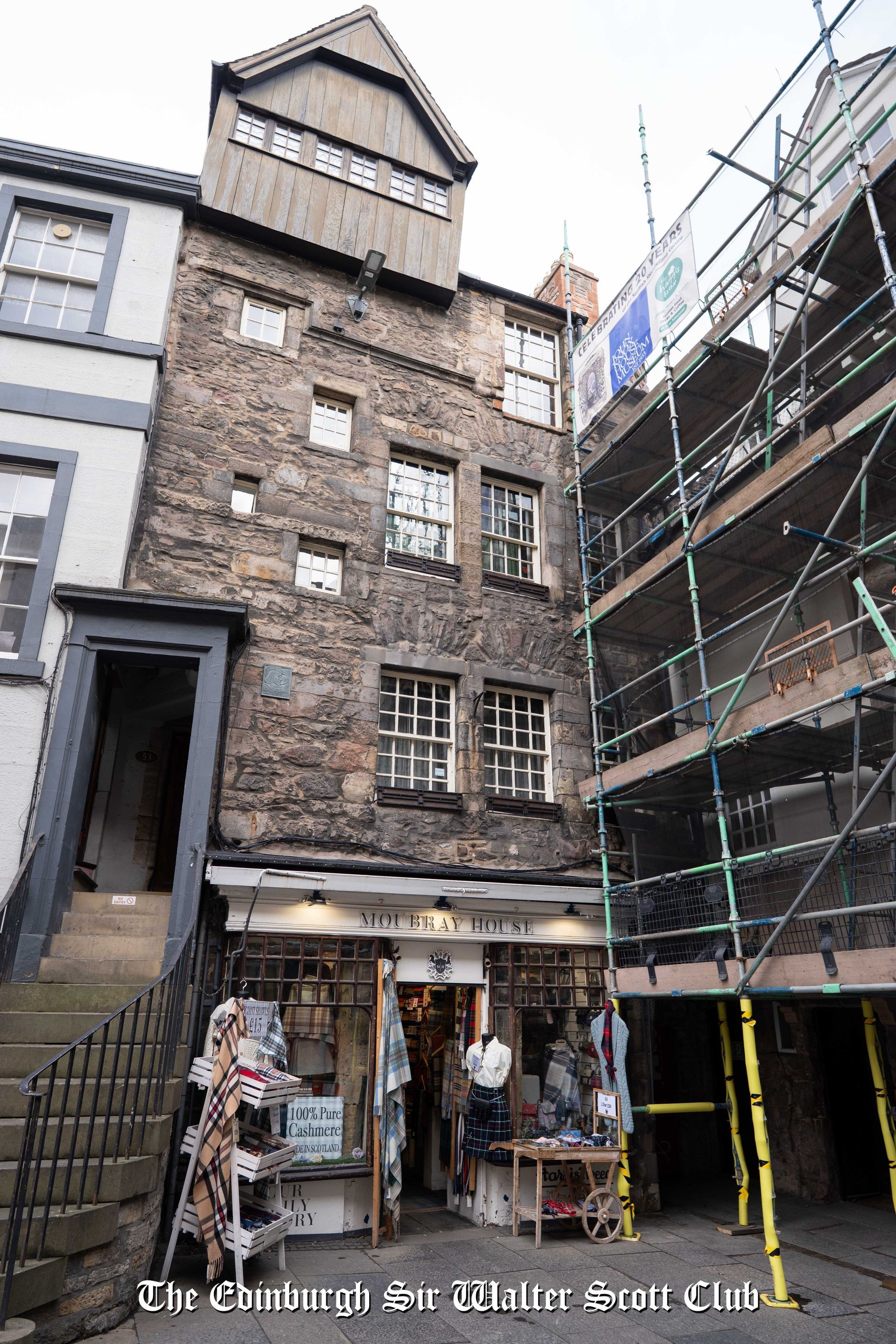
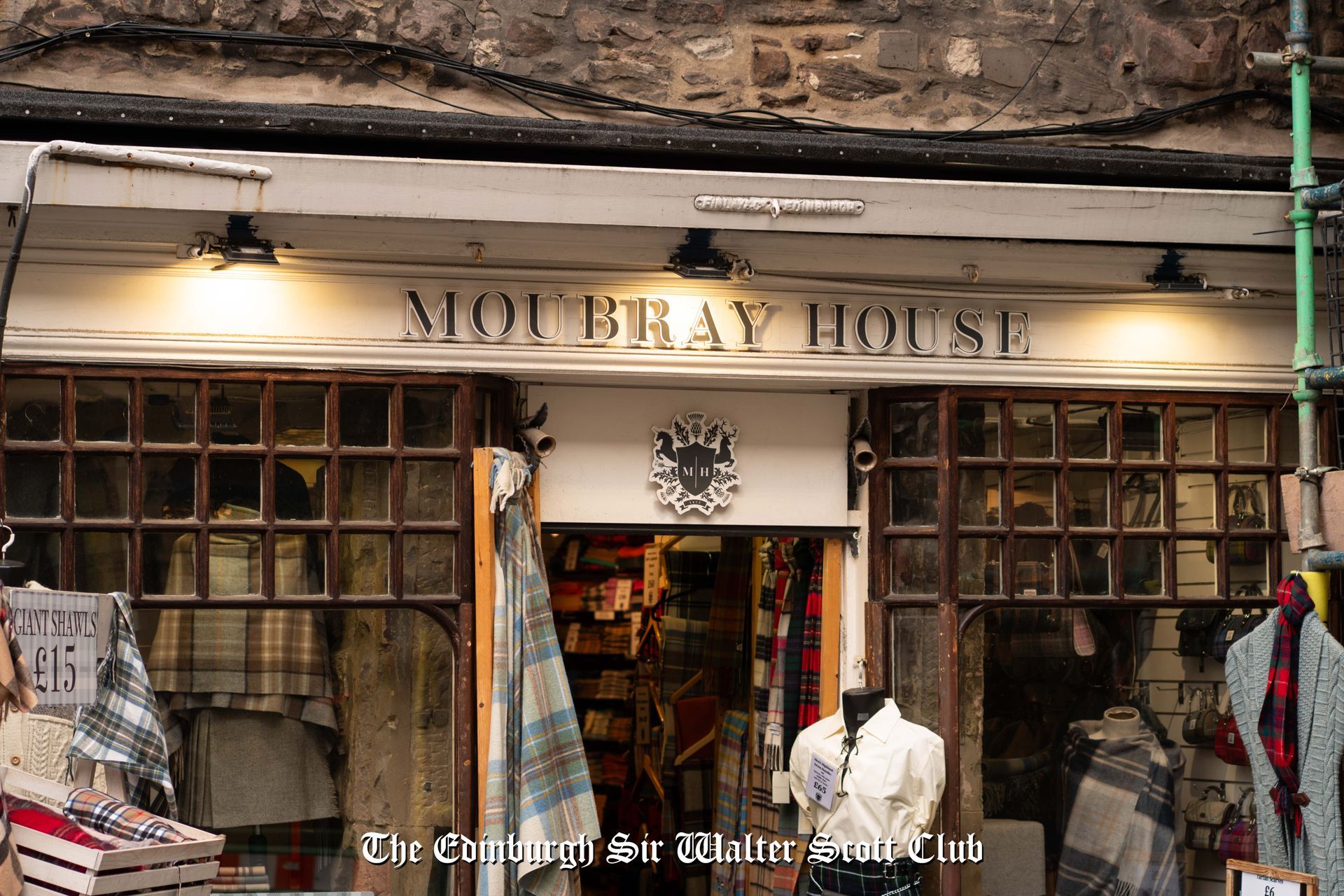
Moubray House, 51-53 High Street, EH1 1SR

Publishing house from which the Waverley novels entered the commercial book trade.
GPS Coordinates: 55°57'02.2"N 3°11'06.6"W
Scott Connection:
Premises of Archibald Constable, Sir Walter Scott’s principal publisher during the period when the Waverley novels first appeared.
Date Range Relevant to Scott: c.1800–1826
Current Status:
The original shopfront has not survived in its early nineteenth-century form. The location forms part of the modern High Street streetscape.
Accessibility:
Public street location on the Royal Mile. (Exterior viewing only.)
Why This Place Matters
Archibald Constable’s bookshop on the High Street was one of the most important centres of the Edinburgh publishing trade during the early nineteenth century. From this premises Constable issued many of Scott’s most successful works, including the novels that began with Waverley in 1814.
Constable played a decisive role in Scott’s transformation from a successful poet into the leading novelist of his generation. Through his publishing house Scott’s works reached readers across Britain and beyond, establishing the extraordinary commercial success of the Waverley series.
The High Street shop therefore represents the commercial gateway through which Scott’s manuscripts entered the wider literary marketplace.
Historical Context
In Scott’s lifetime the High Street remained the historic centre of Edinburgh’s book trade. Booksellers and publishers clustered around the streets near Parliament House and St Giles’ Cathedral, where lawyers, students, and visitors created a steady market for books.
Although the New Town was rapidly becoming Edinburgh’s fashionable residential district, many publishers retained their premises in the Old Town where the traditional networks of the trade remained strongest.
As Peter Garside has demonstrated, the production of the Waverley novels depended on a tightly connected network of locations within a small area of the city. Scott wrote in the New Town, printers worked in the Canongate, and publishers such as Constable operated on the High Street. Manuscripts, proofs, and printed sheets circulated constantly between these nearby sites.
Constable’s shop therefore formed a crucial link in the chain connecting author, printer, and bookseller.
Scott Here
Scott’s professional relationship with Archibald Constable began in the early years of the nineteenth century and soon developed into one of the most important partnerships in British publishing.
Constable’s firm published many of Scott’s works and played a major role in shaping the commercial success of the Waverley novels. Through Constable’s distribution networks the books reached a rapidly expanding readership both in Britain and abroad.
However, the relationship also carried financial risks. Scott became financially involved with the publishing enterprise through complex credit arrangements linking the publishing house of Constable with the printing business of James Ballantyne.
When Constable’s firm collapsed in January 1826, the failure triggered a financial crisis that left Scott personally liable for very large debts. The High Street premises therefore symbolise both the extraordinary success of Scott’s literary career and the commercial catastrophe that followed.
The Bigger Theme
Constable’s shop illustrates the central role of commercial publishing in the rise of modern literary fame. The success of the Waverley novels depended not only on Scott’s imaginative writing but also on the entrepreneurial ambitions of publishers who were prepared to invest heavily in new works.
The location demonstrates how literary culture in the early nineteenth century was inseparable from the economic realities of the book trade. Publishing houses served as the commercial engines that brought manuscripts into circulation, but they also exposed authors to financial risk when those enterprises failed.
Literary Connections
Beginning with Waverley in 1814, Scott produced a sequence of historical novels that rapidly became one of the most successful literary series of the nineteenth century. Constable’s firm played a central role in issuing and distributing these works.
The publishing success of the Waverley novels established Scott as an international literary figure and helped secure Edinburgh’s reputation as a major centre of the British publishing industry.
What to Notice On Site
The High Street remains the historic spine of Edinburgh’s Old Town. Although the original shop associated with Archibald Constable no longer survives in its early nineteenth-century form, the surrounding area still reflects the dense commercial environment that supported the book trade.
Nearby locations connected with Scott’s legal and publishing life—including Parliament House, St Giles’ Cathedral, and other bookshops—help illustrate the compact geography of Edinburgh’s literary world.
Questions to Consider
How did the publishing industry shape the literary success of authors in the nineteenth century?
What risks did authors face when they became financially connected with their publishers?
How did Edinburgh’s urban geography contribute to the development of its book trade?
Further Reading
Lockhart, J. G. - Memoirs of the Life of Sir Walter Scott.
Millgate, Jane. - Walter Scott: The Making of the Novelist.
Garside, Peter. - “Edinburgh Locations and the Production of the Waverley Novels.”
Did You Know?
The building now known as
Moubray House has long associations with literary publishing. In
1726
the writer
Daniel Defoe stayed here while gathering material for
A Tour Thro’ the Whole Island of Great Britain. In the early nineteenth century the building also became connected with the publishing history of the
Encyclopaedia Britannica,
one of the most influential reference works produced in Edinburgh.