
Walking Tour: Stop 16
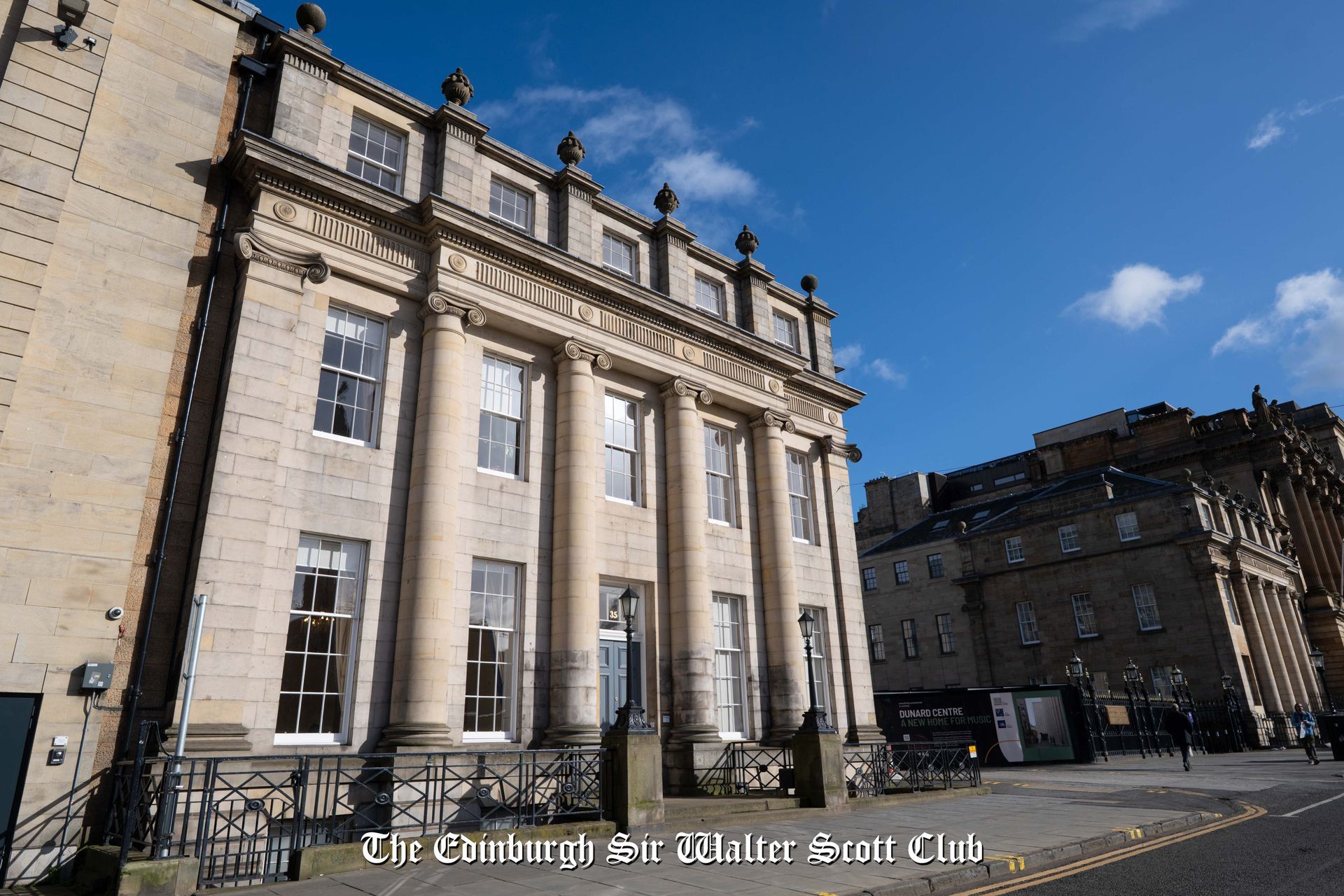
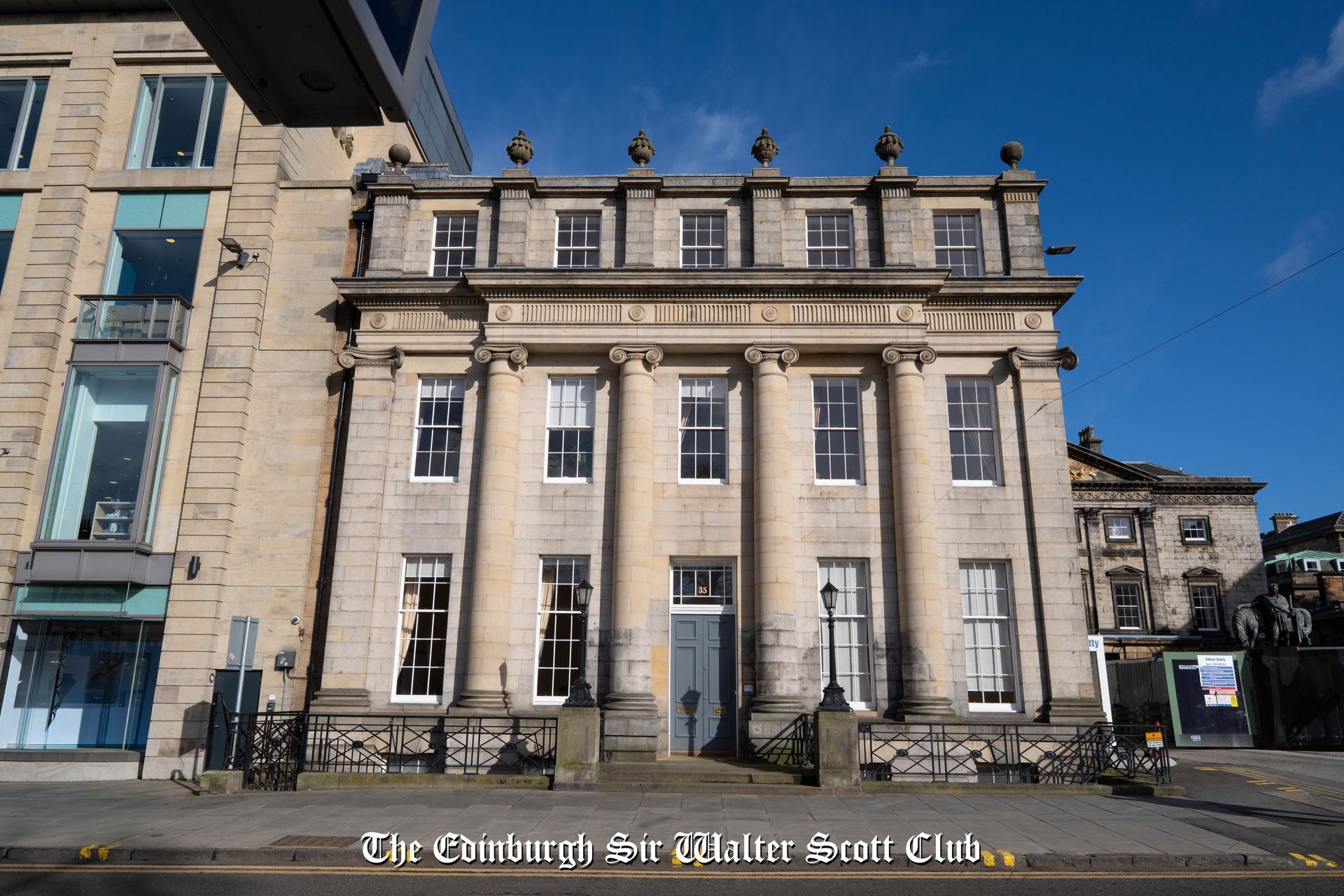
Douglas Hotel
35, St Andrew Square, EH2 2AD

Where Scott stayed on his final return to Edinburgh in 1832.
GPS Coordinates: 55°57'16.4"N 3°11'31.8"W
Scott Connection:
Sir Walter Scott stayed here briefly in July 1832 after returning to Scotland from his final journey abroad, shortly before travelling to Abbotsford where he died later that year.
Date Range Relevant to Scott: July 1832
Current Status:
The original hotel building no longer survives; the site now forms part of the later redevelopment around St Andrew Square.
Accessibility:
Public square; exterior viewing only.
Why This Place Matters
The Douglas Hotel at 34 St Andrew Square, kept in 1832 by the proprietor Walter Douglas, marks one of the final Edinburgh locations connected with Sir Walter Scott’s life. After years of relentless literary labour undertaken to repay the debts incurred by the collapse of the Ballantyne printing business, Scott’s health deteriorated badly in the early 1830s.
In 1831 he travelled to the Mediterranean on medical advice, hoping that a warmer climate might restore his strength. The journey took him to Malta, Naples, and Rome, but the hoped-for recovery never came. Exhausted and increasingly frail, Scott returned to Britain in the summer of 1832.
When he arrived in Edinburgh he stayed briefly at the Douglas Hotel in St Andrew Square before continuing on to Abbotsford. Within a few months he would be dead.
The hotel therefore represents one of the last places in the capital connected with Scott’s life — a quiet moment between his final journey and his return to the Borders.
Historical Context
St Andrew Square formed the eastern anchor of Edinburgh’s Georgian New Town and rapidly became one of the city’s principal commercial and social centres.
During the early nineteenth century the square and surrounding streets contained banks, publishing houses, and fashionable accommodation for visitors to the capital. Travellers arriving from London or the Borders frequently stayed in hotels here before continuing their journeys.
For Scott the district had long been familiar territory. Many of his professional relationships — including those with his publishers and legal associates — were centred within a short walk of the square. Robert Cadell, who later became Scott’s principal publisher and the organiser of the great Magnum Opus edition of the Waverley Novels, had his business premises nearby.
The Douglas Hotel thus stood within the very heart of the commercial and publishing world that had shaped Scott’s literary career.
Scott Here
Scott arrived in Edinburgh in July 1832 after the long voyage home from the Mediterranean. His health had been badly damaged by repeated strokes and by the physical strain of travel.
He stayed only briefly at the Douglas Hotel before continuing south to Abbotsford.
Lockhart later recorded that Scott seemed momentarily revived when he reached Scotland. Familiar surroundings appeared to restore his spirits, and for a short time he spoke more clearly than he had during much of the voyage. The improvement, however, proved temporary.
Within weeks Scott had retired to Abbotsford, where he died on 21 September 1832 at the age of sixty-one.
The Douglas Hotel therefore represents a fleeting but poignant moment — Scott’s final pause in Edinburgh before the end of his life.
The Bigger Theme
Return and Farewell
Throughout his life Scott moved constantly between Edinburgh and the Borders. The capital provided the legal, intellectual, and publishing environment that enabled his literary career, while the Border landscape nourished his imagination.
In 1832 that journey came full circle. After travelling across Europe in search of recovery, Scott returned briefly to Edinburgh before withdrawing permanently to Abbotsford.
The Douglas Hotel thus marks the last stage in Scott’s long relationship with the city.
Literary Connections
Although no major works were written directly at this location, Scott’s final years saw the completion of several important late writings, including:
Tales of a Grandfather (1828–1830)
Letters on Demonology and Witchcraft (1830)
These works formed part of the extraordinary literary effort through which Scott attempted to repay the debts of the Ballantyne partnership.
What to Notice On Site
St Andrew Square still preserves much of its Georgian character and continues to function as a central space within the New Town.
From this location Scott could easily have reached:
• the publishing houses of the New Town
• the legal courts around Parliament Square
• the streets where he had lived for many years.
Standing here today offers a reminder that the commercial heart of Edinburgh — publishers, printers, banks, and lawyers — lay within a remarkably compact area during Scott’s lifetime.
Questions to Consider
Why did Scott choose to return to Abbotsford rather than remain in Edinburgh during his final illness?
How closely were Scott’s literary achievements connected to the commercial networks of New Town Edinburgh?
Further Reading
J. G. Lockhart - Memoirs of the Life of Sir Walter Scott
David Hewitt - Scott on Himself
John Sutherland - The Life of Walter Scott: A Critical Biography
Historical Images