
Walking Tour: Stop S
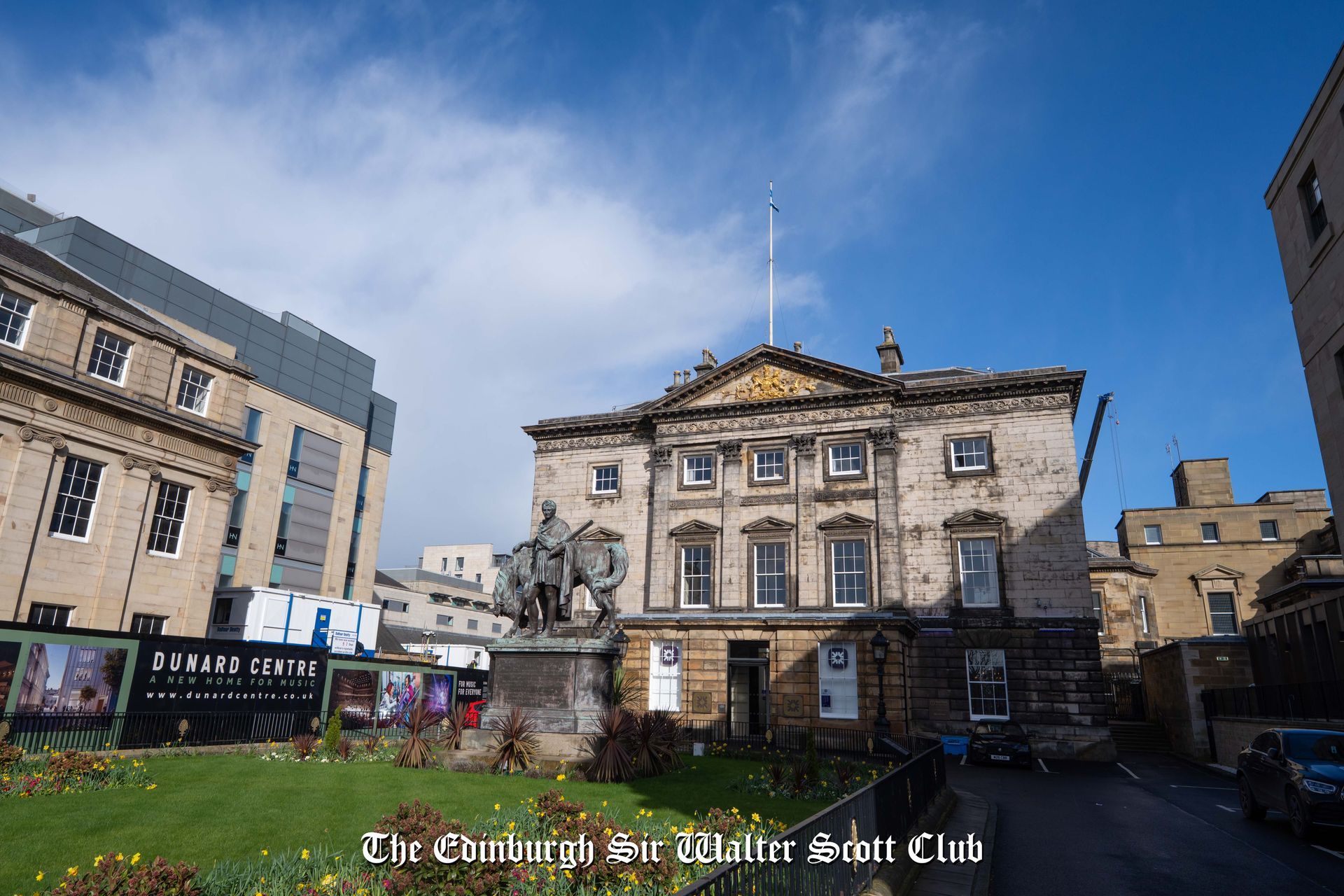
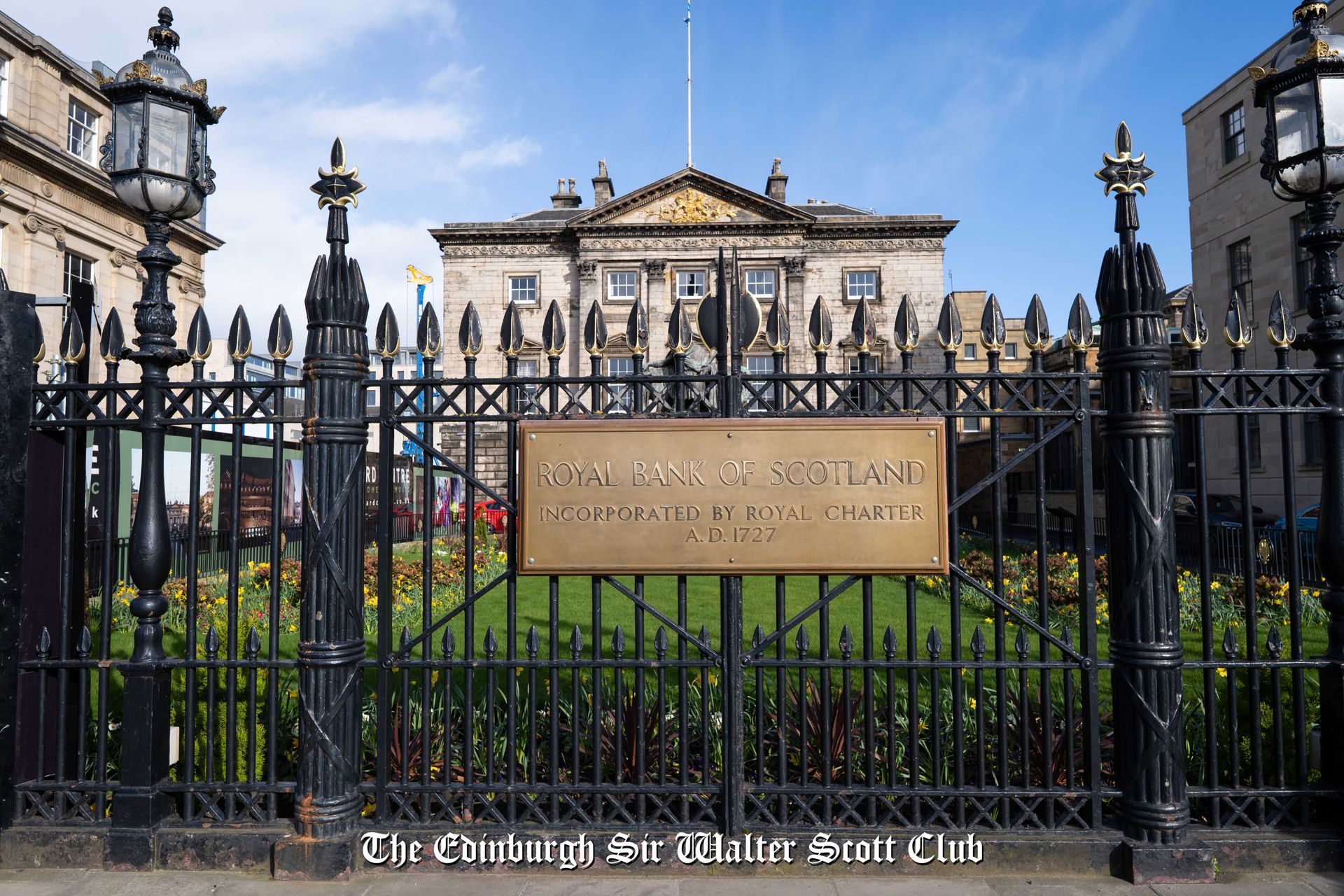
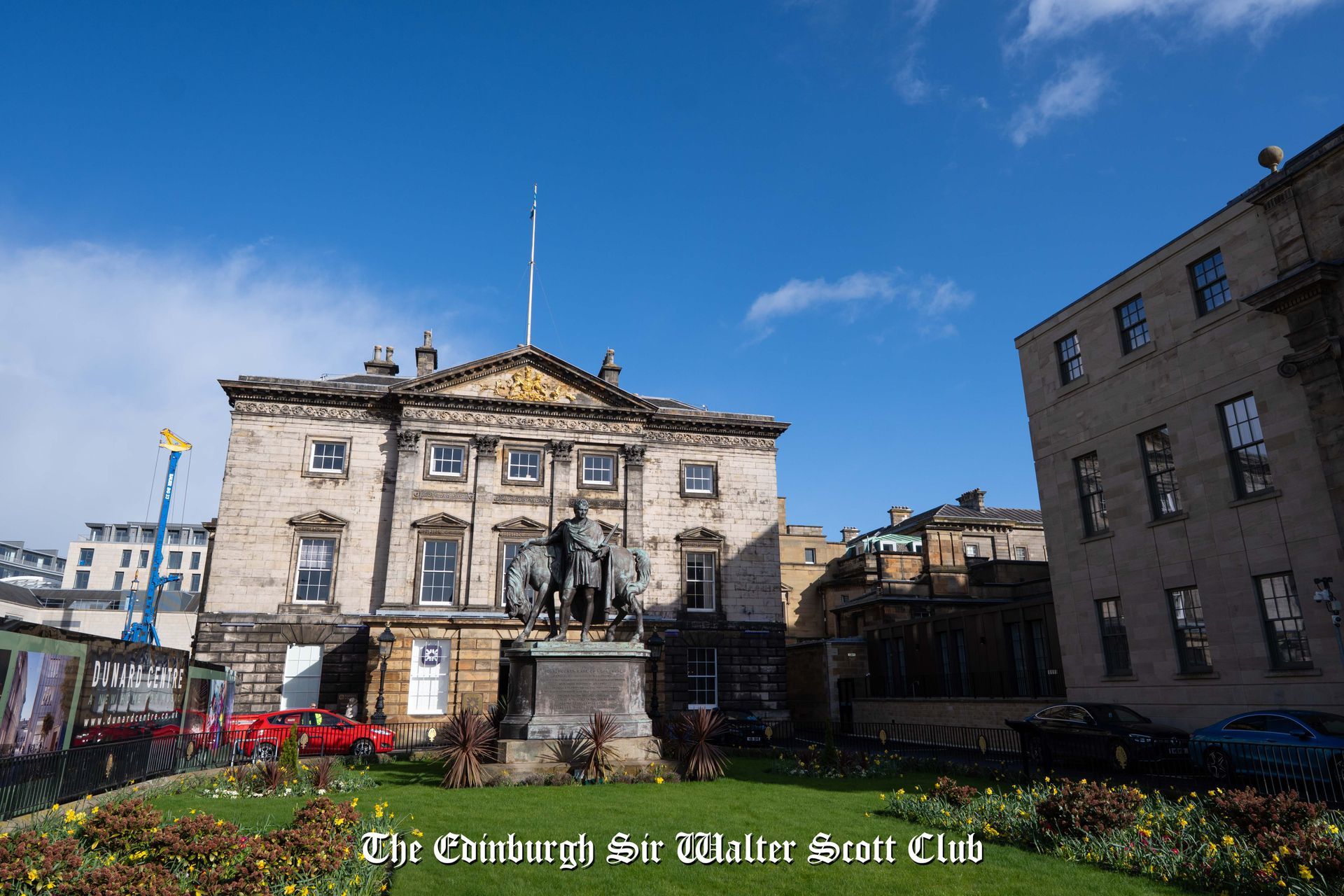
Dundas House
36 St Andrew Square, EH2 2YB

Neoclassical banking house symbolising the financial networks that sustained — and later imperilled — Scott’s literary enterprise.
GPS Coordinates: 55°57'16.2"N 3°11'28.1"W
Scott Connection:
Dundas House later became the headquarters of the Royal Bank of Scotland, representing the banking institutions that underpinned the commercial credit networks supporting Edinburgh’s publishing trade during Scott’s lifetime.
Date Range Relevant to Scott: early nineteenth century
Current Status:
Headquarters building of the
Royal Bank of Scotland.
Accessibility:
Public Street. (Exterior viewing only.)
Why This Place Matters
Dundas House represents the financial infrastructure that supported the commercial world of early nineteenth-century Edinburgh. Although Scott is most often remembered as a poet and novelist, his literary success depended upon a complex network of publishers, printers, agents, and banks.
The Scottish book trade operated largely on systems of credit and bills, with banks providing essential financial backing for publishing ventures. These arrangements allowed publishers such as Archibald Constable to finance large print runs of Scott’s works and helped transform the Waverley novels into an international publishing phenomenon.
The same system also contributed to the financial collapse of 1826, when the failure of Constable’s firm and the printing house of James Ballantyne & Company revealed the extent to which the literary marketplace depended upon fragile credit structures.
Historical Context
Dundas House was designed in the 1770s by the architect Sir William Chambers as a grand townhouse for Sir Lawrence Dundas, one of the wealthiest merchants and financiers in Britain. Its imposing neoclassical design reflects the growing economic power of Edinburgh’s commercial elite during the later eighteenth century.
In the early nineteenth century the building was acquired by the Royal Bank of Scotland, which established its headquarters there. The bank became one of the central financial institutions in Edinburgh, supporting the city’s commercial and professional life.
The presence of major banks in the New Town reflected the transformation of Edinburgh into a major financial centre within Britain.
Scott Here
Scott’s literary career was closely intertwined with the financial systems represented by institutions such as the Royal Bank of Scotland. His publishers relied on banking credit to fund large printing ventures, and Scott himself participated in the financial arrangements surrounding the firms of Archibald Constable and James Ballantyne.
When the publishing houses collapsed in 1826, Scott discovered that he was personally liable for large debts incurred through these interconnected credit arrangements. Rather than declaring bankruptcy, he resolved to repay the obligations through his future literary earnings.
The banking world symbolised by Dundas House therefore forms part of the broader economic environment within which Scott’s remarkable literary output was produced.
The Bigger Theme
Dundas House illustrates the hidden financial framework behind Romantic-era literature. The creation and distribution of books required not only authors and printers but also banks, credit systems, and commercial investment.
Scott’s novels were produced within this sophisticated economic network. The same system that enabled the extraordinary success of the Waverley novels also exposed Scott to significant financial risk when the publishing houses supporting them collapsed.
Literary Connections
The financial crisis of 1826 profoundly affected Scott’s later life and writing. Determined to repay his debts, he undertook an extraordinary period of literary productivity, producing works such as Woodstock, The Life of Napoleon Bonaparte, and the Magnum Opus edition of the Waverley novels.
These works were written partly in fulfilment of Scott’s commitment to repay the debts accumulated through the publishing ventures supported by Edinburgh’s financial institutions.
What to Notice On Site
Dundas House stands prominently at the centre of St Andrew Square, forming one of the architectural focal points of Edinburgh’s New Town. Its classical façade reflects the wealth and prestige of the commercial elite who shaped the development of the New Town during the late eighteenth century.
The building’s continued use as a banking headquarters highlights the enduring importance of Edinburgh as a financial centre.
Questions to Consider
How dependent was nineteenth-century publishing on systems of banking credit?
What risks did authors face when their literary enterprises became tied to commercial finance?
How might Scott’s determination to repay his debts have influenced his later literary output?
Did You Know?
After the financial collapse of 1826, Scott refused to declare bankruptcy and instead committed himself to repaying his creditors through writing. Over the following years the income from his books substantially reduced the debts, making his case one of the most remarkable examples of literary labour used to resolve a financial crisis.
Further Reading
Lockhart, J. G. - Memoirs of the Life of Sir Walter Scott.
Millgate, Jane. - Walter Scott: The Making of the Novelist.
Garside, Peter. - Edinburgh Locations and the Production of the Waverley Novels.
Did You Know?
After the financial collapse of 1826, Scott refused to declare bankruptcy and instead committed himself to repaying his creditors through writing. Over the following years the income from his books substantially reduced the debts, making his case one of the most remarkable examples of literary labour used to resolve a financial crisis.