
Walking Tour: Stop 21
Huntly House
Museum of Edinburgh, 142 Canongate, EH8 8DD

Historic Canongate townhouse preserving artefacts and material culture from the Edinburgh of Scott’s lifetime.
GPS Coordinates: 55°57'05.0"N 3°10'46.0"W
Scott Connection:
The museum preserves artefacts and historical materials relating to Edinburgh’s civic and cultural life during Sir Walter Scott’s lifetime.
Date Range Relevant to Scott:
Late eighteenth century – early nineteenth century
Current Status:
Municipal museum operated by the City of Edinburgh Council within the historic building known as Huntly House.
Accessibility:
Public museum entrance on the Canongate; accessible galleries within the building.
Why This Place Matters
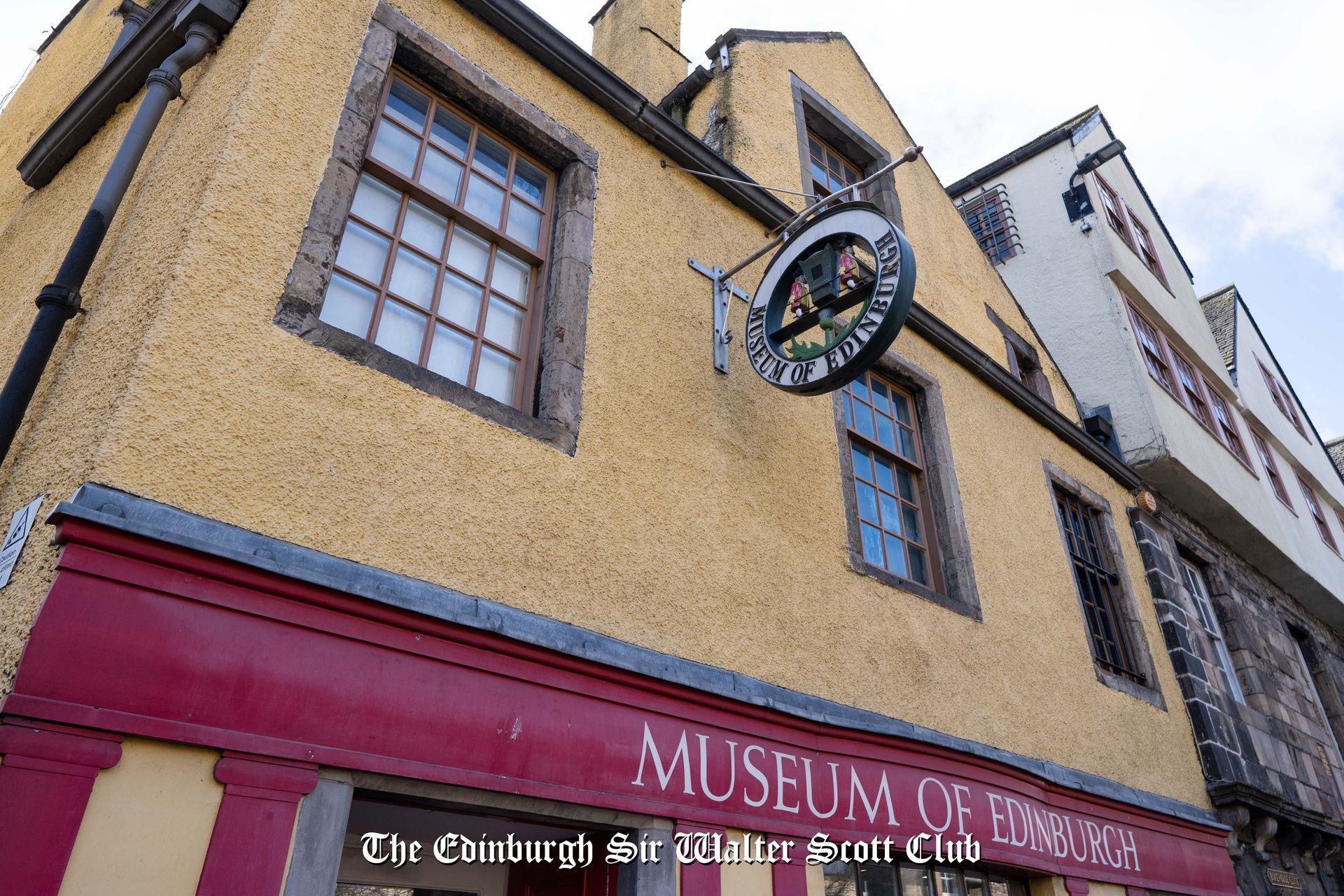
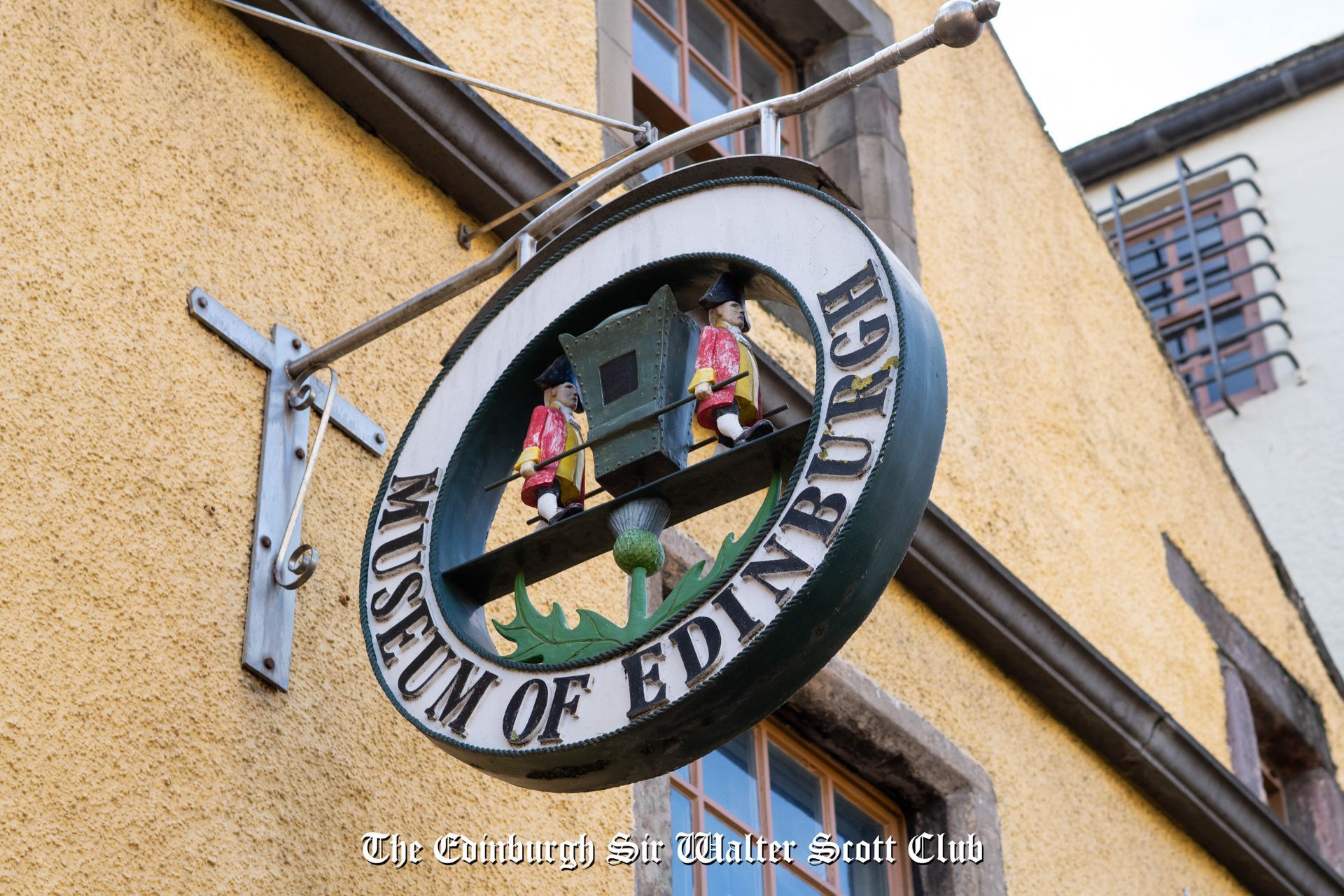
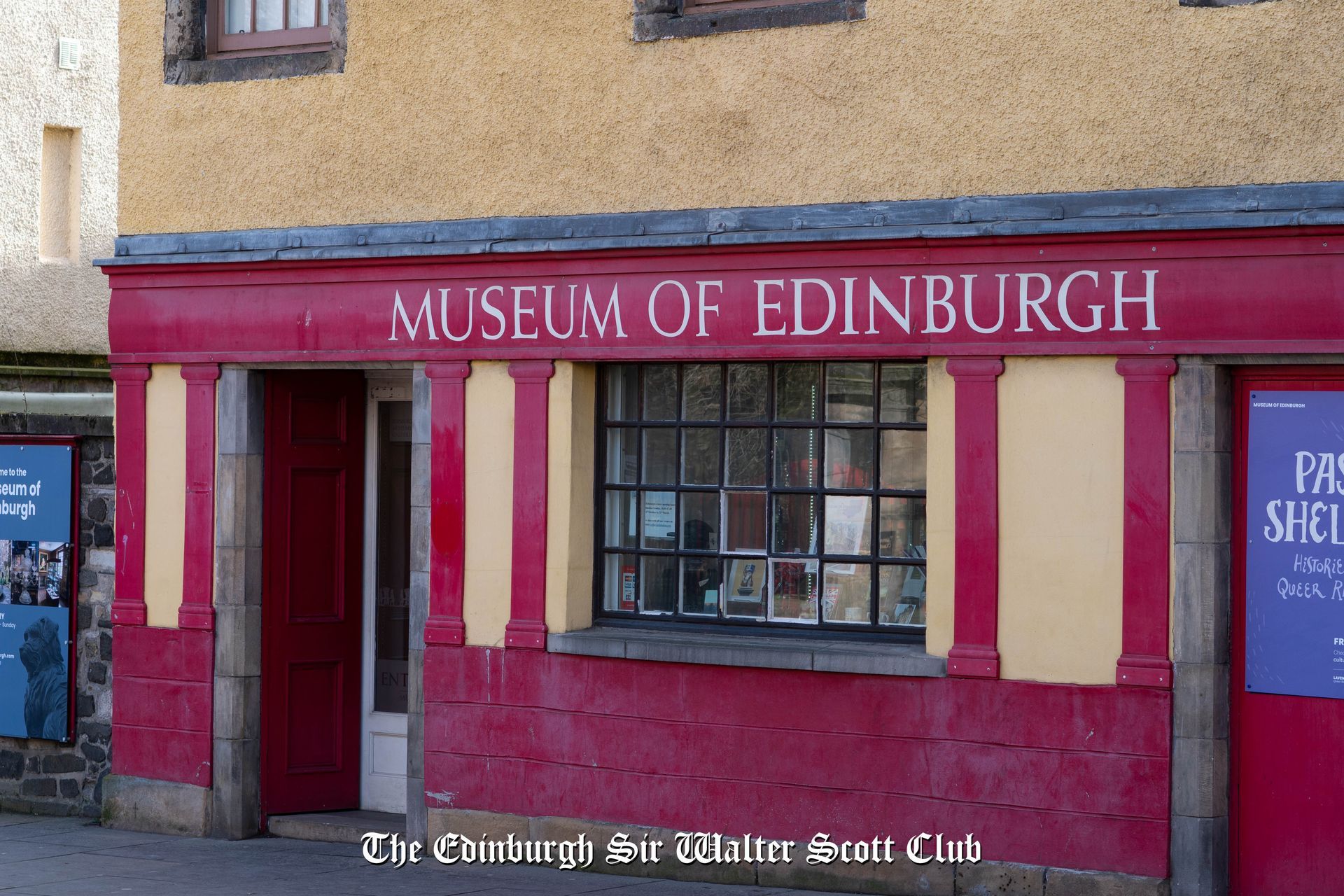
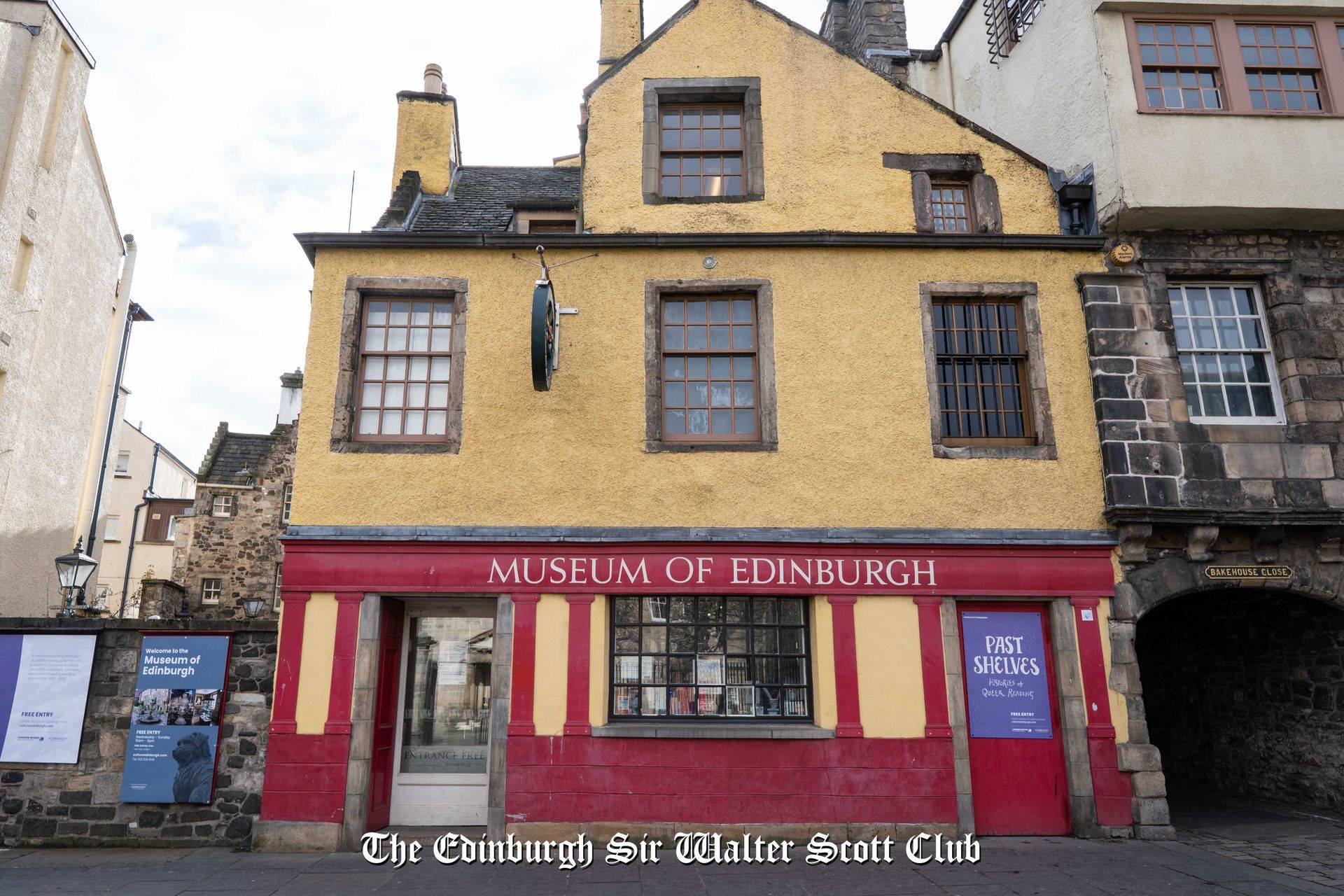
The Museum of Edinburgh occupies Huntly House, one of the most historically significant surviving townhouses on the Canongate. The museum preserves objects, documents, and artworks relating to the development of the city, many of which illuminate the civic environment in which Sir Walter Scott lived and worked.
While the building itself predates Scott by more than a century, the collections housed within it include materials that help contextualise the Edinburgh of Scott’s era. Through these artefacts the museum provides insight into the political, social, and cultural world that formed the backdrop to Scott’s life and writing.
Historical Context
Huntly House was constructed in the early seventeenth century and later became associated with the Marquess of Huntly, from whom the building takes its name. Like many houses along the Canongate, it served successive roles as a noble residence, commercial property, and later institutional building as the character of the district changed over time.
By the nineteenth century the Canongate had shifted from an aristocratic residential street to a district of mixed commercial and residential use. During Scott’s lifetime the area remained an important historical corridor linking Edinburgh’s Old Town with the royal residence at Holyrood Palace.
The preservation of Huntly House allows visitors to experience one of the few surviving domestic structures from the earlier Canongate streetscape.
Scott Here
Although there is no evidence that Scott lived in or directly used Huntly House, the museum contains materials connected with the historical world he explored in his writing. Scott’s work frequently drew upon the history of Edinburgh and the traditions of Scotland more broadly, and many artefacts preserved in the museum illustrate the kinds of objects and environments familiar to him.
The museum also reflects the nineteenth-century interest in historical preservation and antiquarian research—fields in which Scott himself was deeply engaged.
The Bigger Theme
The Museum of Edinburgh demonstrates how the city’s past has been preserved and interpreted through objects and material culture. Scott’s historical imagination relied heavily on antiquarian research, manuscripts, artefacts, and historical records.
Institutions such as the Museum of Edinburgh therefore play an important role in sustaining the historical memory of the city that inspired Scott’s writing.
Literary Connections
Scott’s novels frequently incorporate detailed descriptions of historical settings, clothing, weapons, and everyday objects. Such material details contributed to the vivid historical realism for which his fiction became famous.
The artefacts displayed within the museum help illustrate the physical culture of the Scotland Scott sought to portray in his historical works.
What to Notice On Site
Huntly House itself is notable for its distinctive seventeenth-century architecture, including its crow-stepped gables and carved stonework. These features reflect the architectural character of the Canongate during the period when it served as a residential street for Scotland’s nobility.
Inside the museum, visitors will find displays covering the development of Edinburgh across several centuries, including objects connected with the city’s literary and civic history.
Questions to Consider
How do museums shape our understanding of the historical environments that influenced writers such as Sir Walter Scott?
What role do artefacts play in preserving the cultural memory of a city?
How might Scott’s interest in antiquarian research relate to the kinds of objects preserved in museums today?
Further Reading
Millgate, Jane. -
Walter Scott: The Making of the Novelist.
Youngson, A. J. -The Making of Classical Edinburgh.
Did You Know?
Huntly House contains one of the finest surviving examples of seventeenth-century domestic architecture on the Canongate, with its distinctive crow-stepped gables and decorative stonework still visible today.
Official Website