
Walking Tour: Stop B
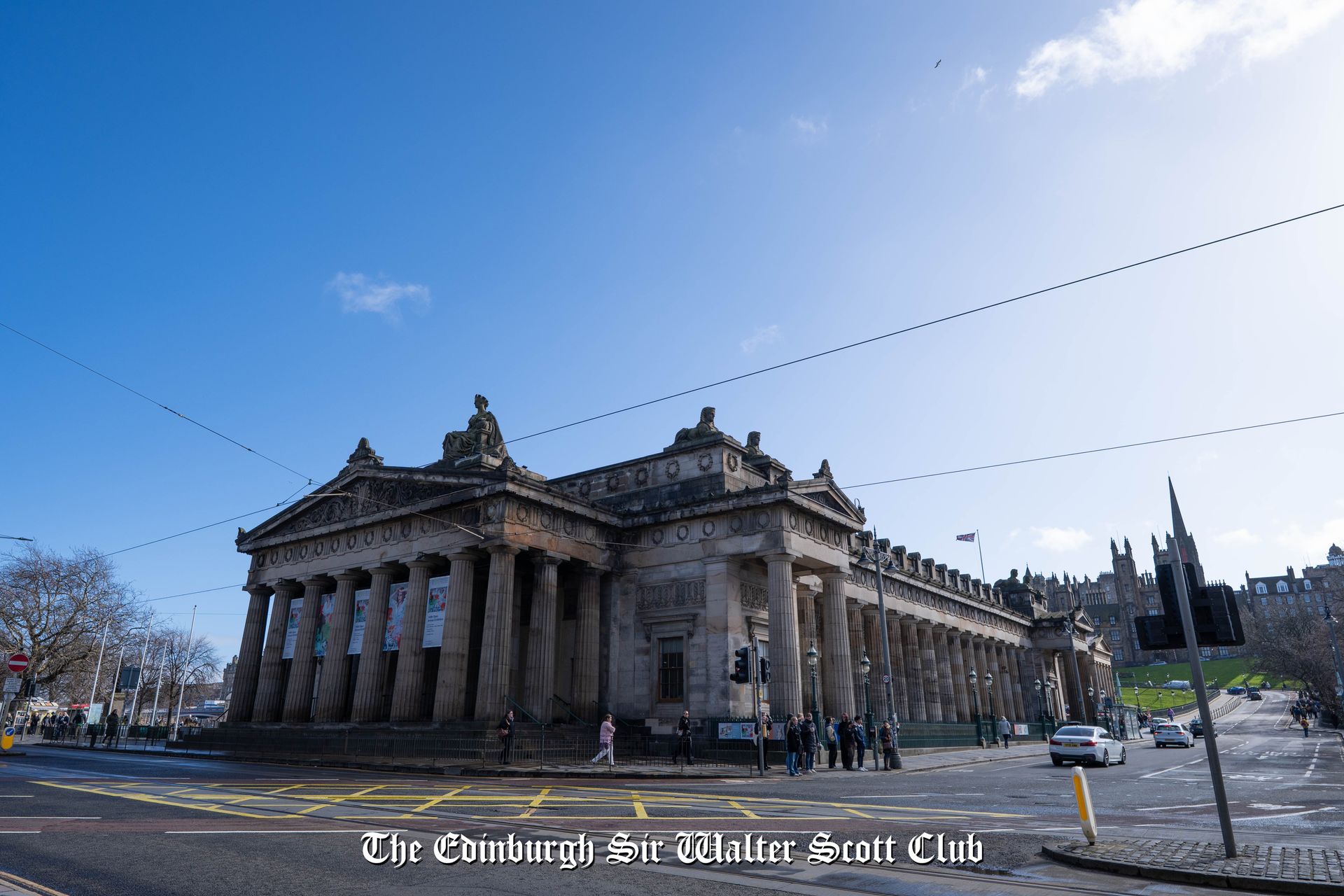
Royal Scottish Academy Building
(Former Royal Institution)
The Mound, EH2 2EL

Home of the Royal Society of Edinburgh during Scott’s presidency.
GPS Coordinates: 55°57'06.0"N 3°11'46.6"W
Scott Connection:
Meeting place of the Royal Society of Edinburgh during Sir Walter Scott’s presidency (1820–1832).
Date Range Relevant to Scott: c.1826–1832
Current Status:
Art gallery building housing the Royal Scottish Academy; located on The Mound within Edinburgh’s central cultural district.
Accessibility:
Public building with step-free access via ramps from Princes Street Gardens level and The Mound.
Why This Place Matters
The building now known as the Royal Scottish Academy originally opened in 1826 as the Royal Institution, intended to promote the advancement of the fine arts in Scotland. During the later years of Sir Walter Scott’s presidency of the Royal Society of Edinburgh, the society held its meetings in rooms within this building.
This association places Scott not only within Edinburgh’s literary culture but also at the centre of its learned institutions. His presidency of the Royal Society of Edinburgh represented formal recognition of his intellectual authority within Scotland’s scholarly and civic community.
Historical Context
The Royal Institution Building referred to here is the classical structure directly facing Princes Street, now occupied by the Royal Scottish Academy. It stands beside, but is distinct from, the neighbouring National Gallery building further up toward the Mound.
It was conceived as a national cultural centre combining exhibition galleries with accommodation for learned societies. The project was promoted by leading figures in Edinburgh’s civic and intellectual life, reflecting the city’s continuing ambition to serve as Scotland’s principal centre of scholarship and artistic culture.
The building was designed by the architect William Henry Playfair, one of the key figures responsible for shaping the monumental architecture of early nineteenth-century Edinburgh. Constructed between 1822 and 1826, it forms one of the most prominent architectural features on The Mound, the artificial ridge linking Edinburgh’s Old Town with the New Town.
Within this new building the Royal Society of Edinburgh, Scotland’s national academy of science and letters founded in 1783, held its meetings during the period of Scott’s presidency. The location symbolised the society’s close relationship with the cultural institutions emerging around The Mound during this period.
Scott Here
Sir Walter Scott was elected President of the Royal Society of Edinburgh in 1820, succeeding Dugald Stewart. He remained in the position until his death in 1832.
As president, Scott presided over meetings, oversaw the activities of the society, and represented it within the broader intellectual life of Scotland. The society’s meetings held in the Royal Institution building therefore place Scott within a formal institutional setting quite different from the literary circles normally associated with his name.
The presidency reflected Scott’s status not merely as a novelist but as a public intellectual whose historical scholarship, antiquarian interests, and literary achievements commanded respect across a wide range of academic disciplines.
The Bigger Theme
The Royal Institution illustrates Scott’s role as a civic intellectual within Edinburgh’s institutional life. His leadership of the Royal Society of Edinburgh demonstrates the extent to which his reputation extended beyond literature into the wider intellectual culture of Scotland.
Scott’s career intersected with several of Edinburgh’s learned societies and professional networks, including the legal profession, antiquarian scholarship, and historical research. His presidency symbolised the integration of literary creativity with the scholarly traditions of the Scottish Enlightenment.
Literary Connections
Scott’s historical novels and poems frequently draw upon the antiquarian research and historical scholarship that also characterised the work of the Royal Society of Edinburgh.
The intellectual networks represented by the society helped sustain the wider culture of historical enquiry in which Scott operated. His engagement with scholars, scientists, and antiquaries reinforced the documentary foundations that underpin much of his historical writing.
What to Notice On Site
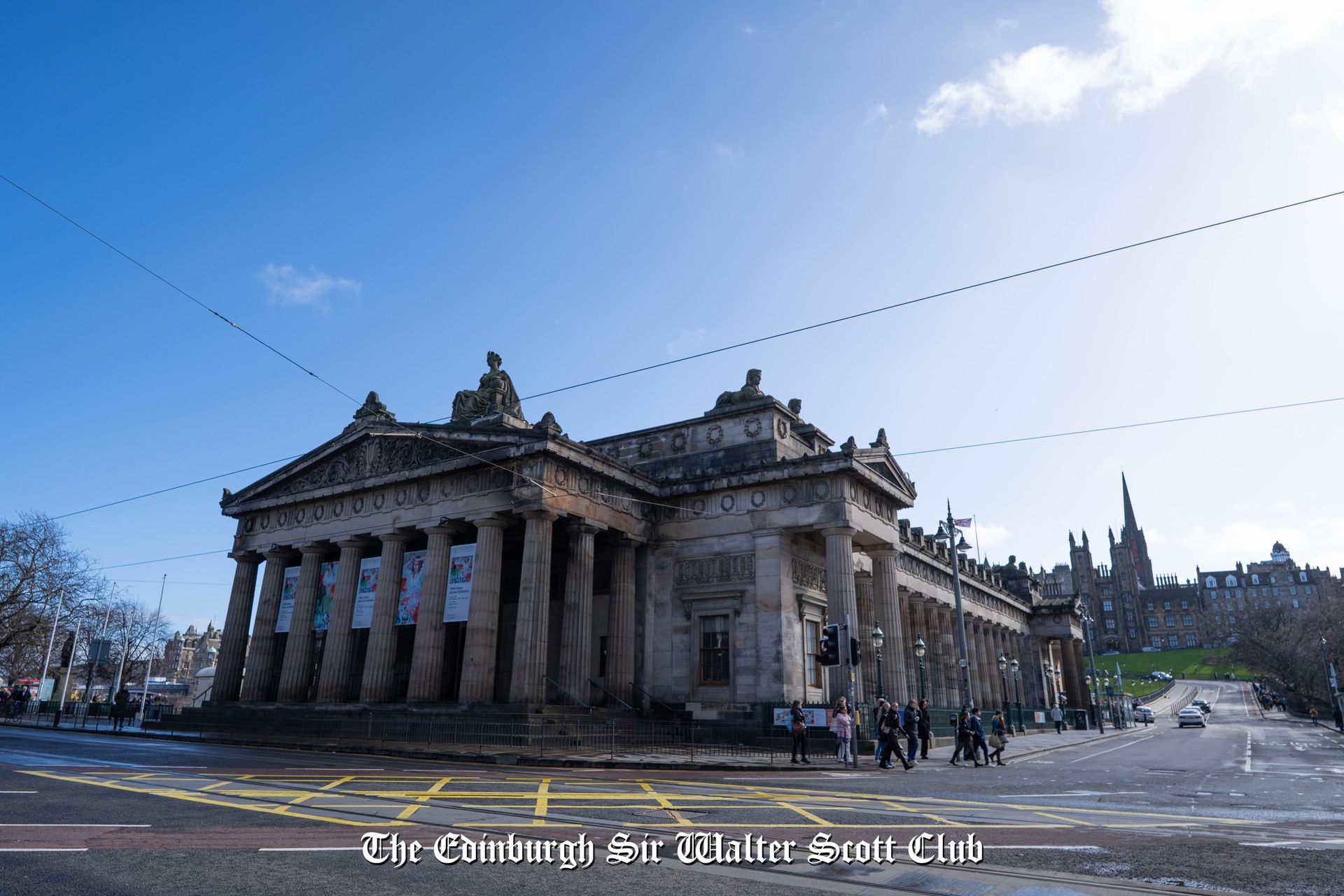
The building’s classical façade, designed by William Henry Playfair, forms one of the defining architectural elements of The Mound. Its temple-like appearance reflects the neoclassical style widely adopted in Edinburgh during the early nineteenth century.
Today the structure houses the Royal Scottish Academy, which occupies the galleries originally created for the exhibition of art within the Royal Institution. The building sits alongside other major cultural institutions on The Mound, including the National Gallery of Scotland.
Questions to Consider
How did Scott’s presidency of the Royal Society of Edinburgh reflect his standing within Scotland’s intellectual life?
What role did learned societies play in shaping the cultural identity of Edinburgh during the early nineteenth century?
How does the architecture of The Mound express the civic ambitions of Edinburgh during Scott’s lifetime?
Further Reading
Withers, Charles. -
The Royal Society of Edinburgh and the Scottish Enlightenment.
Youngson, A. J. - The Making of Classical Edinburgh.
Royal Society of Edinburgh -History of the Society.
Did You Know?
Sir Walter Scott served as President of the Royal Society of Edinburgh for twelve years, from 1820 until his death in 1832, reflecting his standing within Scotland’s wider intellectual community.
Official Website