

Walking Tour: Stop 13
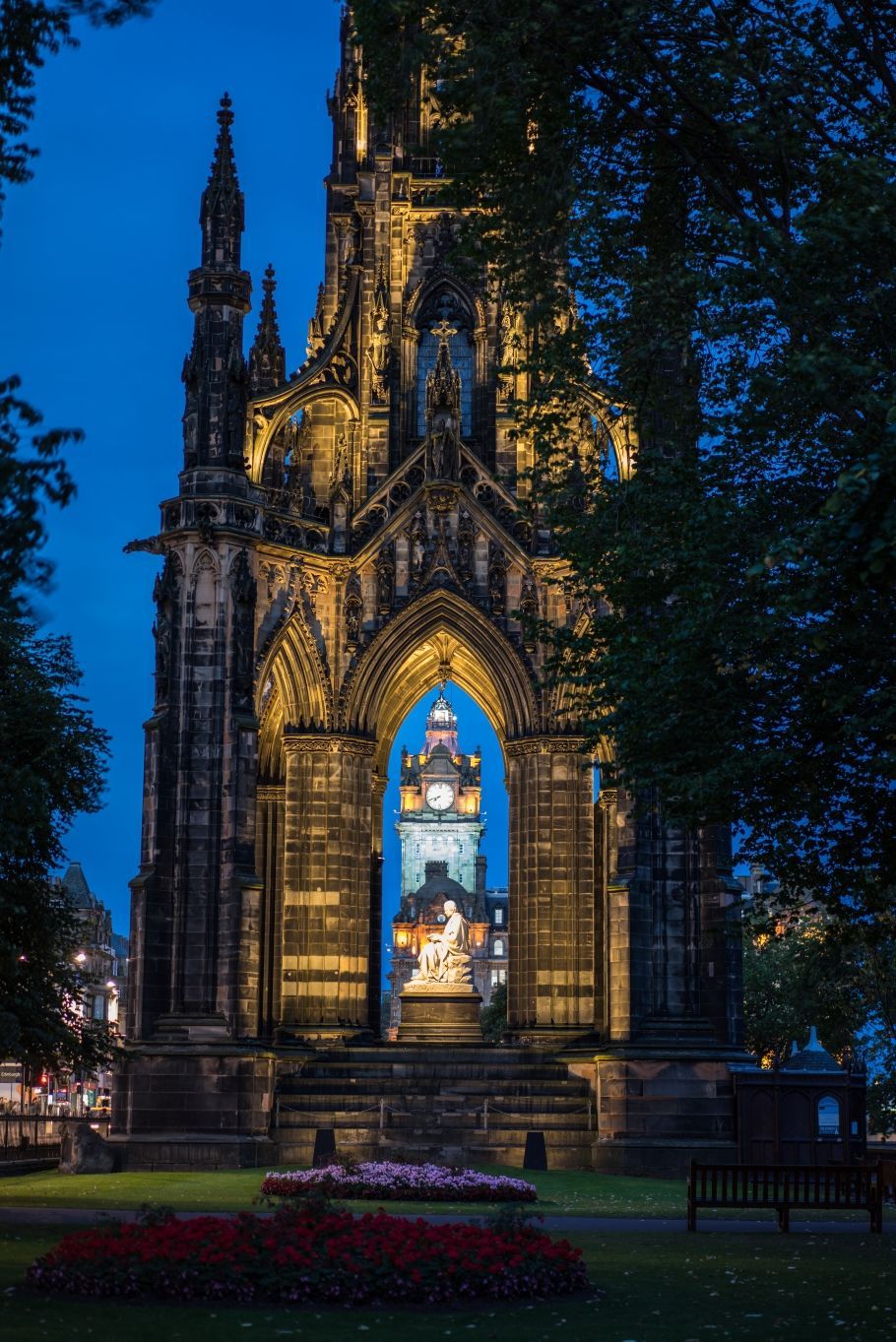
Scott Monument
Princes Street Gardens, EH2 2EJ

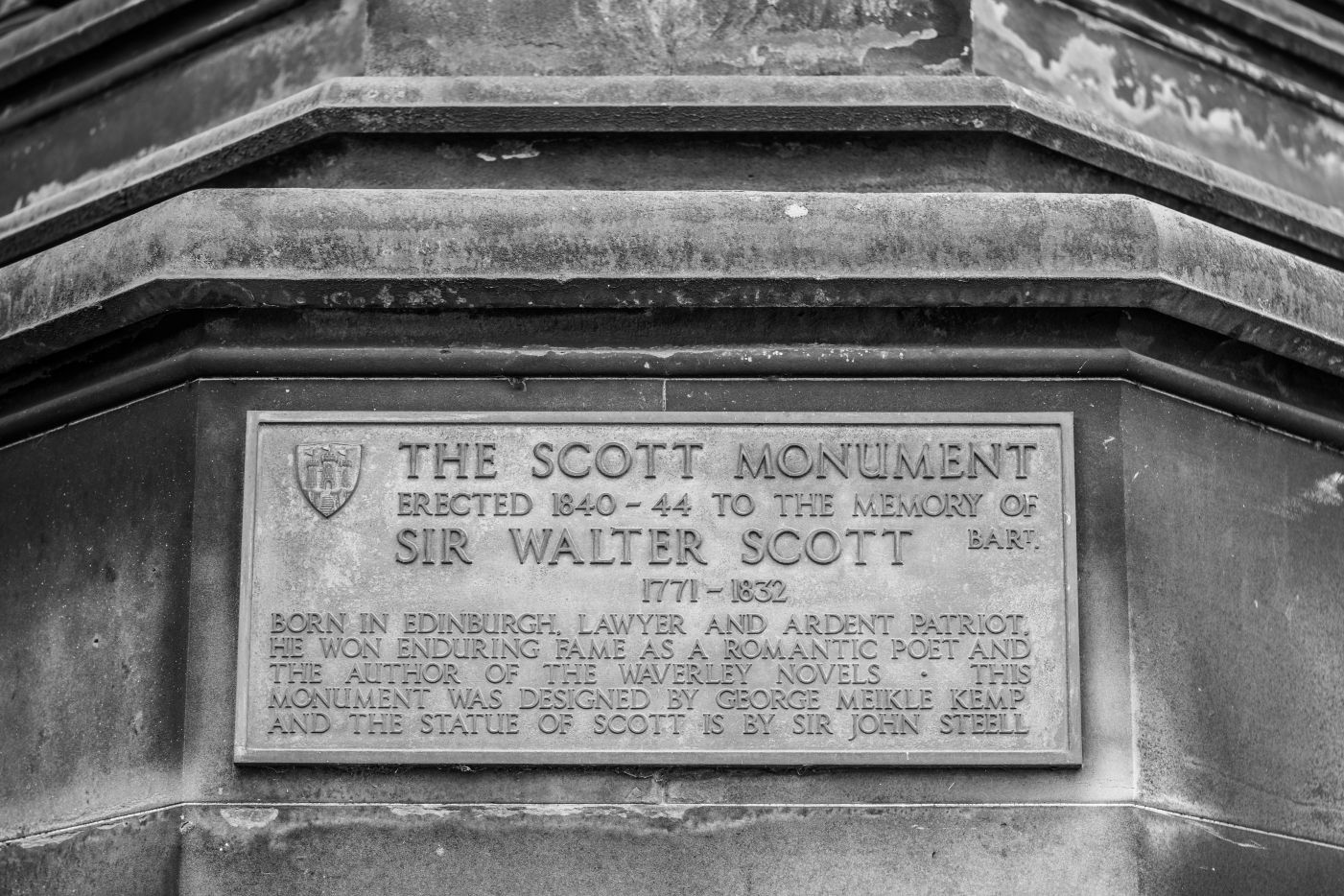
Victorian monument commemorating Scott (completed 1844).
GPS Coordinates: 55°57'08.6"N 3°11'35.8"W
Scott Connection:
Victorian Gothic monument erected in Scott’s honour (1840–1844); site of annual wreath-laying by the Edinburgh Sir Walter Scott Club since 1902.
Date Range Relevant to Scott: Monument erected 1840–1844 (posthumous).
Current Status:
Public monument; interior stair access to viewing platforms (ticketed).
Accessibility:
Exterior accessible at ground level.
Interior requires ascent of narrow spiral staircases (significant steps; not step-free).
Opening Times:
Seasonal opening; check official City of Edinburgh Council listing before visiting.
Audio guide narrated by Alasdair Hutton
Why This Place Matters
The Scott Monument is the most visible expression of Scott’s civic canonisation.
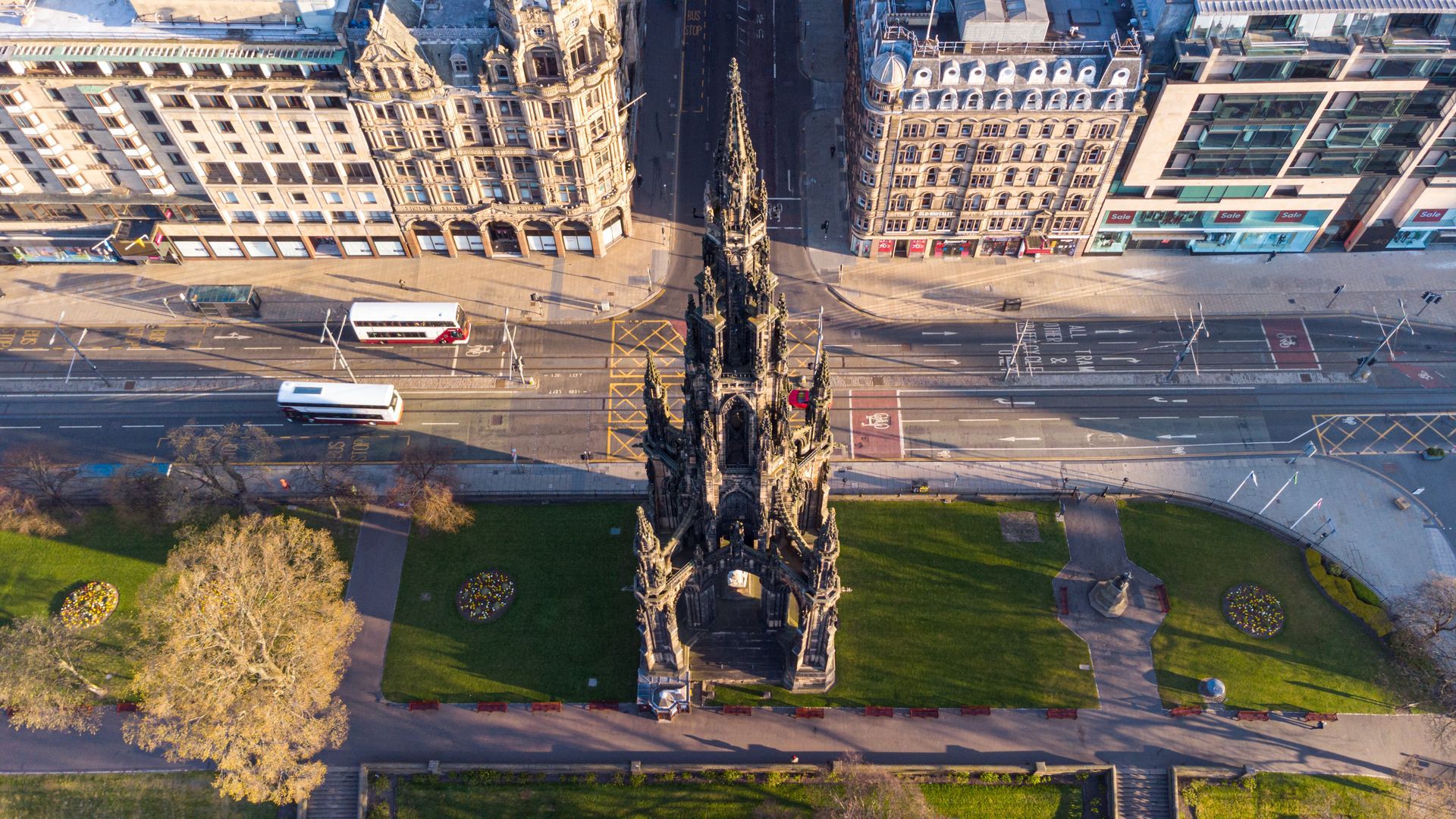
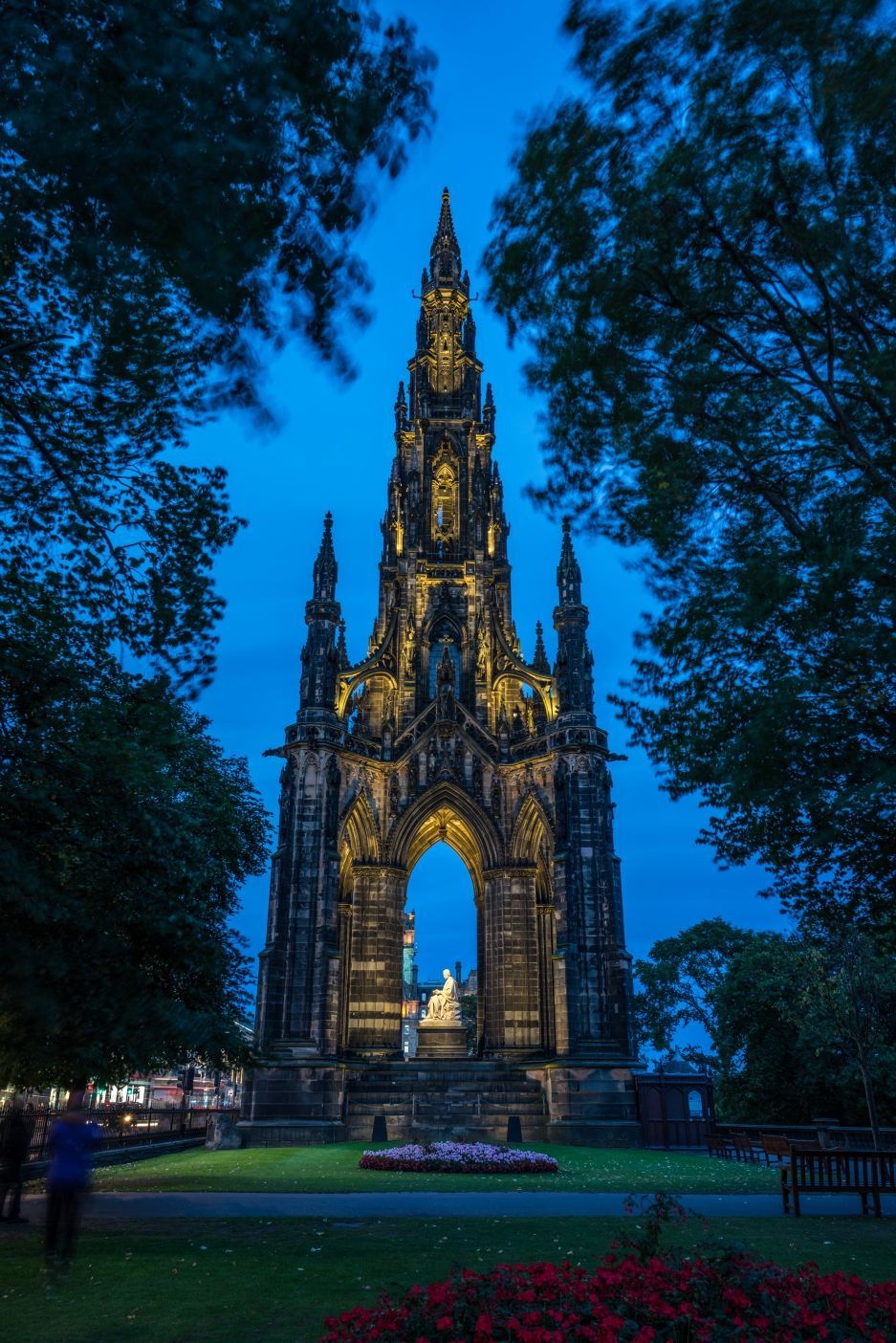
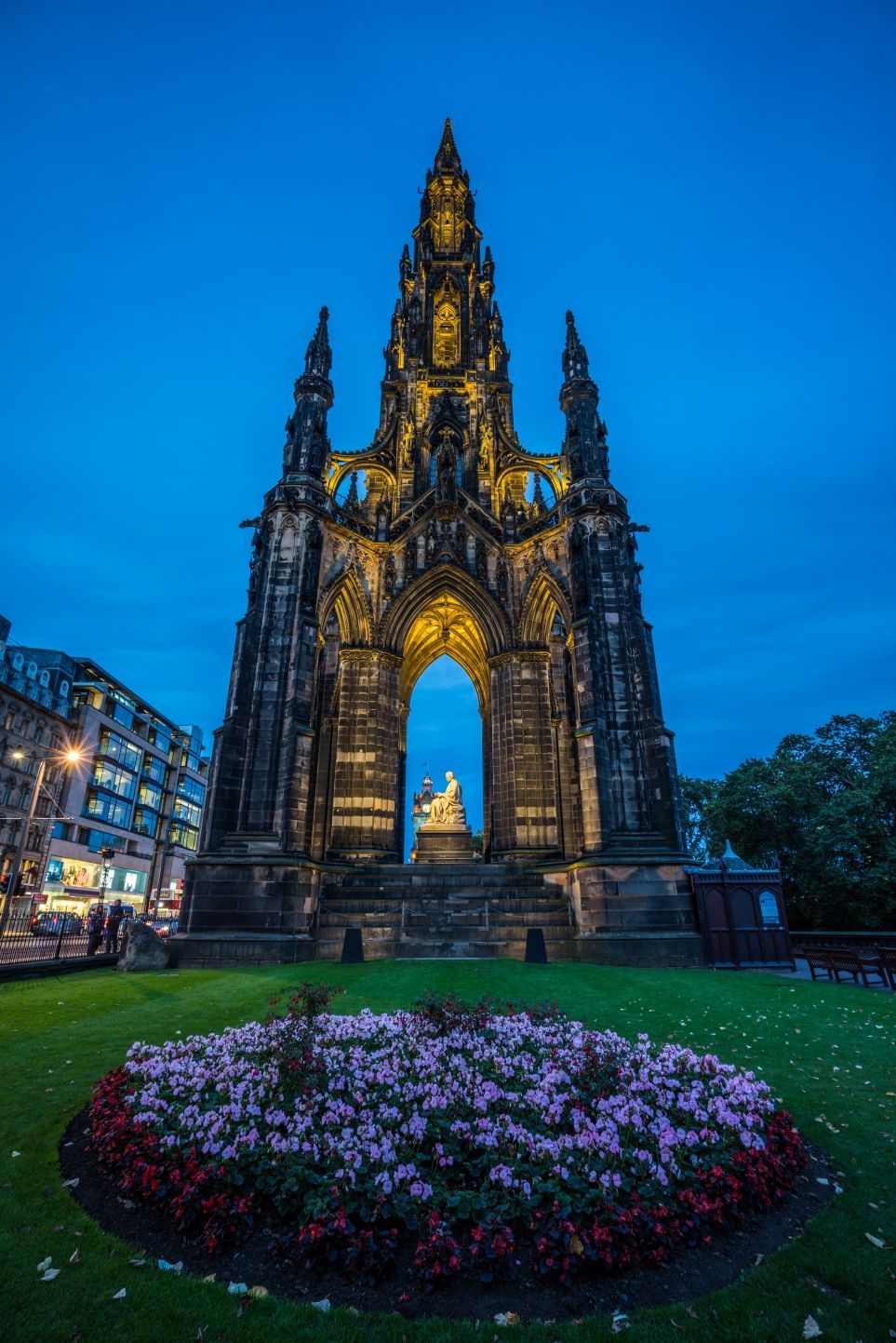
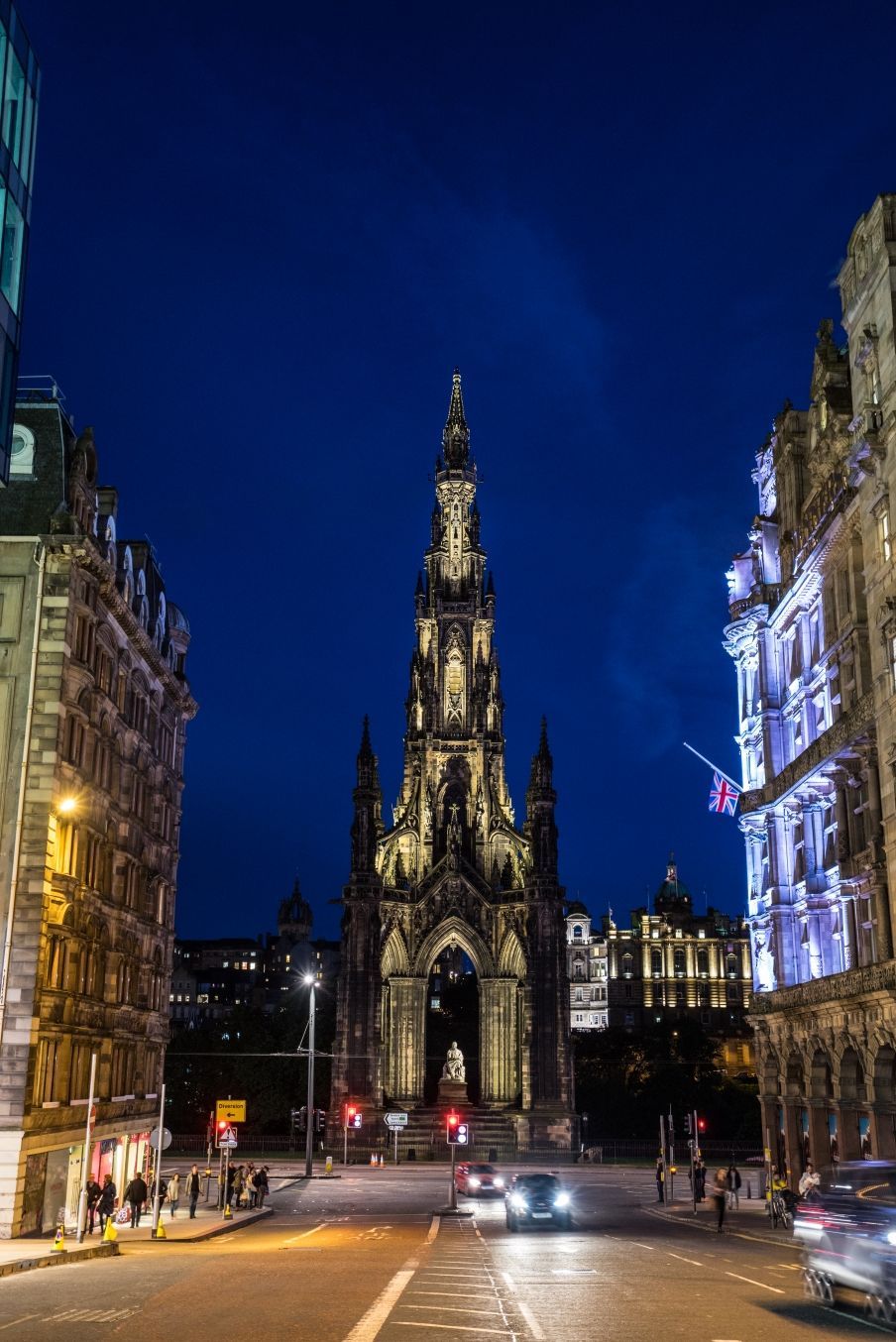
Completed in 1844, just twelve years after his death, the monument embodies the scale of his reputation. Rising above Princes Street Gardens in elaborate Gothic stonework, it is both memorial and national statement.
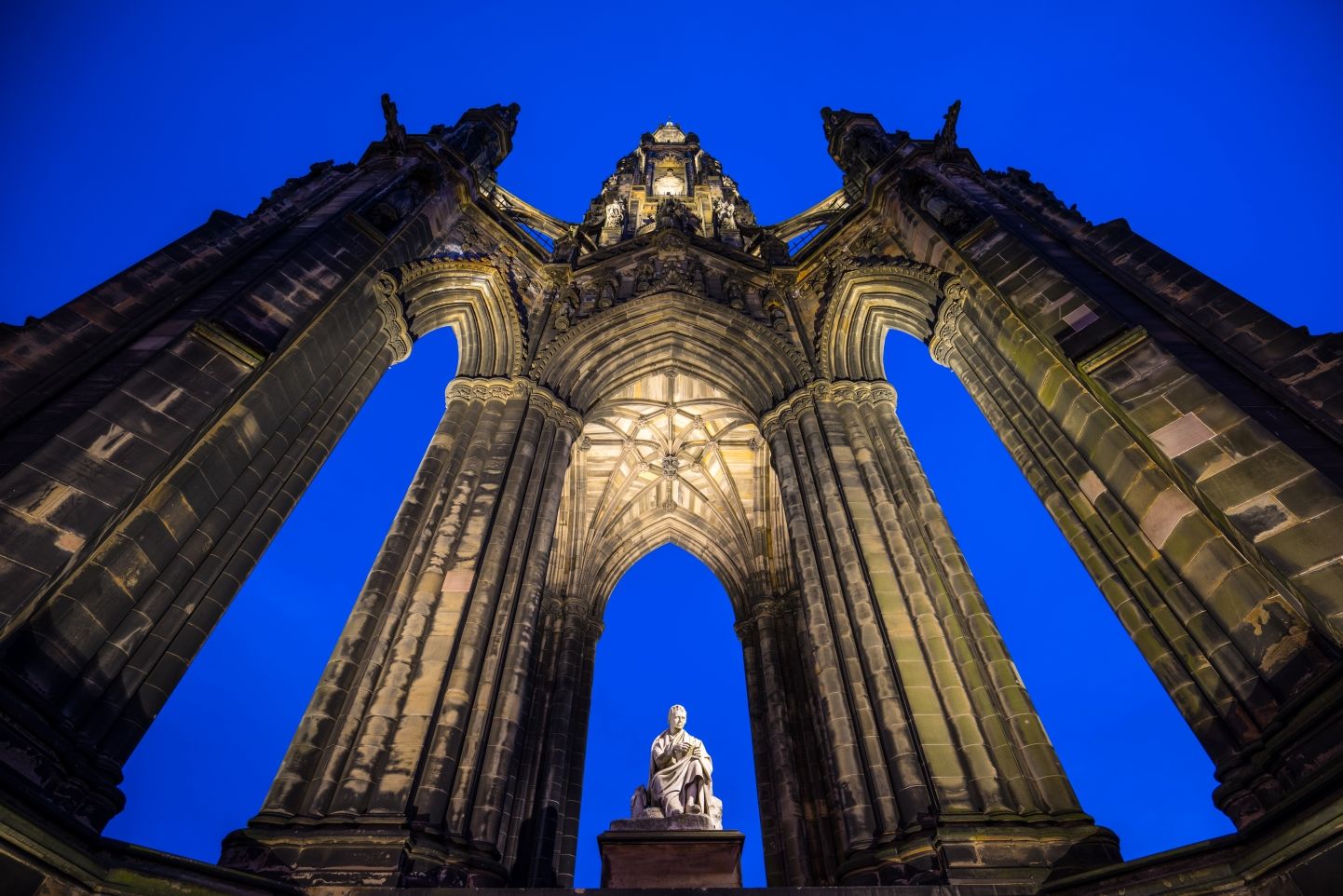
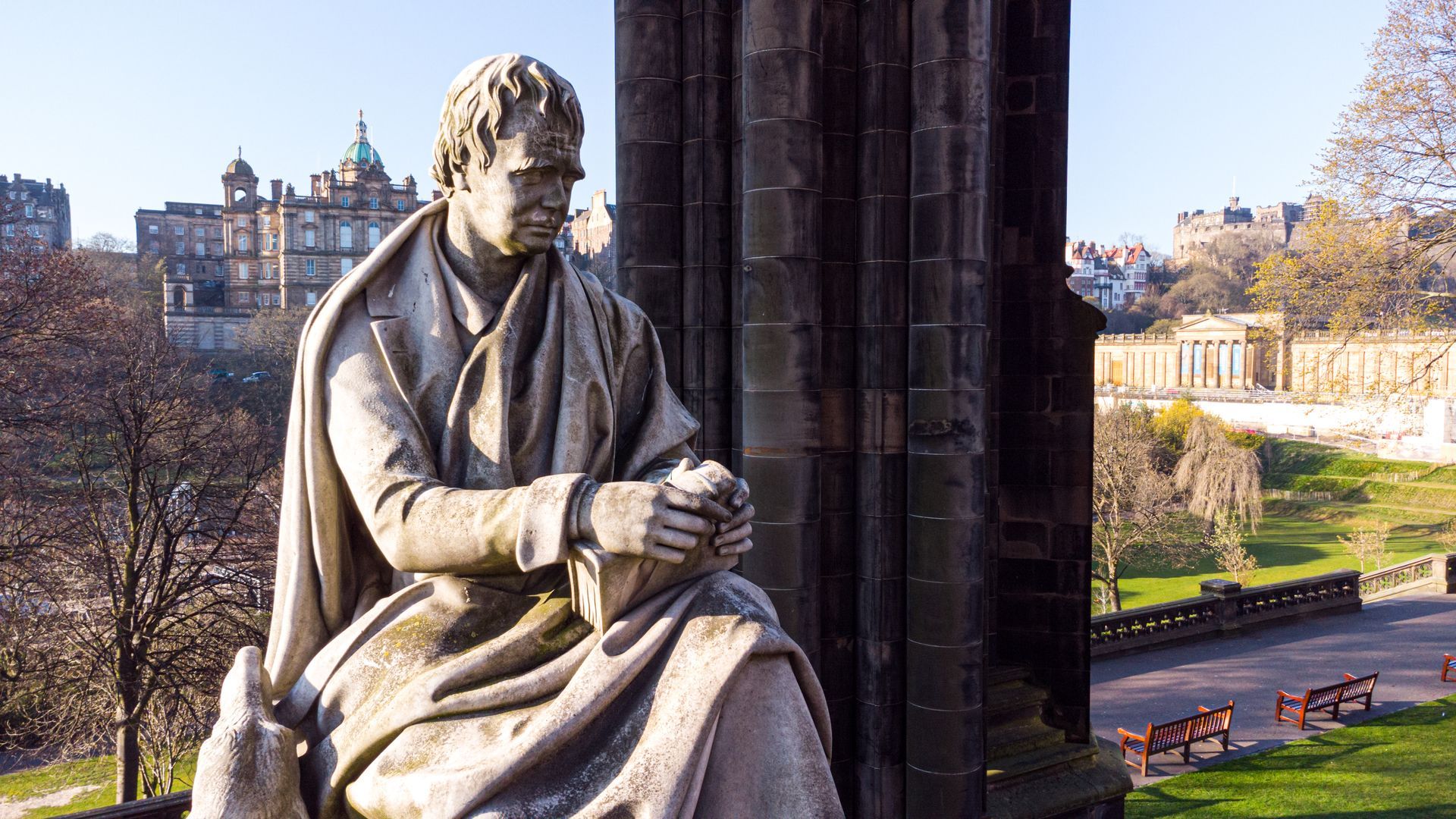
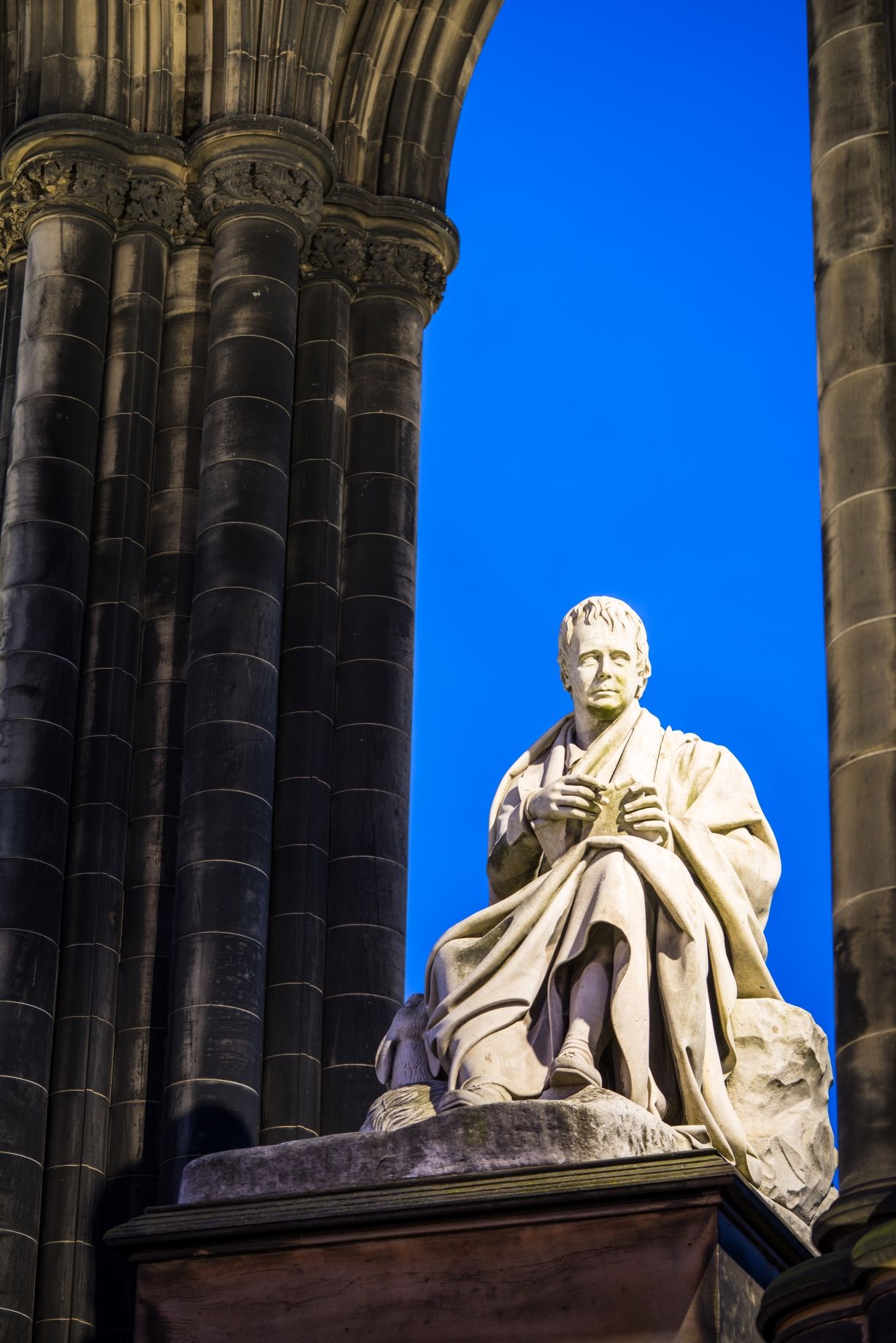
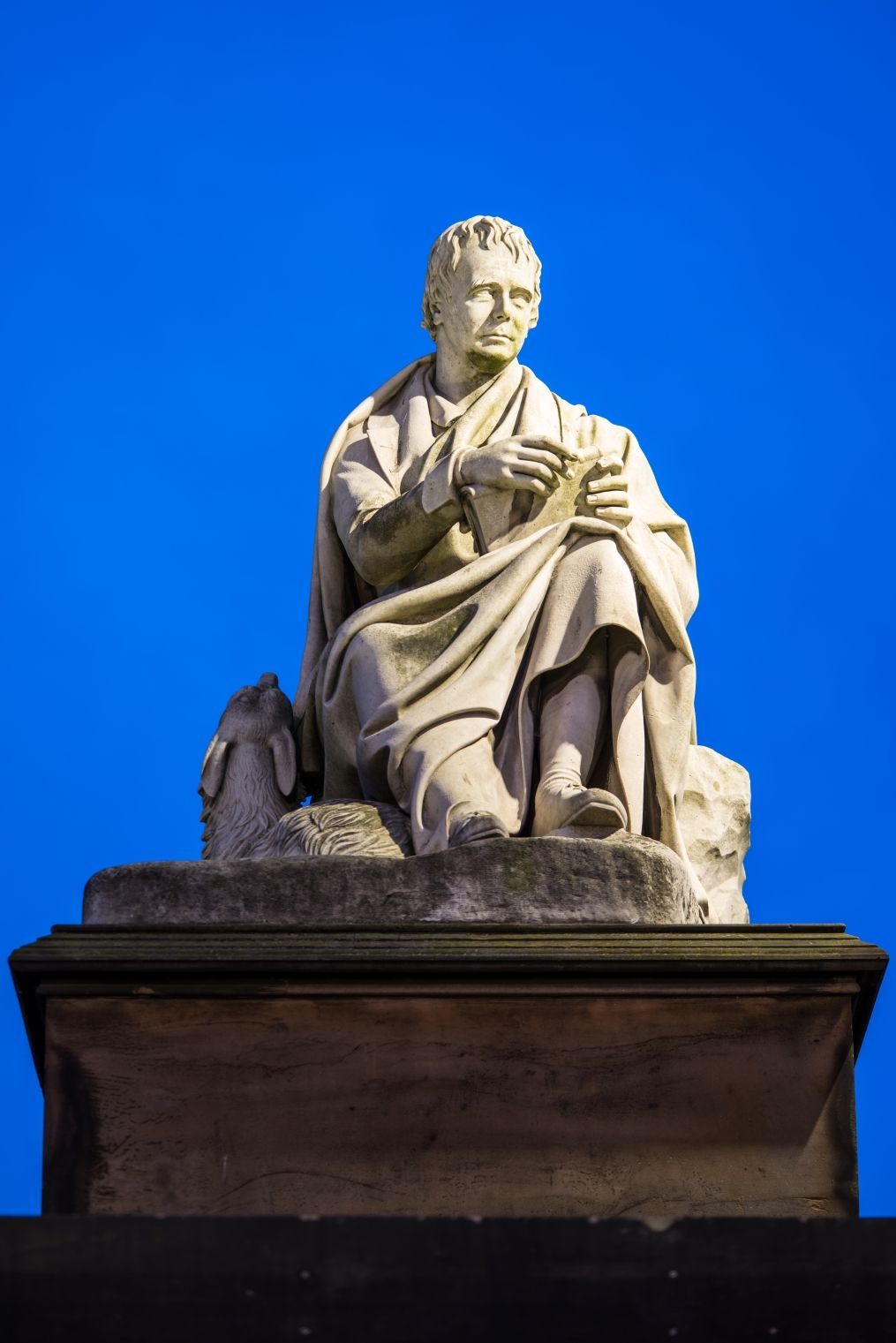
Within its canopy sits a marble statue of Scott, carved by Sir John Steell, with his deerhound Maida at his feet.
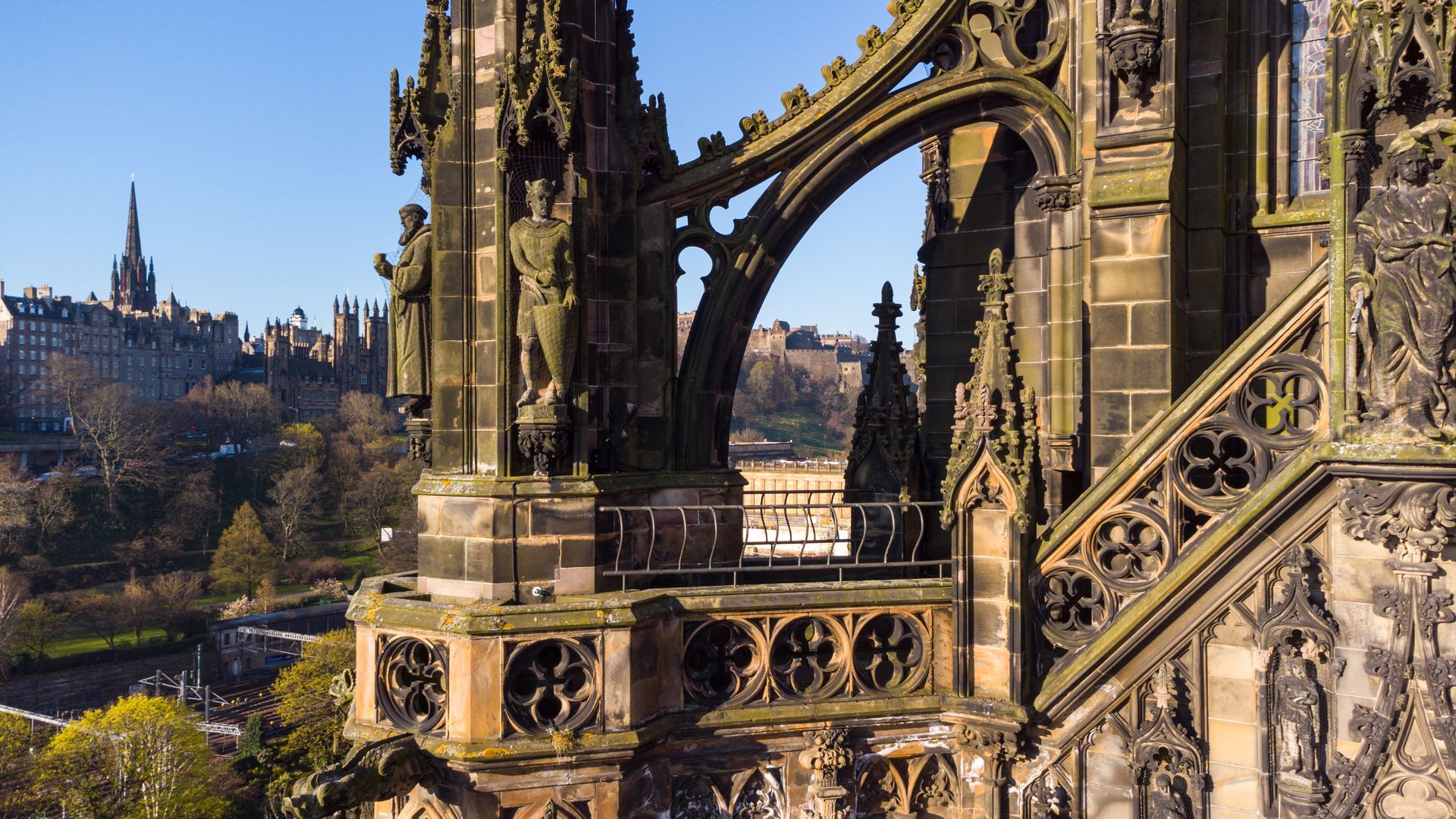
Around the structure are niches containing figures from the Waverley Novels — transforming the monument into a sculpted index of his fictional world.
For Edinburgh, the monument does not merely commemorate Scott. It asserts that literature helped define the nation.
Historical Context
Designed by George Meikle Kemp, the monument emerged during the height of Victorian medieval revivalism. Its Gothic form deliberately echoes the architecture of abbeys and cathedrals — linking Scott symbolically to Scotland’s historic past.
By the mid-nineteenth century, Scott’s novels had reshaped European perceptions of Scotland. The monument reflects how quickly he was elevated from celebrated author to national cultural figure.
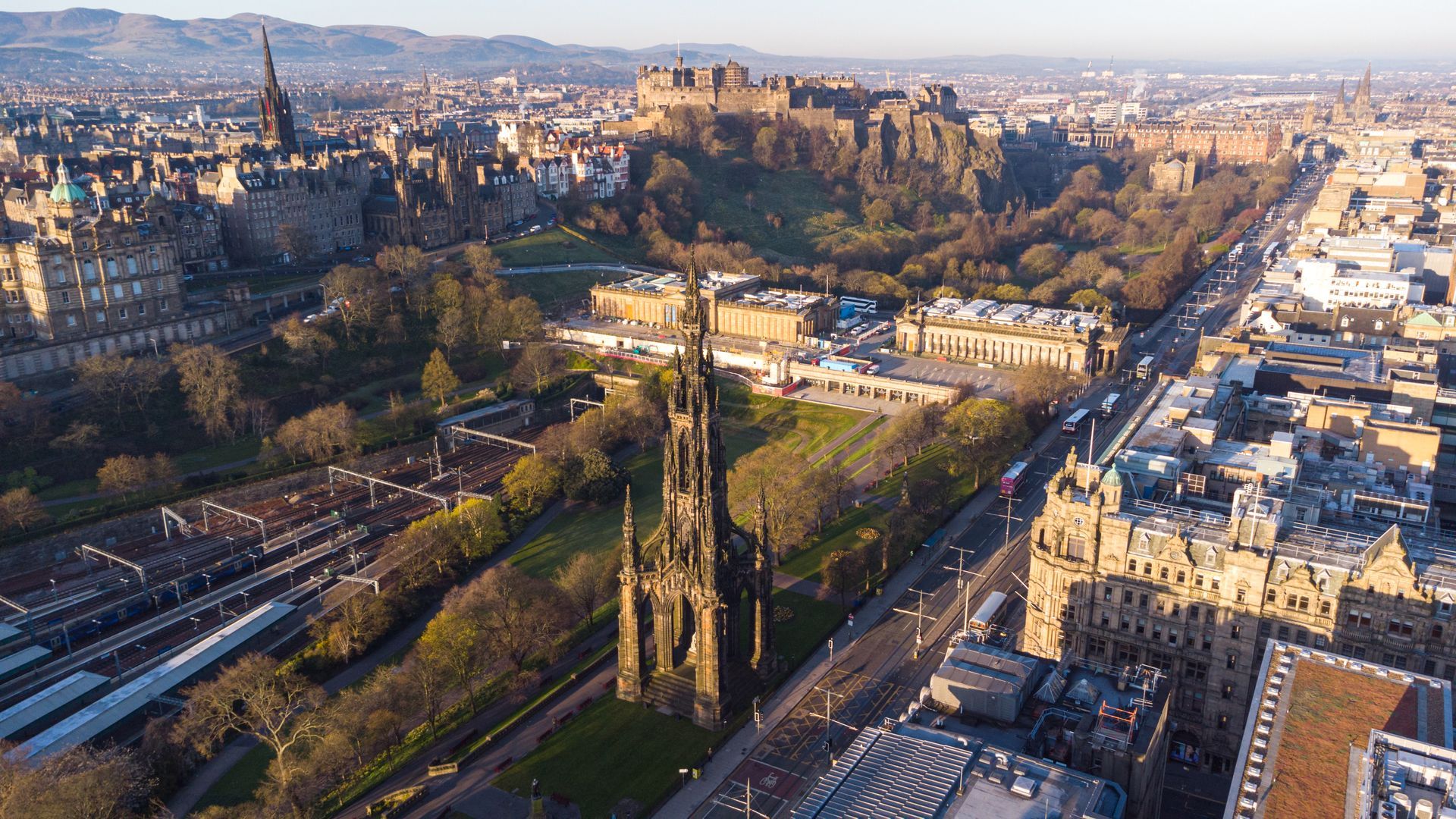
The site’s placement in Princes Street Gardens — visible from Old and New Town alike — reinforces the idea that Scott bridged historical and modern Scotland.
Scott Here
Although completed after his death, the monument stands within sight of places central to his life:
• The Mound and the Advocates’ Library
• 39 Castle Street
• Parliament House
The statue’s seated posture — contemplative, manuscript resting upon his knee — reflects the disciplined authorship developed during his Edinburgh years.
The Edinburgh Sir Walter Scott Club has maintained a direct ceremonial link with the monument since 1902, when it began the tradition of laying an annual wreath on Scott’s birthday, 15th August. Some wreaths have reached six feet in height — a striking visual gesture beneath the Gothic spire.
In 1952, to mark the Club’s 45th Annual Dinner, the monument was specially illuminated in the evening — a symbolic act reinforcing its place at the centre of Scott’s commemorative culture.
The Bigger Theme:
Literary Nationalism in Stone
The monument represents the transformation of literary achievement into civic architecture.
Scott did not write nationalist propaganda; yet his historical novels shaped how Scotland imagined its own past. The monument literalises that influence.
It is a structure built not for a monarch, soldier, or statesman — but for a novelist.
Here, narrative became nation.
Literary Connections
The sculpted figures around the monument draw directly from:
•
Waverley
• Rob Roy
• The Heart of Midlothian
• Ivanhoe
• Old Mortality
• The Bride of Lammermoor
The monument functions as a stone anthology of Scott’s fictional universe.
What to Notice On Site
• The sheer verticality of the Gothic spire.
• The seated marble figure and Maida beneath the canopy.
• The carved characters in the surrounding niches.
• The monument’s visibility from both Old Town ridge and New Town streets.
Step back across Princes Street Gardens to see how it punctuates the skyline.
Questions to Consider
- Why was a novelist memorialised on such a scale?
- Does the monument celebrate Scott the man — or Scott the myth?
- How does architecture influence cultural memory?
Further Reading
J. G. Lockhart,
Memoirs of the Life of Sir Walter Scott
Charles McKean,Edinburgh: An Illustrated Architectural Guide
Historic Environment Scotland — official monument description
Did You Know?
The seated statue of Sir Walter Scott at the heart of the monument was sculpted by Sir John Steell (1804–1891), one of Scotland’s most important nineteenth-century sculptors. Carved from white Carrara marble, the statue shows Scott resting from his writing with a book on his lap, accompanied by his beloved deerhound Maida.
Steell himself is buried in St John’s Episcopal Churchyard at the west end of Princes Street.
Official Website
Images courtesy of Lee Live: (Photographer) The Scott Monument // Drone Photos
The Scott Monument
