
Walking Tour: Stop Q
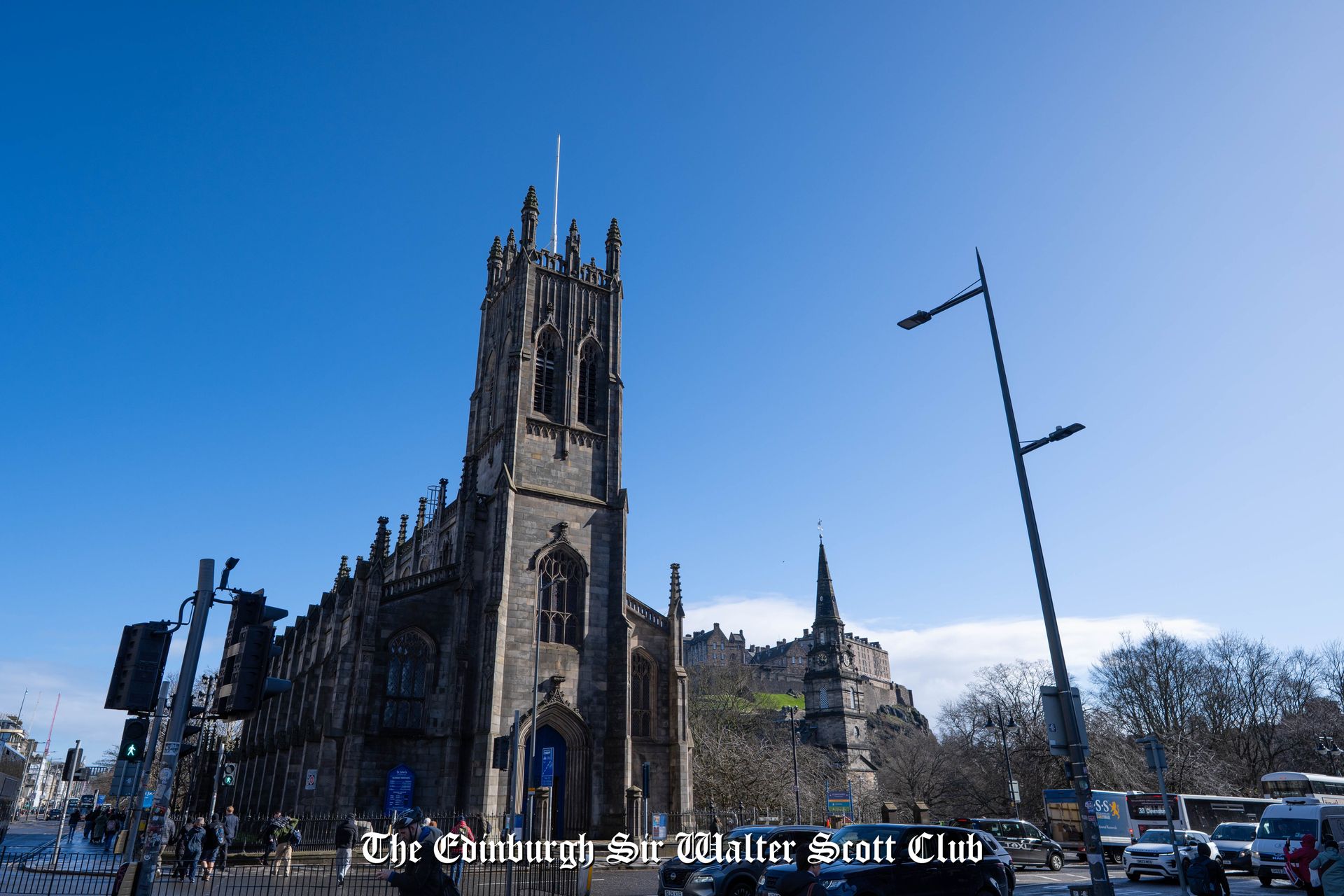
St John’s Episcopal Church
Princes Street, EH2 4BJ

Burial place of Anne Rutherford Scott, mother of Sir Walter Scott.
GPS Coordinates: 55°57'00.6"N 3°12'21.4"W
Scott Connection:
Burial place of Anne Rutherford Scott (1739–1819), mother of Sir Walter Scott.
Date Range Relevant to Scott: 1819
Current Status:
Active Episcopal church at the west end of Princes Street with adjoining churchyard.
Accessibility:
The grave is located within the Dormitory Garden, but it can be seen through the gates. Special access may be obtained via the Church Office in-advance.
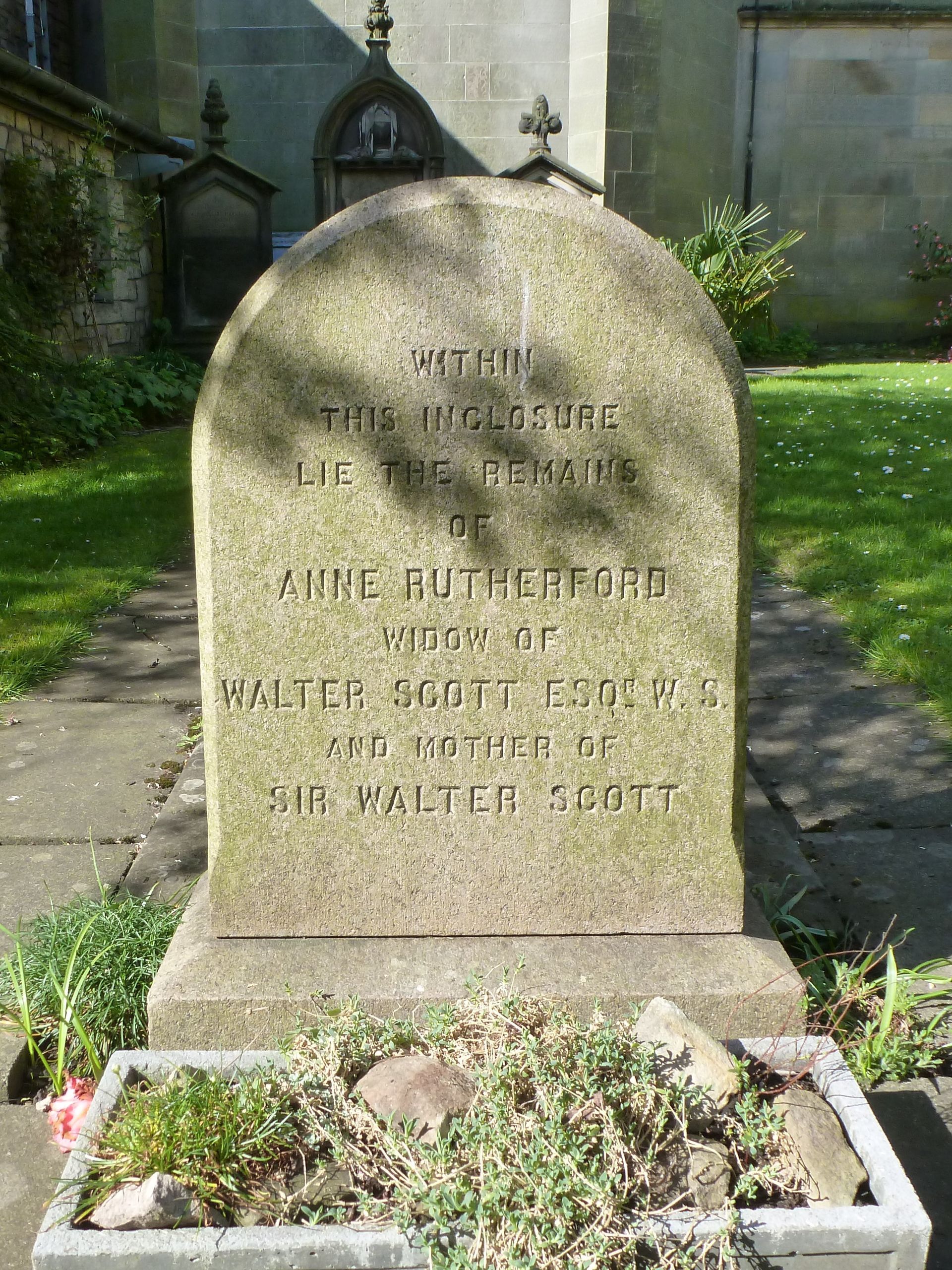
Image: Peter Garside
Why This Place Matters
St John’s Episcopal Church contains the burial place of Anne Rutherford Scott, the mother of Sir Walter Scott. Her death in 1819 occurred during the height of Scott’s literary career, when the Waverley novels had already begun to establish his international reputation.
Anne Rutherford came from a distinguished Edinburgh family connected with the medical profession and the intellectual world of the Scottish Enlightenment. Through her family background, Scott was linked to networks of physicians, scholars, and professionals whose influence shaped the cultural environment in which he grew up.
Her burial at St John’s places part of Scott’s immediate family memory within the expanding New Town landscape, rather than the older kirkyards of the Old Town.
Scott’s choice of burial place reflected contemporary concerns about grave robbing. In 1819 Edinburgh’s medical schools created a growing demand for bodies for anatomical study, and fears of disturbance after burial were widespread. The enclosed design of the St John’s Dormitory offered a degree of protection that was difficult to guarantee in larger and more open churchyards, helping to explain Scott’s emphasis on privacy and security when selecting the family burial ground.
Historical Context
St John’s Episcopal Church was built between 1816 and 1818, designed by the architect William Burn in a Gothic style that contrasted with the surrounding Georgian architecture of the New Town.
The church formed part of the growing presence of the Scottish Episcopal Church in Edinburgh during the early nineteenth century. As the New Town expanded westward, new places of worship were established to serve the developing residential districts beyond the original Georgian plan.
The churchyard soon became a burial place for members of Edinburgh’s professional and middle classes who lived in the surrounding New Town streets.
Scott Here
Anne Rutherford Scott, the mother of Sir Walter Scott, died in December 1819 and was buried in the churchyard of St John’s Episcopal Chapel at the west end of Princes Street. Shortly before her death, Scott purchased part of a family burial enclosure within the newly completed Dormitory, an enclosed burial ground designed to provide privacy and security.
Writing to his brother Thomas on 23 December 1819, Scott described the burial ground as being surrounded by high walls, with individual enclosures separated by deep dividing walls “so as to prevent the possibility either of encroaching on, or disturbing the relics of the dead.” He explained that he had chosen the site because of its “extreme seclusion, privacy and security”, adding that “in this new place I intend to lay our poor mother when the scene shall close.” She died only a few days later. and was buried in the same enclosure as members of the Rutherford family, including her brother Dr Daniel Rutherford and her sister Christian Rutherford. A marker within the Dormitory commemorates her burial, and the enclosure can still be viewed today through the gate on the Lower Terrace beside the Ramsay Cross.
The Bigger Theme
St John’s Episcopal Church illustrates the changing religious and social geography of Edinburgh during Scott’s lifetime. The movement of burial places from the crowded kirkyards of the Old Town to the newly established churches of the New Town reflects the city’s physical and social expansion.
The site also highlights the importance of family memory and denominational identity within Scott’s biography, linking the writer to the wider networks of kinship and religious affiliation that shaped Edinburgh society.
Literary Connections
Scott’s works frequently reflect a deep awareness of Scotland’s religious and social divisions, including the historical tensions between Episcopalian, Presbyterian, and other traditions. His own family background exposed him to these cultural and denominational currents within Scottish society.
The burial of his mother at St John’s Episcopal Church therefore provides a quiet reminder of the religious landscape that formed part of Scott’s upbringing.
What to Notice On Site
St John’s Episcopal Church stands prominently at the west end of Princes Street near the junction with Lothian Road. The churchyard surrounding the building contains a number of nineteenth-century monuments associated with residents of Edinburgh’s New Town.
The Gothic architecture of the church, designed by William Burn, contrasts with the classical terraces of the surrounding New Town and reflects the growing presence of Episcopal worship in Edinburgh during the early nineteenth century.
Behind the church lies a small enclosed burial compound containing the memorial marker associated with Anne Rutherford Scott.
Unlike the large open churchyards of older Edinburgh parishes such as St Cuthbert’s, the burial ground at St John’s forms a contained and protected space. Such enclosed burial areas were valued in the early nineteenth century because they offered greater security from the grave robbers or “resurrectionists” who were active in Edinburgh during this period.
The enclosure therefore reflects both the changing burial customs of the city and the practical concerns surrounding burial during the era in which Scott lived.
Questions to Consider
How did family relationships shape the early life of Sir Walter Scott?
What role did religious affiliation play in the social world of Edinburgh during the Romantic period?
How did the expansion of the New Town change the geography of burial and commemoration within the city?
Further Reading
Lockhart, J. G. - Memoirs of the Life of Sir Walter Scott.
Millgate, Jane. - Walter Scott: The Making of the Novelist.
Hutton, Laurence. - Literary Landmarks of Edinburgh.
Garside, Peter - The Scott Family Graves
Did You Know?
St John’s churchyard contains the grave of Sir John Steell, the sculptor responsible for the statue of Sir Walter Scott that sits beneath the canopy of the Scott Monument in Princes Street Gardens.
The burial ground at St John’s forms a small enclosed compound, unlike the large open churchyards common in older Edinburgh parishes. Enclosed burial spaces such as this were valued in the early nineteenth century because they offered greater protection from the grave robbers who supplied bodies to Edinburgh’s medical schools.
Only days before his mother’s death, Scott wrote to his brother Thomas describing the newly completed burial enclosure at St John’s. Rather than speaking directly of her approaching death, he wrote that he intended to bury her there “when the scene shall close” — a characteristically gentle and theatrical phrase that reveals both his affection for his mother and his reluctance to confront her loss directly.
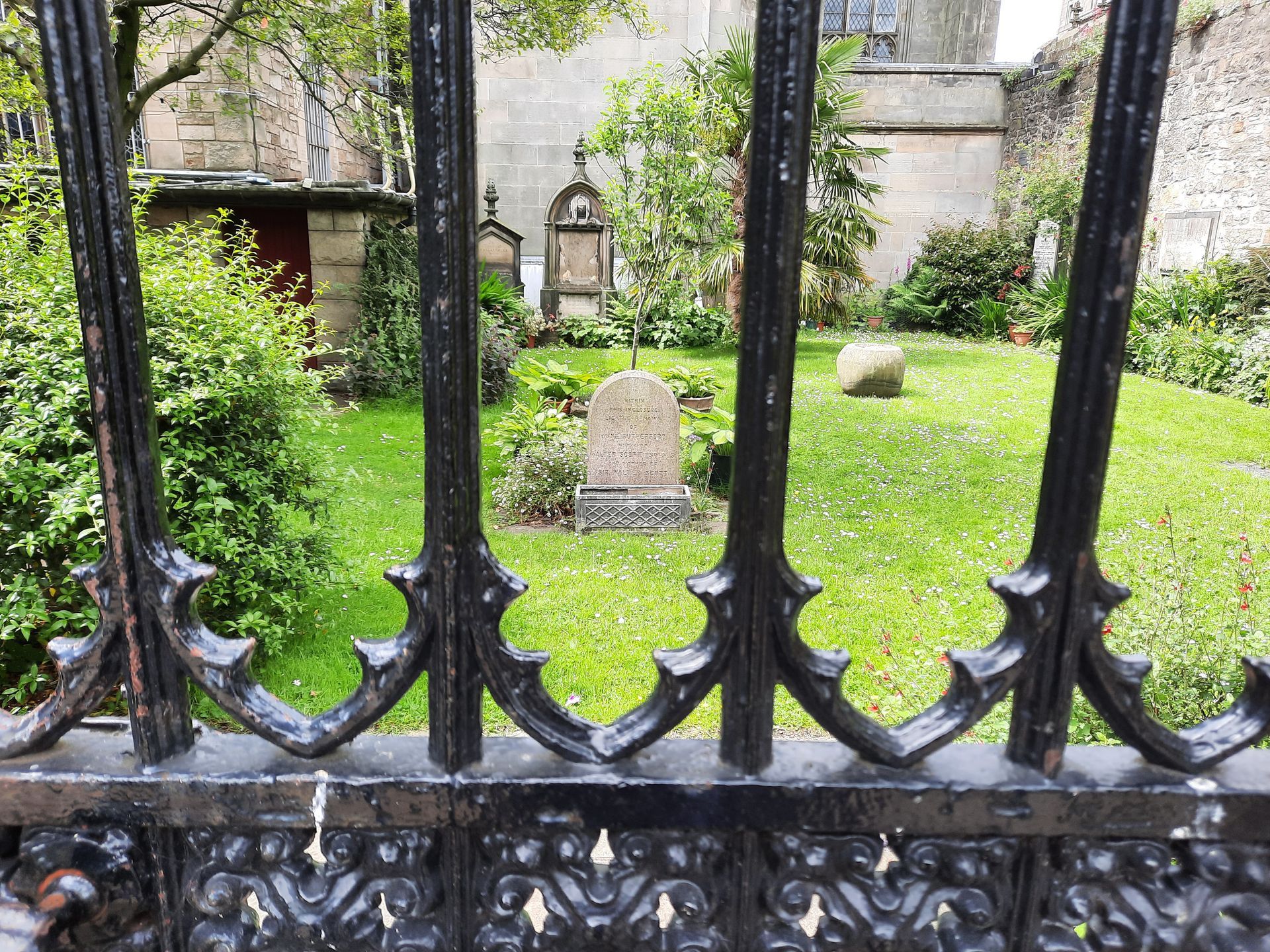
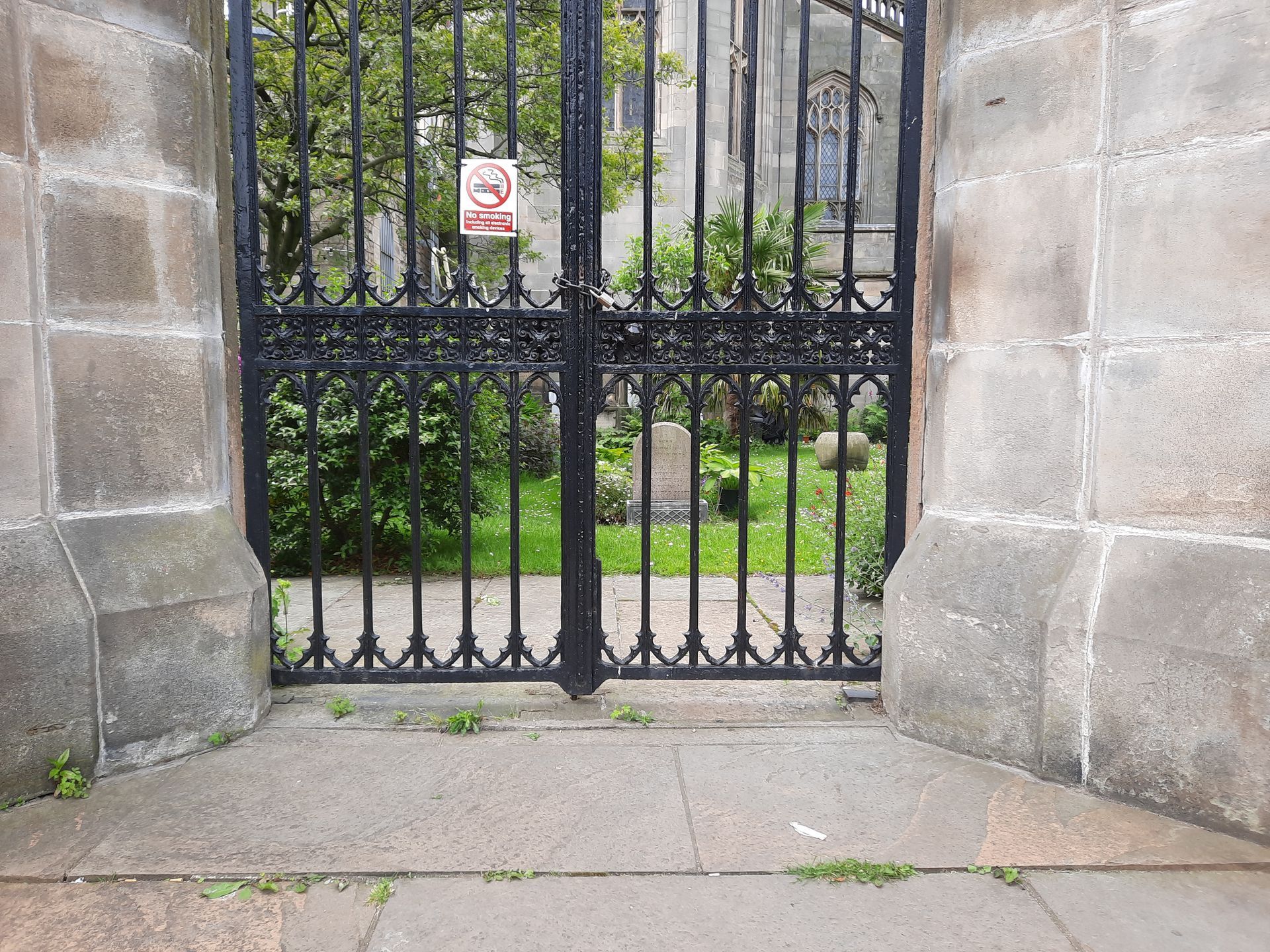
Above images: Helen Syme