
Walking Tour: Stop H
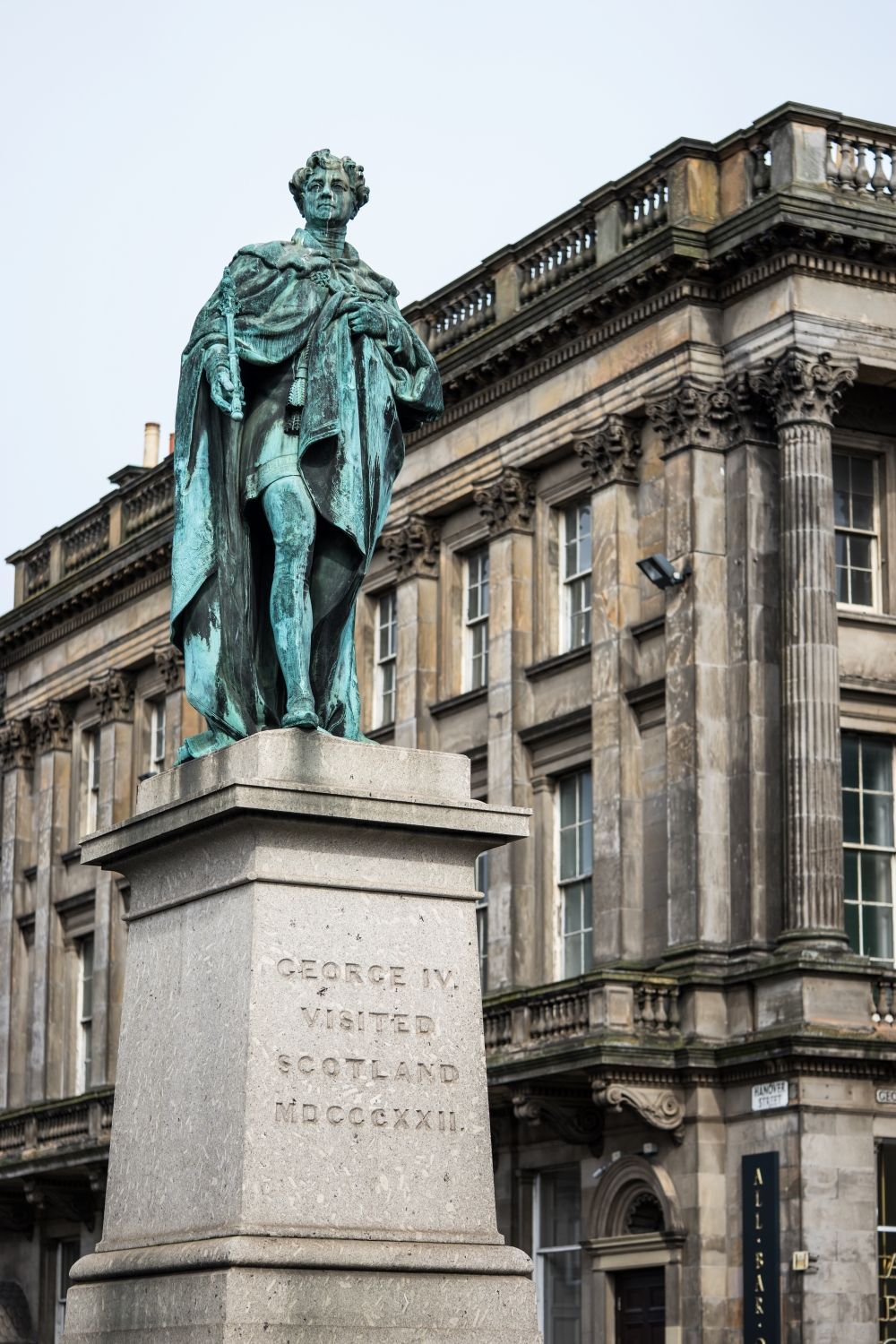
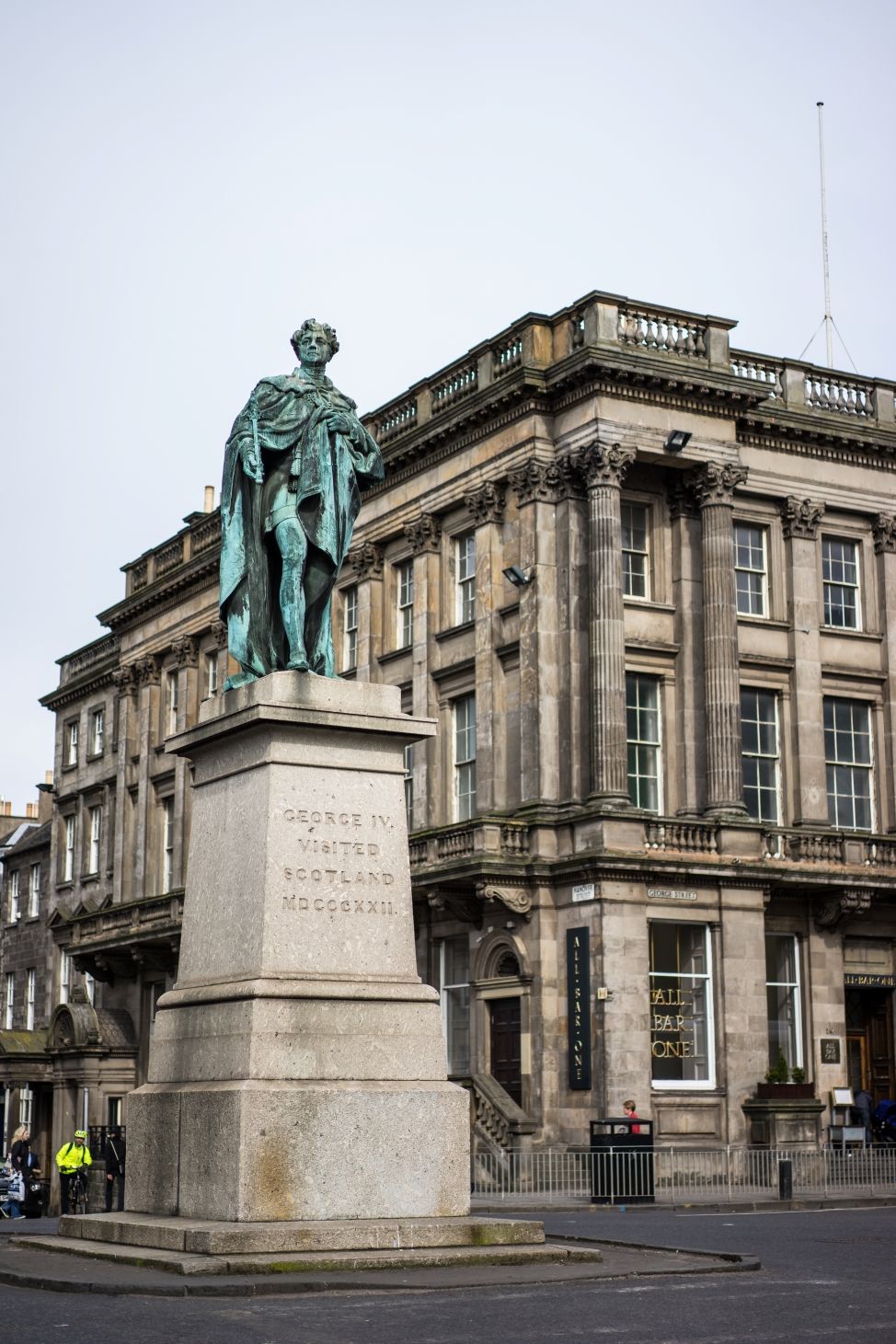
Statue of George IV
East End, George Street, EH2 2PJ

Monument linked to the 1822 royal visit organised by Scott.
GPS Coordinates: 55°57'12.8"N 3°11'51.8"W
Scott Connection
The statue commemorates the royal visit of King George IV to Edinburgh in 1822 — an event organised and choreographed by Sir Walter Scott. Scott coordinated the pageantry of the visit, advised citizens on appropriate forms of celebration, and helped shape the symbolic presentation of Scotland during the royal procession.
Scott also wrote an advisory pamphlet for the citizens of Edinburgh explaining how the royal visit should be celebrated, and composed the popular ballad “Carle, now the King’s come!” for the occasion.
Date Range Relevant to Scott: 1822 (Royal Visit to Scotland)
Current Status
Public monument in Edinburgh’s New Town.
Accessibility
Open public space. Fully accessible from George Street pavements.
Why This Place Matters
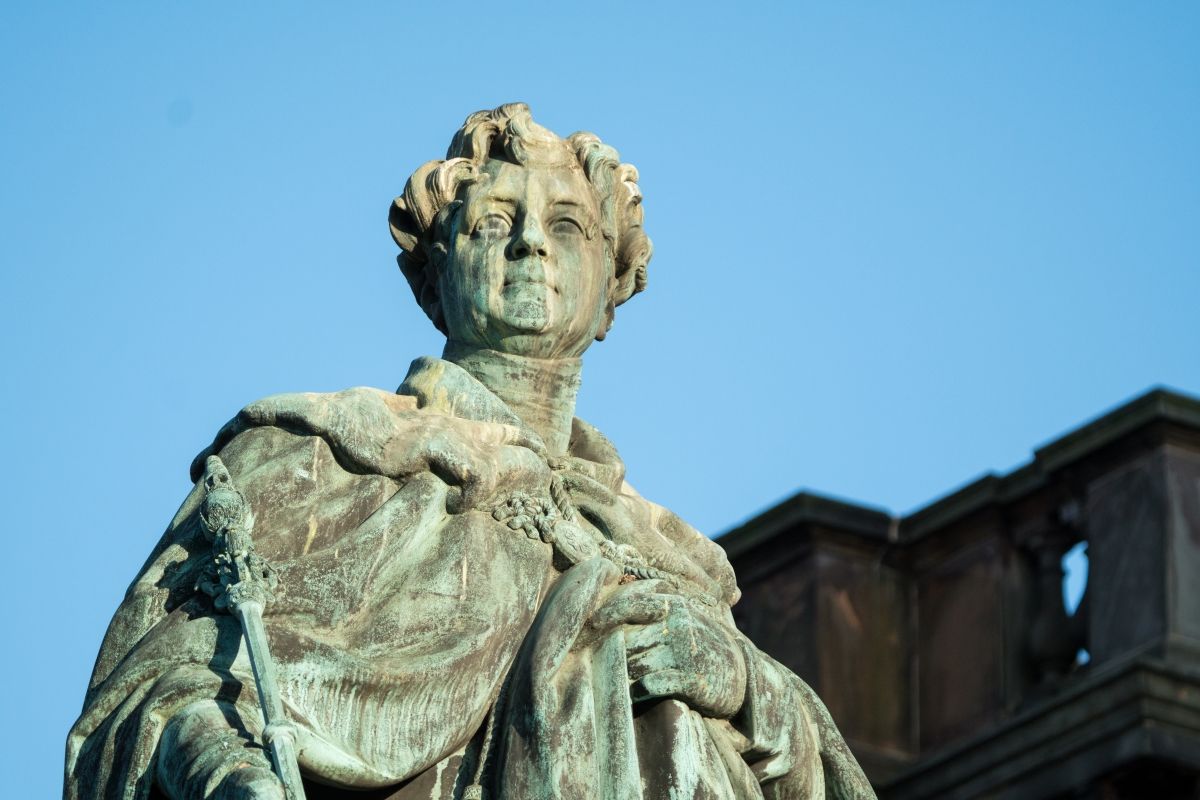
The statue, representing the king standing in Highland dress, marks one of the most remarkable cultural events in nineteenth-century Scotland — the royal visit of 1822.
This visit was not simply a ceremonial tour. It was a carefully orchestrated act of national theatre devised by Sir Walter Scott.
At the time, Scotland had not received a reigning monarch since the seventeenth century. Scott seized the opportunity to stage a sequence of ceremonies designed to present George IV as heir to Scotland’s historic kings and to reconcile the monarchy with Scottish national identity.
The celebrations transformed Edinburgh into a theatrical civic spectacle. Temporary triumphal arches and ceremonial decorations were erected along the royal procession route through the city, while banners, processions, and public displays filled the streets. Crowds gathered in vast numbers to witness the royal entry, and the ancient Honours of Scotland — the crown, sceptre, and sword rediscovered by Scott at Edinburgh Castle in 1818 — were ceremonially presented during the visit.
The statue therefore commemorates not only the monarch but also the extraordinary cultural event that reshaped Scotland’s public image.
Historical Context
George IV arrived in Scotland in August 1822 for what became known as the “King’s Jaunt.” It was the first visit by a reigning British monarch since the seventeenth century.
Scott had been asked by the Lord Provost of Edinburgh to assist with organising the visit. Drawing on his historical knowledge and imagination, he designed a programme of ceremonies intended to emphasise Scotland’s ancient traditions while reinforcing loyalty to the Crown.
The celebrations lasted nearly two weeks and included:
• ceremonial processions through Edinburgh
• public receptions at Holyrood Palace
• grand civic events across the city
• a theatrical performance of Scott’sRob Roy at the Theatre Royal
Scott encouraged participants to wear Highland dress, helping establish tartan as a visible symbol of Scottish national identity. The king himself appeared publicly in full Highland costume.
The spectacle proved enormously influential. It helped redefine Scotland’s historical image and popularised tartan and Highland symbolism across the country.
The statue was erected in 1831 and sculpted by Sir Francis Chantrey, who also created the famous bust of Sir Walter Scott for Abbotsford, from which the version in Westminster Abbey was later derived.
Scott Here
Scott played the central organisational role in the royal visit.
He wrote advisory pamphlets for the citizens of Edinburgh, helped design the ceremonial programme, and shaped the symbolic narrative that linked the Hanoverian monarchy with Scotland’s historical traditions.
Through pageantry and historical imagery, Scott effectively transformed the visit into a performance of national identity.
The Bigger Theme
Invented Tradition and National Pageantry
Scott understood that nations are often shaped through ceremony and symbolism. The 1822 royal visit blended historical memory, theatre, and politics into a powerful public spectacle.
By presenting Scotland as a unified “clan nation” loyal to the Crown, Scott helped create many of the national symbols still associated with Scotland today.
Literary Connections
Scott’s historical imagination — evident throughout the Waverley Novels — shaped the symbolic framework of the visit.
His understanding of Scottish history allowed him to transform historical traditions into a dramatic civic event that resonated with both Scots and international observers.
What to Notice On Site
The statue stands at the eastern end of George Street — a prominent location within Edinburgh’s Georgian New Town.
Its position near St Andrew Square reflects the civic importance of the monarch’s visit and the role of Edinburgh’s New Town elites in organising the celebrations.
Although the monument depicts the king, it also indirectly commemorates the cultural influence of Sir Walter Scott.
Questions to Consider
How much of what we think of today as “traditional Scotland” was shaped during the 1822 royal visit?
To what extent did Scott consciously create the visual language of Scottish national identity?
Further Reading
Emma Stead - Sir Walter Scott: Stage Manager George IV’s Visit to Edinburgh
Alasdair Hutton -George IV’s Visit to Scotland - Bicentenary Reflections
Sir Walter Scott - Hints Addressed to the Inhabitants of Edinburgh in Prospect of His Majesty’s Visit
John Prebble - The King’s Jaunt: George IV in Scotland 1822
Did You Know?
When King George IV appeared in Highland dress during the 1822 visit, the outfit caused considerable amusement.
The kilt had been made especially for the occasion at great expense, but it was cut rather short. To preserve modesty, the king wore flesh-coloured trousers beneath it.
A contemporary wit, Lady Hamilton Dalrymple, reportedly remarked:
“Since he is to be among us for so short a time, the more we see of him the better.”
Despite the gentle mockery, the image of the king in tartan helped cement Highland dress as a national symbol of Scotland.

Image credits: Lee Live: Photographer