
Walking Tour: Stop T
Theatre Royal
Waterloo Place (now Waverley Gate), EH1 3EG

Site of Edinburgh’s principal eighteenth-century theatre where Scott participated in the city’s theatrical life and supported early performances of Scottish drama.
GPS Coordinates: 55°57'11.0"N 3°11'26.7"W
Scott Connection:
Scott attended performances at the Theatre Royal, supported theatrical productions there, and played an active role in the staging of Joanna Baillie’s play The Family Legend in 1810.
Date Range Relevant to Scott: c.1790–1820s
Current Status:
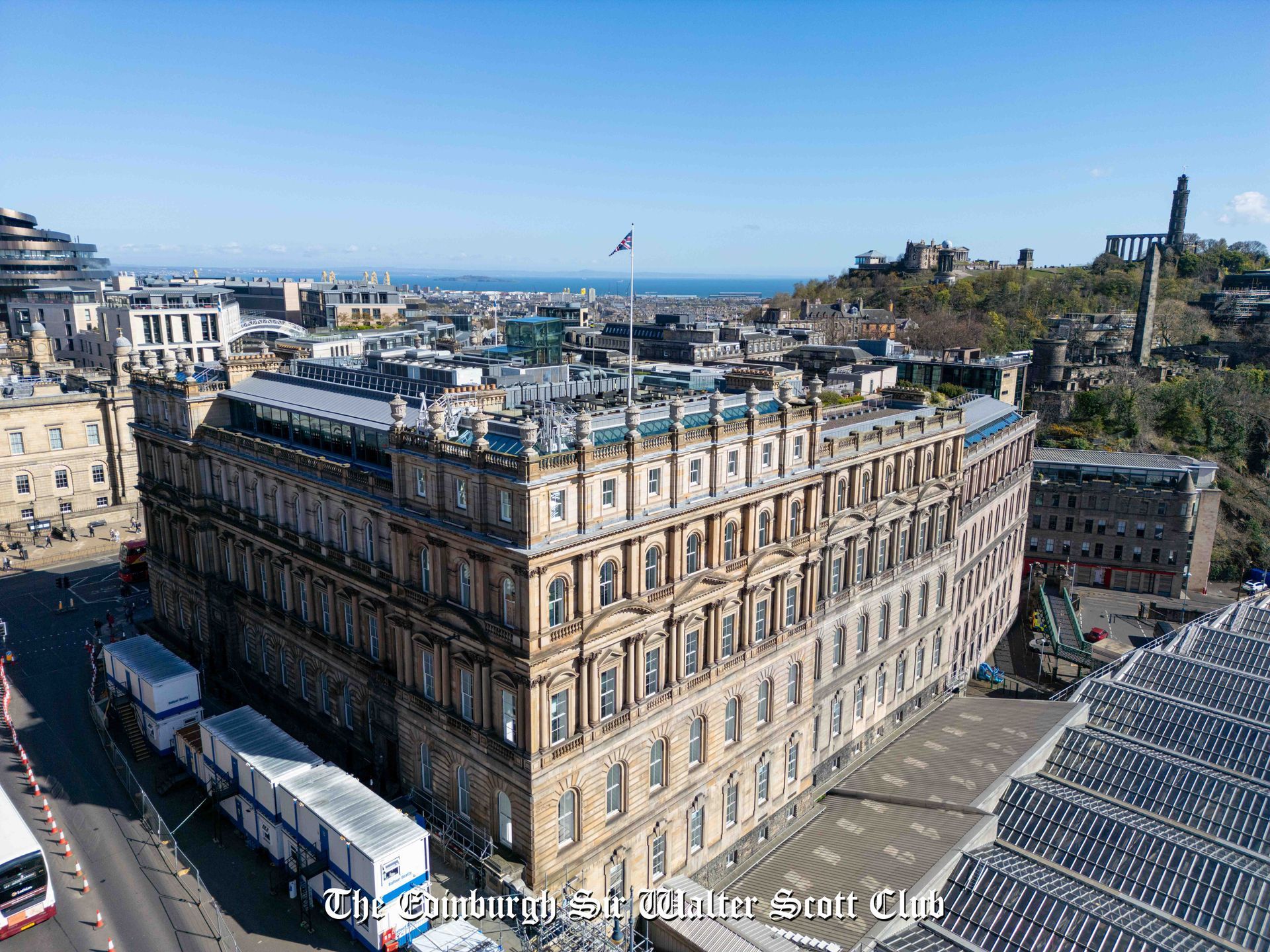
The theatre no longer survives. The site lies within the area now occupied by
Waverley Gate near Waterloo Place.
Accessibility:
Public Street. (Exterior viewing only.)
Why This Place Matters
The Theatre Royal was the principal playhouse of Edinburgh during the later eighteenth and early nineteenth centuries and formed an important centre of the city’s cultural life. Lawyers, writers, and members of the professional classes regularly attended performances there, making the theatre an important meeting point between literary culture and public entertainment.
Sir Walter Scott was closely connected with this theatrical world. He attended performances regularly, supported the theatre as a patron, and actively encouraged dramatic productions. His involvement went beyond that of an ordinary spectator: in 1809 he helped persuade Henry Siddons, son of the celebrated actress Sarah Siddons, to move from London’s Drury Lane to Edinburgh to take over the management of the Theatre Royal.
The arrival of the Siddons family marked the beginning of a particularly successful period in the theatre’s history. Scott’s encouragement of the company and his later support for Scottish dramatic works — most notably the staging of Joanna Baillie’s The Family Legend in 1810 — illustrate his commitment to developing a distinctive Scottish theatrical culture.
The Theatre Royal therefore represents an important dimension of Scott’s life in Edinburgh: his participation in the city’s vibrant theatrical society and his role in promoting Scottish drama on the national stage.
Historical Context
The Theatre Royal discussed here was the playhouse built in Shakespeare Square in 1769, near the eastern end of Princes Street. For almost ninety years it served as Edinburgh’s principal theatre and a focal point of the city’s dramatic and social life.
A significant new phase began in 1809, when the actor and theatre manager Henry Siddons, son of the celebrated tragedienne Sarah Siddons, arrived in Edinburgh with his wife Harriot Siddons to take over the management of the theatre. Encouraged in part by Sir Walter Scott, their move from London helped stabilise the theatre’s fortunes and raised the standard of its productions.
After Henry Siddons’s death in 1815, Harriot Siddons continued to manage the theatre and became the first woman to hold the patent of a British Theatre Royal. During this period her younger brother William Henry Murray worked under her management and later succeeded to the theatre patent himself in 1830, continuing the family’s influence on Edinburgh’s theatrical life.
The theatre stood on ground overlooking the valley later occupied by Waverley Station. It remained in operation until 1859, when the building was demolished to make way for the construction of the General Post Office. That nineteenth-century structure was later incorporated into the modern Waverley Gate complex, which now marks the approximate site of Edinburgh’s most important eighteenth- and early nineteenth-century theatre.
Scott Here
Scott was actively involved in the theatrical culture of Edinburgh. One of the most significant moments came in 1810, when he helped organise and promote the staging of Joanna Baillie’s tragedy The Family Legend at the Theatre Royal.
Baillie was a respected Scottish dramatist, and Scott worked energetically to ensure the success of the production, rallying support among Edinburgh’s literary and social circles. The play proved highly successful and represented an important moment in the promotion of Scottish drama on the Edinburgh stage.
Scott’s wife Charlotte Scott was also an enthusiastic theatre-goer during the early years of their marriage, and the theatre formed part of the couple’s social life in the city.
In later years the relationship between Scott and the theatre took another form when dramatic adaptations of his novels began to appear on stage.
The Bigger Theme
The Theatre Royal illustrates how literature and theatrical performance were closely connected in Scott’s Edinburgh. The stage provided a powerful means of presenting historical themes, national stories, and literary characters to large public audiences.
Scott’s engagement with the theatre went beyond that of an ordinary spectator. As a patron and supporter of the theatre, he helped promote the development of Scottish historical drama, most notably by encouraging and assisting the successful staging of Joanna Baillie’s The Family Legend in 1810. His efforts reflected a wider ambition to demonstrate that Scottish subjects and writers could flourish on the national stage.
In later years the relationship moved in the opposite direction: Scott’s own novels became a rich source for theatrical adaptation. Dramatisations of works such as Rob Roy brought his characters before popular audiences and contributed to the development of what later came to be recognised as Scottish national drama.
Literary Connections
Scott’s novels quickly became popular material for stage adaptation. One of the most successful examples was the dramatised version of Rob Roy, in which the character Bailie Nicol Jarvie became a favourite with audiences.
The role was famously played by the comic actor Charles Mackay, widely known as “the real Mackay”. His lively portrayal of Jarvie helped bring Scott’s characters vividly to life on the stage and contributed to the popularity of theatrical adaptations of Scott’s works.
What to Notice On Site
The original Theatre Royal building no longer survives. After the theatre was demolished in 1859, the site was redeveloped for the construction of the General Post Office, an important nineteenth-century government building serving Edinburgh’s expanding communications network.
The Post Office building itself was later incorporated into the modern Waverley Gate complex near Waterloo Place. The surrounding landscape has also been dramatically reshaped by the construction and expansion of Waverley Station, which removed many earlier buildings in the valley between the Old and New Towns.
The theatre therefore survives today only as a historical location within Edinburgh’s evolving urban landscape.
Questions to Consider
How important were theatres in shaping the cultural life of eighteenth-century cities?
What role did stage adaptations play in spreading the popularity of Scott’s novels?
How did Edinburgh’s urban development alter the physical landscape of its earlier cultural institutions?
What contribution did stage adaptations of Scott’s novels make to the development and popularity of what later became known as Scottish national drama?
Further Reading
Lockhart, J. G. - Memoirs of the Life of Sir Walter Scott.
Millgate, Jane. - Walter Scott: The Making of the Novelist.
Graham, Helen -
The Real Mackay: Scott’s Favourite Comedian.
Did You Know?
In 1794 Sir Walter Scott was not merely a spectator at the Theatre Royal. As a young advocate he briefly became involved in the dispute between the theatre’s management and its audience over seating privileges. Scott later recalled attempting to mediate between the opposing sides — an early glimpse of the legal and negotiating skills that would become central to his professional life.
Historical Images
Image coming soon
