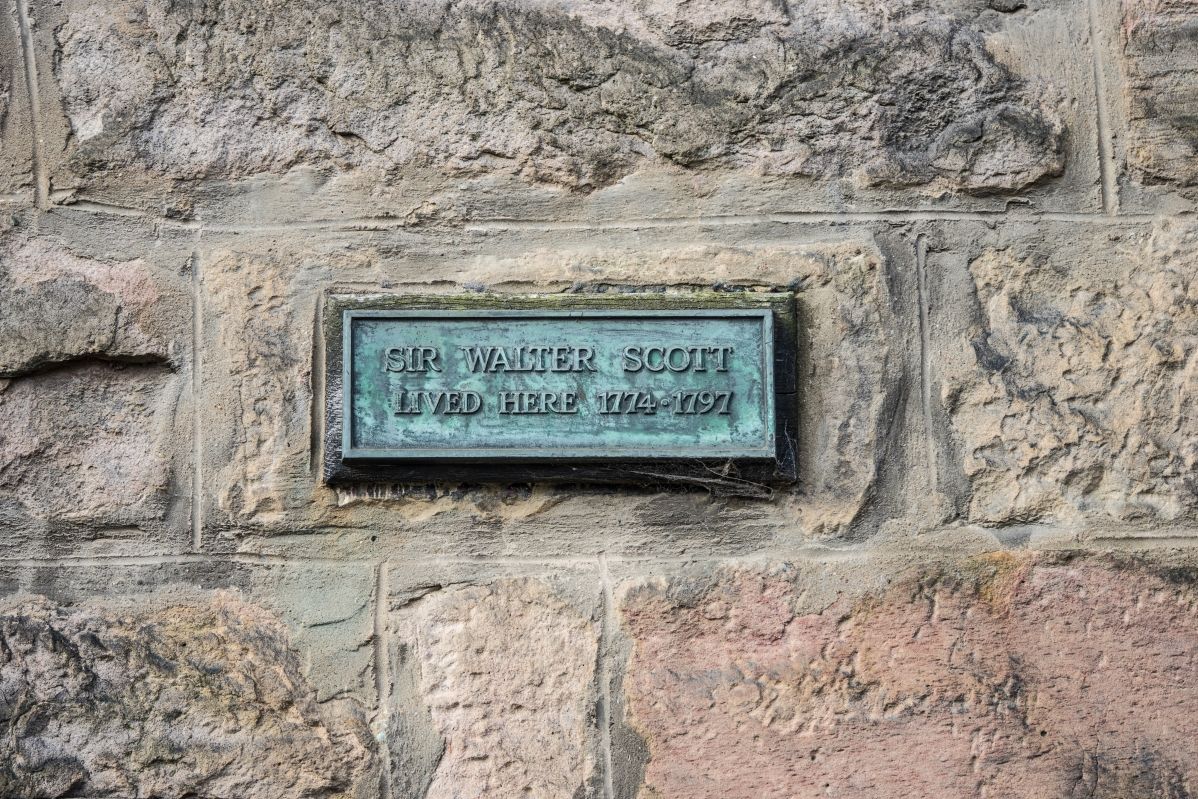

25 George Square

Enlightenment Networks and the Formation of a Romantic Mind
Address
25 George Square
Postcode: EH8 9LD
GPS Coordinates: 55°56'35.5"N 3°11'24.5"W
Scott Connection
Student lodgings and family residence within Enlightenment Edinburgh; formative intellectual environment.
Date Range Relevant to Scott: c. 1778–1797 (family residence and student years; dates approximate and overlapping)
Current Status
University building (University of Edinburgh precinct)
Accessibility
Street access; step-free pavement areas; interiors subject to university use and restrictions. Exterior viewing only.
Why This Place Matters
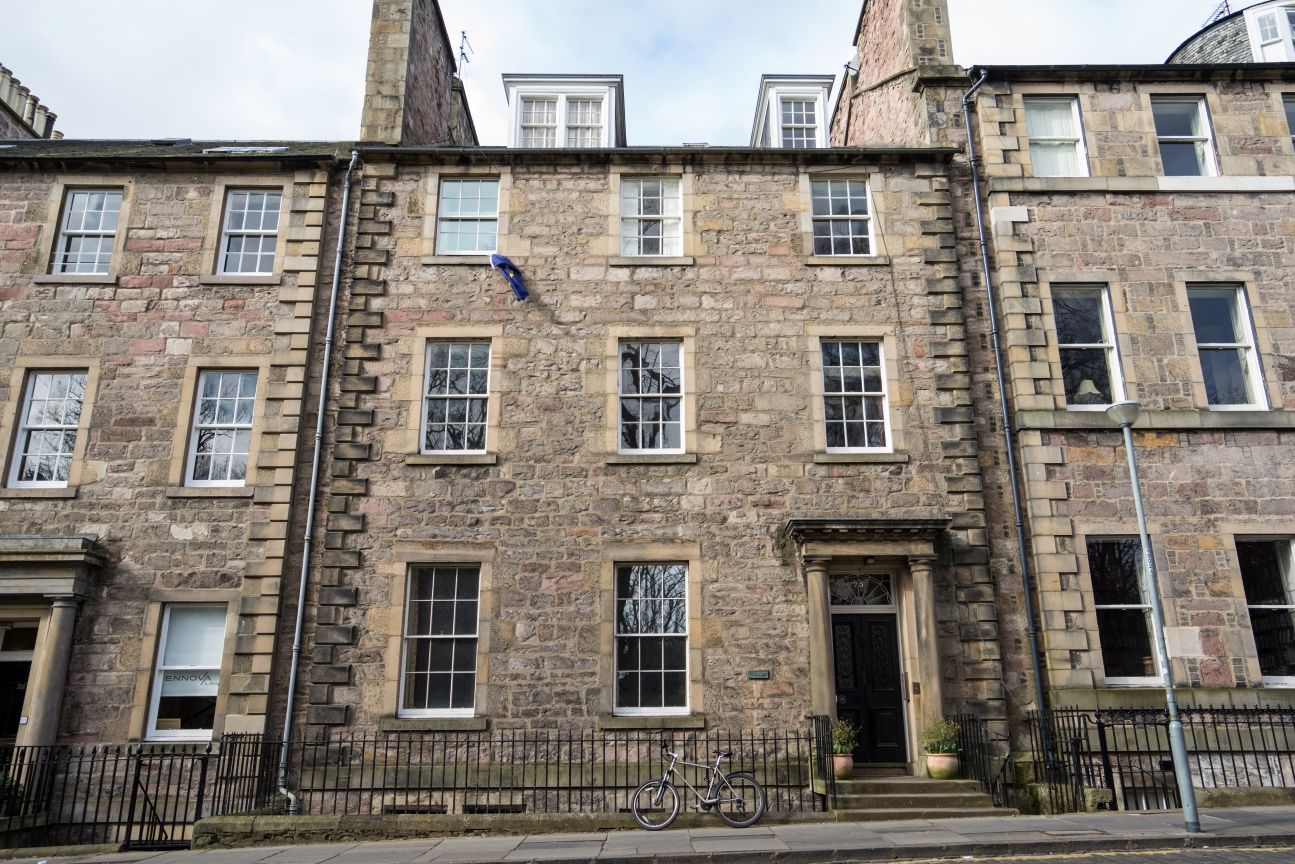
George Square situates Scott at the intellectual centre of late eighteenth-century Edinburgh. Unlike the compressed closes of College Wynd, this was part of the city’s expanding, ordered south side — associated with professional families, university life, and Enlightenment sociability.
Here Scott lived during formative years that combined legal study, voracious reading, antiquarian collecting, and social observation. The square’s proximity to the University of Edinburgh placed him within a culture shaped by philosophy, jurisprudence, classical education, and historical inquiry.
This address reminds us that Scott did not emerge in opposition to the Enlightenment. He was formed within it. His later Romantic historical imagination grew out of disciplined exposure to legal reasoning, classical models, and civic debate. George Square represents not retreat from modernity but participation in it.
Historical Context
In the late eighteenth century, George Square lay on the southern edge of Edinburgh’s expanding urban footprint. Developed in the 1760s, it reflected the same spirit of order and rational planning that shaped the New Town.
The University of Edinburgh was at the height of its international reputation. Thinkers associated with moral philosophy, law, medicine, and history contributed to what we now call the Scottish Enlightenment.
The square housed professional families — advocates, writers, physicians — whose domestic interiors often doubled as intellectual spaces. Conversation, collecting, and reading were woven into daily life. It was within this environment that Scott’s historical imagination was disciplined rather than merely romanticised.
Scott Here
Scott’s father, Walter Scott, Writer to the Signet, maintained a household here that combined professional seriousness with cultural aspiration.
During these years Scott attended the Royal High School and later studied at the University of Edinburgh. He began assembling small antiquarian collections — coins, relics, weapons — and developed his fascination with Scottish history and border balladry.
The square’s proximity to the university facilitated his exposure to legal training and Enlightenment historiography. It also placed him within networks of aspiring professionals whose ambitions were civic as well as literary.
This was the period in which the “archive instinct” matured: Scott as collector, reader, and historical synthesiser.
The Bigger Theme
Enlightenment Formation and Romantic Mediation
Scott’s later work is often framed as a Romantic revival of Scotland’s past. Yet George Square demonstrates that his historical imagination was shaped within Enlightenment frameworks of evidence, documentation, and legal reasoning.
His novels do not reject rational inquiry; they mediate between analytic modernity and inherited memory. George Square symbolises that intellectual hinge.
Literary Connections
• The Heart of Midlothian — engagement with law, civic justice, and moral judgement reflects Scott’s legal education and urban awareness.
•
Redgauntlet — retrospective narration shaped by memory and historical consciousness, echoing formative intellectual influences.
•
Guy Mannering — tension between professional modernity and older loyalties mirrors the social contrasts Scott absorbed in youth.
Though not depicted directly, George Square represents the disciplined intellectual substratum beneath the imaginative surface of the Waverley Novels.
What to Notice On Site
• The geometric order of the square — contrast with the Old Town’s compression.
• The proximity to university buildings — education embedded in domestic space.
• The scale of façades — professional respectability rather than aristocratic display.
• The sense of openness compared to College Wynd.
Consider how urban planning shapes intellectual temperament.
Questions to Consider
• How did Enlightenment legal culture shape Scott’s approach to historical fiction?
• Does Romanticism in Scott represent reaction, continuation, or mediation?
• How might living in a professional square influence one’s sense of civic identity?
Further Reading
• J.G. Lockhart,
Memoirs of the Life of Sir Walter Scott
• Walter Scott,
Ashestiel Memoir (in David Hewitt (ed.),
Scott on Himself, 1981)
•
Edinburgh Edition of the Waverley Novels
(General Editor: David Hewitt)