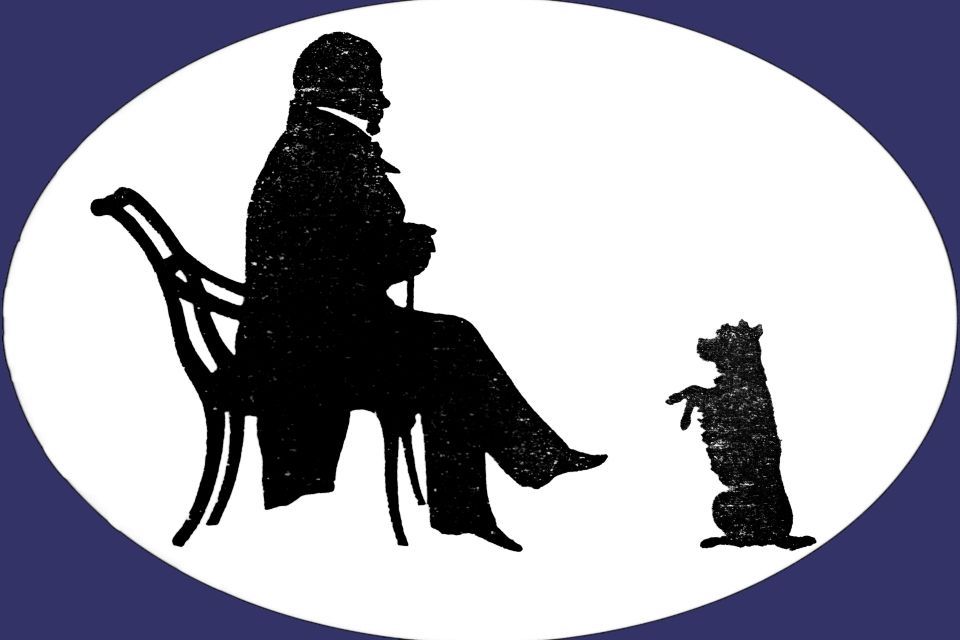

Walking Tour: Stop 19
Old Calton Burial Ground
Waterloo Place, EH7 5AA

Burial ground containing monuments linked to Scott’s era and associates.
GPS Coordinates: 55°57'13.3"N 3°11'09.2"W
Scott Connection:
Burial place of several figures connected with Sir Walter Scott’s literary and publishing circle, including the novelist David Macbeth Moir, a close friend and correspondent of Scott.
Date Range Relevant to Scott: Early nineteenth century; monuments erected during and after Scott’s lifetime.
Current Status:
Historic cemetery and public heritage site.
Accessibility:
Public access; some uneven ground and steep paths.

image coming soon
Why This Place Matters
Old Calton Burial Ground forms part of the wider commemorative landscape of nineteenth-century Edinburgh. Situated beneath Calton Hill, the cemetery quickly became associated with monuments celebrating figures connected with Scotland’s political, intellectual, and literary life.
Although Sir Walter Scott himself is buried at Dryburgh Abbey, several members of his wider circle were interred here. Among them is David Macbeth Moir, physician, poet, and novelist, who corresponded with Scott and moved within the same literary networks of early nineteenth-century Scotland.
The cemetery therefore represents another strand of the intellectual community that surrounded Scott. It reminds visitors that the literary culture of the period was not created by Scott alone but by a wider group of writers, editors, publishers, and critics who shaped Scotland’s reputation as a centre of literary life.
Historical Context
Old Calton Burial Ground was established in 1718 when the overcrowding of Edinburgh’s churchyards made new burial grounds necessary. Its location just beyond the eastern edge of the Old Town placed it close to the expanding New Town district.
During the eighteenth and nineteenth centuries the cemetery acquired a number of striking monuments, including the Political Martyrs’ Monument, commemorating reformers transported to Australia in the 1790s, and the monument to the philosopher David Hume nearby on Calton Hill.
The burial ground therefore sits within a broader landscape of civic memory, where monuments express political ideals, intellectual achievements, and national identity.
Scott Here
Scott was familiar with Calton Hill and the surrounding district throughout his life in Edinburgh. The hill and its monuments formed part of the dramatic skyline visible from many parts of the New Town.
Members of Scott’s literary and social circle were later buried in Old Calton Burial Ground, including David Macbeth Moir, whose writings and correspondence place him within the same literary culture that Scott helped to shape.
The site therefore represents a quieter but significant connection with the network of writers who formed part of Scotland’s nineteenth-century literary world.
The Bigger Theme
Commemoration and Cultural Memory
Edinburgh’s cemeteries function not only as burial places but also as monuments to the intellectual life of the city. Old Calton Burial Ground forms part of a landscape in which political reformers, philosophers, and writers are remembered together.
For visitors following Scott’s footsteps, the cemetery illustrates how the city commemorated the generation of thinkers and writers who helped shape Scotland’s cultural identity during the Enlightenment and Romantic periods.
Literary Connections
The burial of David Macbeth Moir links the cemetery with the literary culture surrounding Scott. Moir contributed to the Blackwood’s Magazine circle and maintained correspondence with Scott, reflecting the close-knit nature of Edinburgh’s early nineteenth-century literary community.
What to Notice On Site
Look for the dramatic setting beneath Calton Hill, where the cemetery lies surrounded by some of Edinburgh’s most striking monuments.
Several memorials within the burial ground reflect the wider intellectual and political world in which Scott lived — including monuments to reformers, soldiers, and members of Edinburgh’s professional classes.
The site also offers one of the best vantage points for viewing the monuments of Calton Hill, which form a powerful symbolic backdrop to the cemetery.
Questions to Consider
How do cemeteries function as places of public memory as well as burial?
What does the mixture of political, intellectual, and literary monuments reveal about nineteenth-century Edinburgh?
Further Reading
J. G. Lockhart - Memoirs of the Life of Sir Walter Scott
David Hewitt - Scott on Himself
Andrew Grant - Old and New Edinburgh
