
Walking Tour: Stop 8
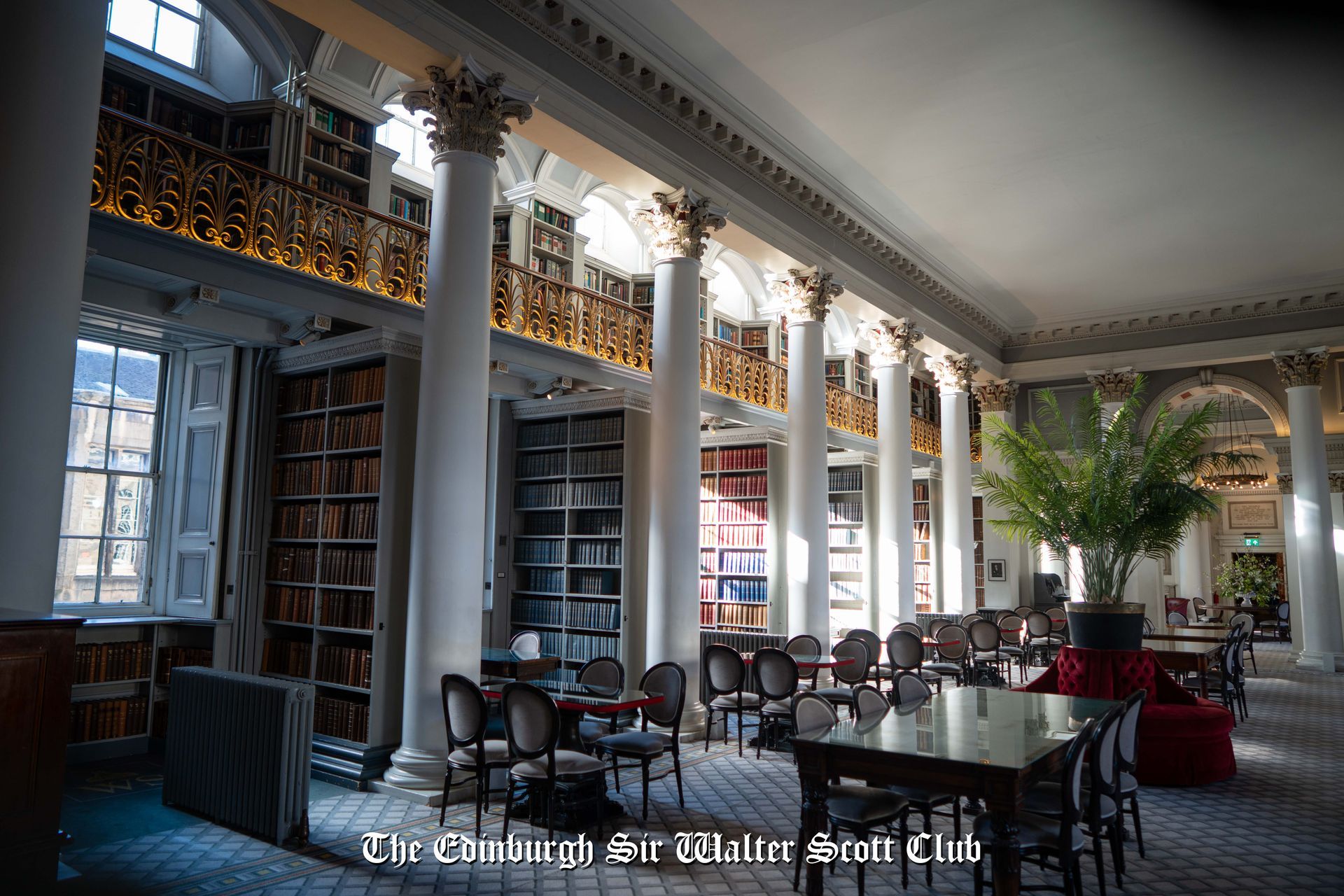
The Signet Library
Parliament Square, EH1 1RF

Professional setting linked to Scott’s legal career.
GPS Coordinates: 55°56'57.1"N 3°11'29.9"W
Scott Connection:
Part of the legal and professional culture of Parliament Square within which Scott worked as Clerk of Session.
Date Range Relevant to Scott: c. 1792–1832
Current Status:
Historic law library; headquarters of the Society of Writers to the Signet; event venue.
Accessibility:
Level access from West Parliament Square; interior access dependent on opening hours and private functions.

Audio guide narrated by Alasdair Hutton
Why This Place Matters
The Signet Library stands at the centre of the legal quarter that shaped Scott’s working life. Although not himself a Writer to the Signet, Scott operated within the same professional ecosystem centred on Parliament Square — a tightly interwoven community of advocates, clerks, writers, judges, and petitioners.
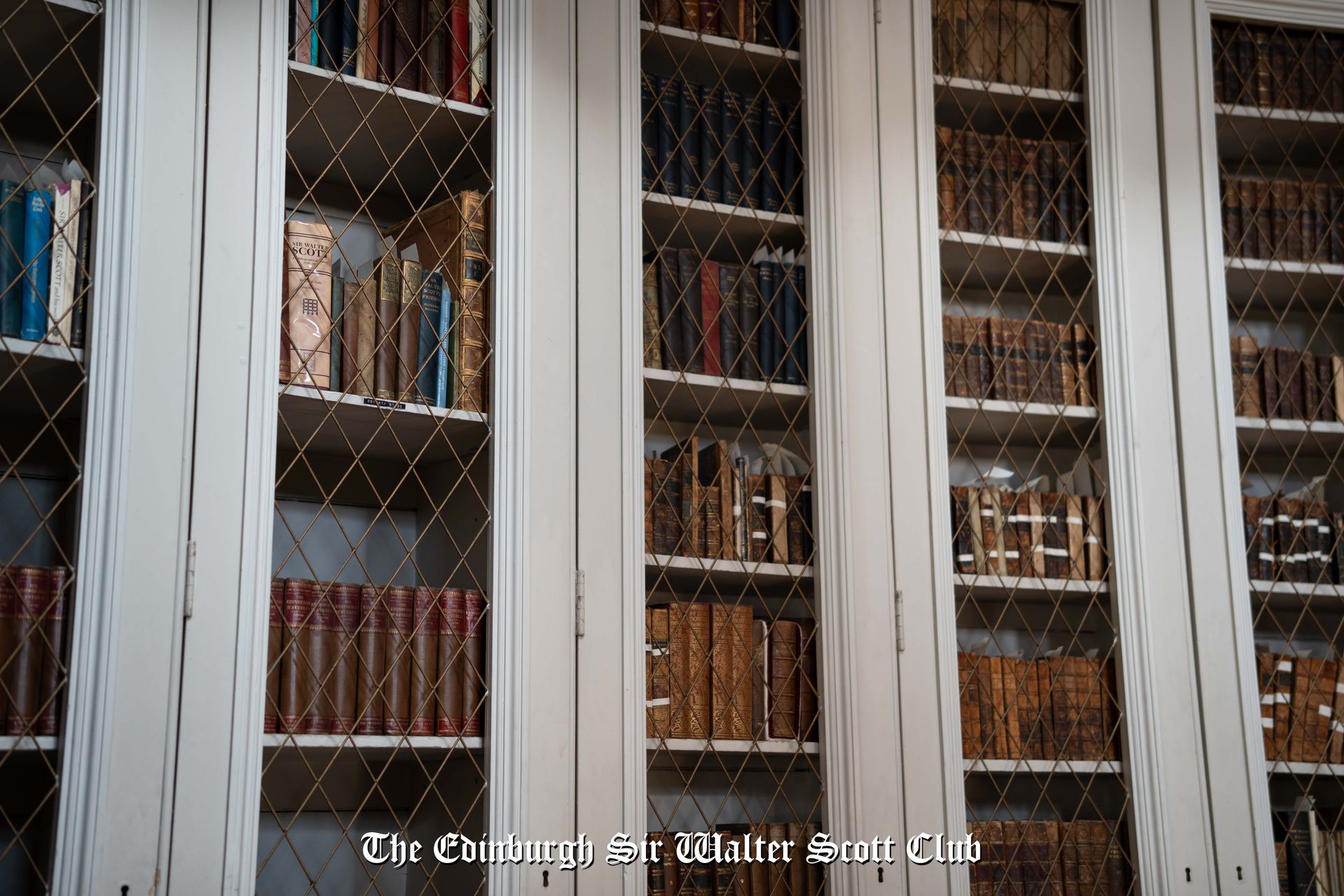
The Society of Writers to the Signet represented one of Scotland’s most senior legal bodies, responsible for preparing documents requiring the royal signet. Its Library was not merely a collection of books but a working environment of precedent, drafting, and documentary authority. Scott’s daily exposure to such institutions situates his literary career within a culture of record-keeping, procedural order, and professional continuity.
This building reminds us that Scott’s fiction emerged alongside disciplined legal practice rather than in isolation from it.
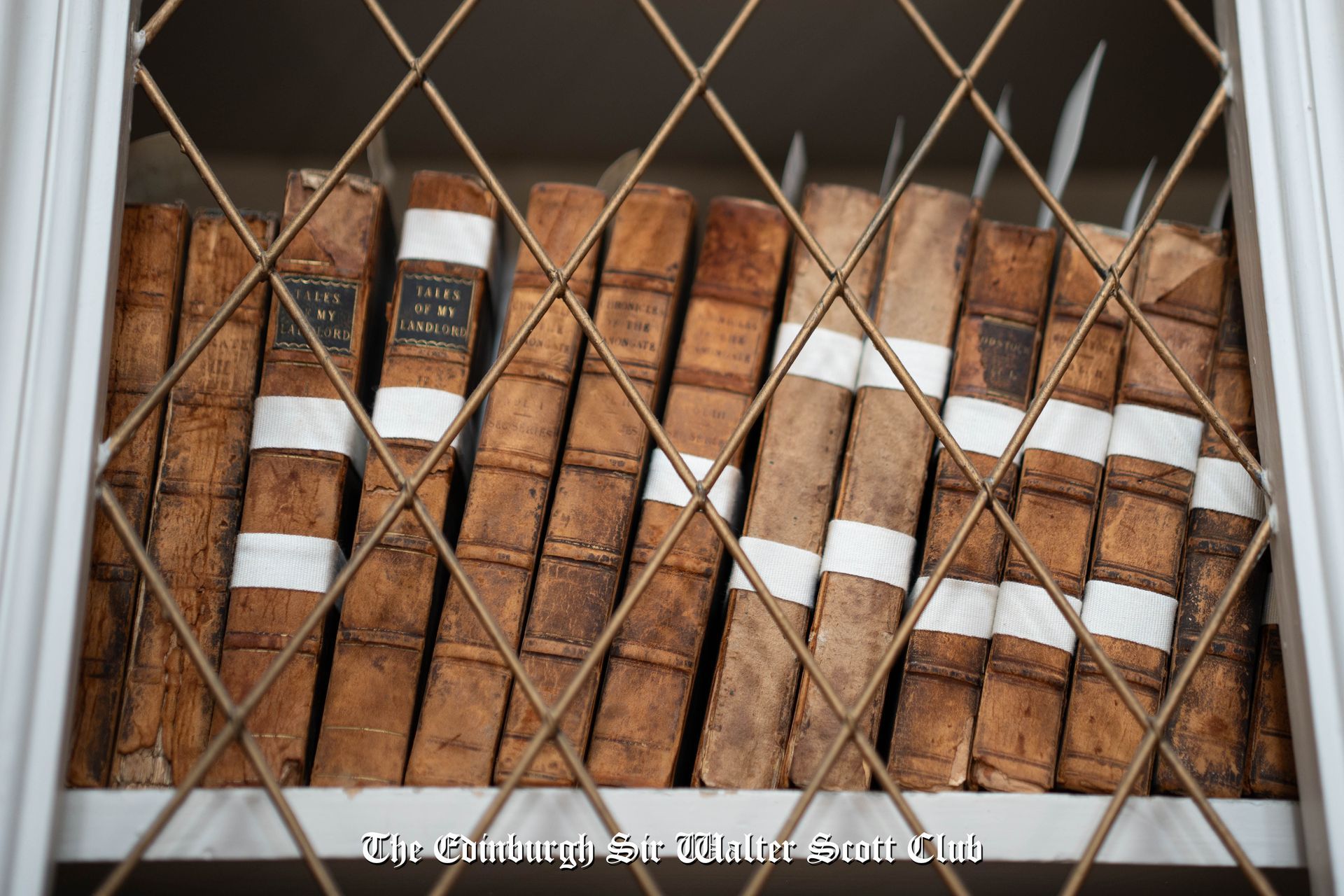
The collections of the Society of Writers to the Signet also preserve important materials relating to Scott’s life and career. These include literary manuscripts, autograph letters, legal documents connected with his apprenticeship and professional work, and financial papers relating to the Ballantyne printing partnership and the crisis of 1826. Together they provide valuable insight into Scott’s legal, literary, and publishing worlds.
Selected Sir Walter Scott Materials in the WS Society Collections:
• Original manuscript of The Bride of Lammermoor.
• Original manuscript of the poem The Eve of St John.
• Manuscript of Scott’s Prefatory Memoir of Oliver Goldsmith.
• A collection of autograph letters by Sir Walter Scott, including correspondence with James Ballantyne and other associates.
• Legal and financial papers of James Ballantyne & Company, including documents relating to the 1826 financial crisis.
• The record of Scott’s legal apprenticeship with his father, Walter Scott WS (1786).
• An original minute and warrant relating to the sealing of Scott’s repositories after his death in September 1832.
• A death mask of Sir Walter Scott and other commemorative portraits and busts.
Extended list below.
Historical Context
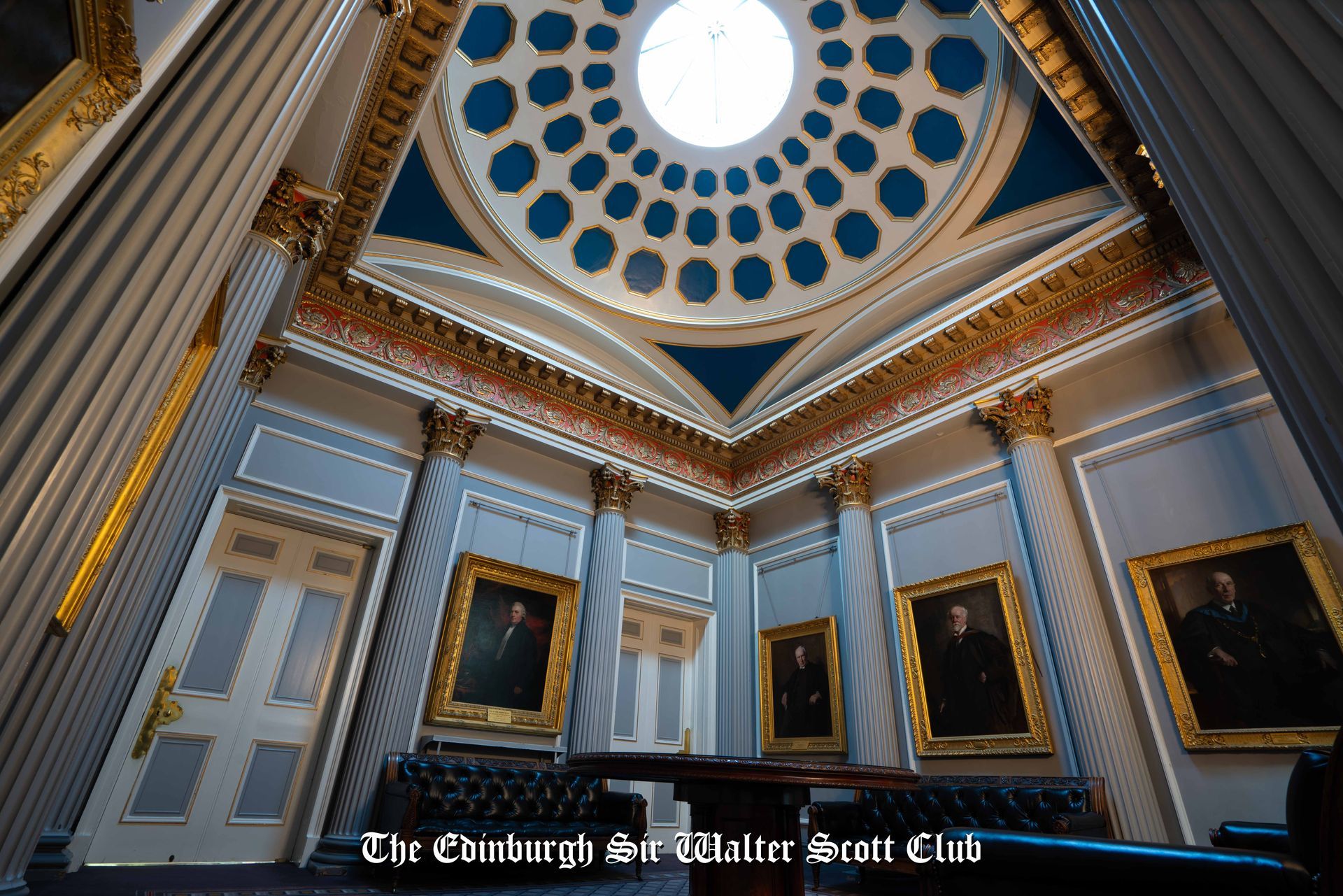
The Society of Writers to the Signet dates formally from 1594, though its origins are earlier. Its members were solicitors entitled to prepare documents sealed with the King’s Signet. The present Library building, completed in the early nineteenth century to designs by Robert Reid, reflects the restrained neoclassical style associated with Enlightenment Edinburgh.
During Scott’s lifetime, the legal institutions surrounding Parliament House formed one of the most active administrative centres in Scotland. Legal argument, documentary preparation, and procedural regulation structured civic life. Parliament Square was therefore both a place of employment and a social theatre of professional interaction.
Scott Here
Scott was admitted to the Faculty of Advocates in 1792 and served as Clerk of Session for over three decades. His working day unfolded within the legal district — consulting papers, recording decisions, and observing the personalities and disputes that animated Scottish law.
Though not a member of the WS Society, Scott’s father was a Writer to the Signet, and Scott moved within the same professional networks. The legal culture of the Signet Library and its surrounding institutions formed part of the disciplined framework that underpinned his literary production.
His fiction reflects familiarity with documentation, testimony, mediation, and institutional authority — habits cultivated in precisely this environment.
The Bigger Theme
Law, History, and Literature as a Single Practice
Scott’s historical fiction does not invent a past free from structure; it reconstructs it through habits akin to legal reasoning. Evidence is weighed, conflicting narratives are balanced, and authority is tested against circumstance. The professional culture embodied in the Signet Library — precedent, record, documentation — parallels the narrative discipline of the Waverley novels.
Rather than separating his legal and literary lives, this site demonstrates their interdependence.
Literary Connections
• The Heart of Midlothian — Detailed engagement with legal procedure, civic authority, and the moral consequences of judgment.
• The Antiquary — Emphasis on documents, charters, and interpretation reflects habits of documentary scrutiny.
• Redgauntlet — Structured around letters and testimony, mirroring the mediation of evidence.
What to Notice On Site
• The building’s neoclassical symmetry and ordered interior space.
• Its immediate proximity to Parliament Hall and St Giles’ Cathedral.
• The contrast between institutional regularity here and the irregular closes of the Old Town.
• The atmosphere of continuity and professional tradition.
Questions to Consider
• How might daily engagement with legal documentation shape a writer’s approach to historical evidence?
• Does Scott’s narrative balance resemble judicial reasoning?
• In what ways does professional discipline support imaginative reconstruction?
Further Reading
J.G. Lockhart,
Memoirs of the Life of Sir Walter Scott
Walter Scott,Ashestiel Memoir
(in David Hewitt (ed.),
Scott on Himself, 1981)
Dr Robert Pirrie WS,Subsidiary Toast, 115th Annual Dinner (2025)
Official Website
Key Scott Materials in the Signet Library Collections
Literary Manuscripts
The Society holds original manuscript material relating to Scott’s literary work, including manuscripts of The Bride of Lammermoor, The Eve of St John, and Scott’s Prefatory Memoir of Oliver Goldsmith. These documents illustrate Scott’s working process and his role not only as novelist and poet but also as literary editor.
Correspondence and Personal Letters
The collection includes numerous autograph letters by Scott written between 1801 and 1831, addressed to legal colleagues, publishers, and friends. These letters show Scott’s daily life as a practising advocate and literary figure within Edinburgh’s legal and publishing world.
Notable correspondents include:
- James Hope WS (Deputy Keeper of the Signet)
- Charles Erskine of Shielfield
- Sir Peregrine Maitland
- Elizabeth Bond, author of Letters of a Village Governess
Documents relating to the Ballantyne Partnership
A particularly important group of documents concerns the partnership between Scott and the printer James Ballantyne, including:
- partnership contracts
- financial ledgers
- creditor records from the 1826 financial crisis
- documents relating to the later Ballantyne–Lockhart controversy
These papers provide insight into the complex financial and publishing arrangements behind the Waverley novels.
Legal Records of Scott’s Early Career
The Society preserves records relating to Scott’s training as a lawyer, including the entry recording the beginning of his legal apprenticeship with his father in 1786.
These materials connect Scott directly with the professional world of the Writers to the Signet.
Visual and Commemorative Objects
The collection also includes visual artefacts connected with Scott, such as:
- a death mask of Scott
- a bust of Scott after Francis Chantrey
- engravings after portraits by Henry Raeburn
- early prints depicting Scott and his world
These objects reflect the visual culture surrounding Scott’s fame in the nineteenth century.