
Walking Tour: Stop 7
Parliament Hall
Parliament House, EH1 1RF

Scott’s workplace as Clerk of Session.
GPS Coordinates: 55°56'56.8"N 3°11'25.8"W
Scott Connection
The hub of Scott’s professional legal life — where he worked as Clerk of Session and absorbed speech, dispute, and civic debate that fed his narrative imagination.
Date Range Relevant to Scott: c. 1799–1832 (throughout Scott’s legal career in Edinburgh)
Current Status
Historic and working legal courts building (Court of Session); public access limited; tours/times vary with court operations.
Accessibility
Street access; interior access subject to operational restrictions; historic stone steps and corridors.
Photography strictly prohibited.
Audio guide narrated by Alasdair Hutton
Why This Place Matters
Parliament Hall stands at the heart of the Scottish legal world — and it sits at the heart of Scott’s dual life as lawyer and novelist. For decades, Scott spent long hours here as Clerk of Session, immersed in argument, procedure, equity, and judicial personality. His daily work was not separate from his imaginative life: it was raw material for it.
Both Peter Garside and Dr Lucy Wood emphasise that Edinburgh’s civic architecture and procedural cultures provided Scott with a living archive of voices, comportment, and moral theatre that would resurface in the texture of his fiction. Parliament Hall was not a backdrop; it was a training ground in rhetoric, human foible, and the texture of dispute — where the law was felt as gesture, language, and civic narrative rather than abstract code.
This site underscores that Scott’s novels do not simply depict history — they mediate it through the procedural, argumentative, and performative culture that he knew intimately as part of his legal life.
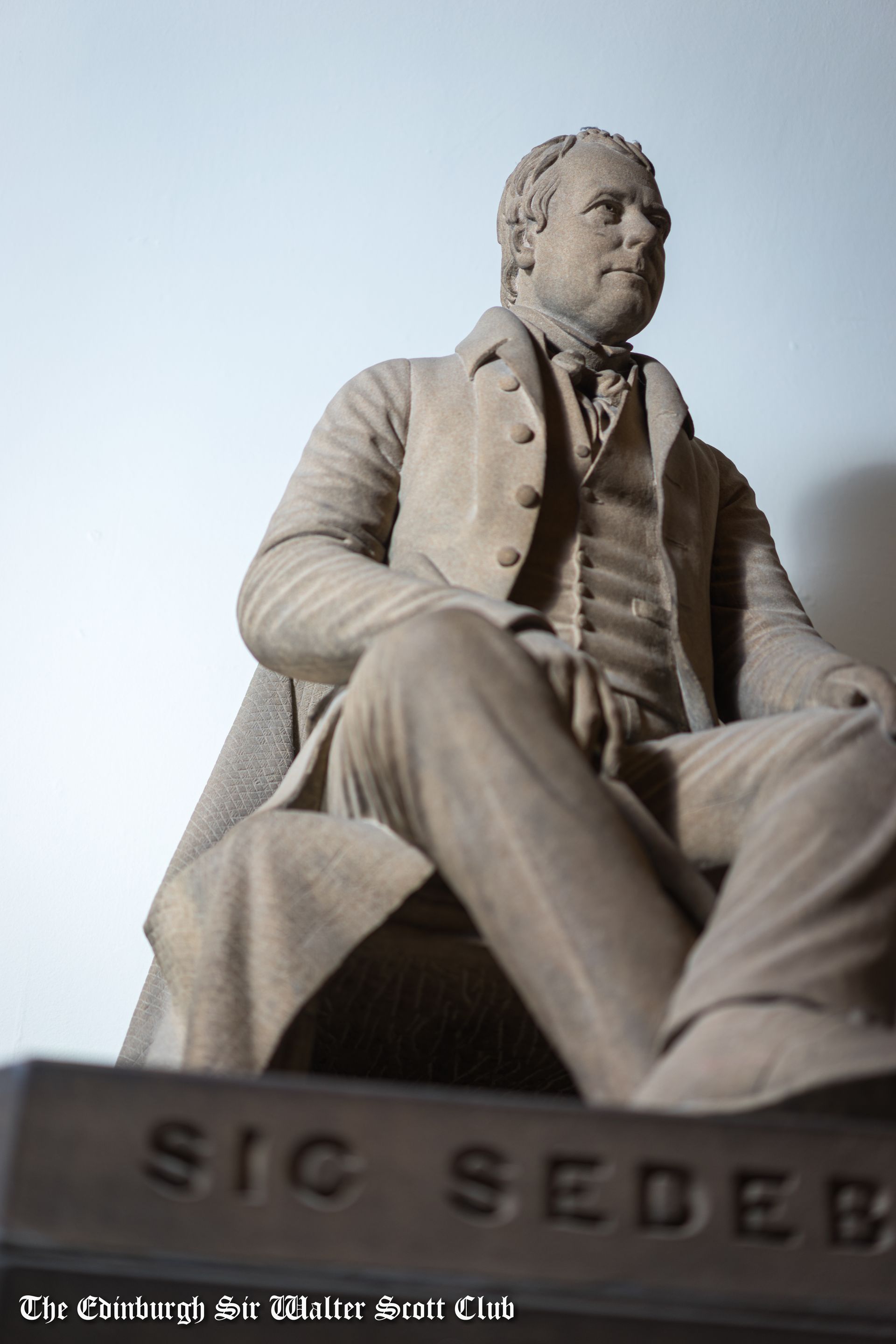
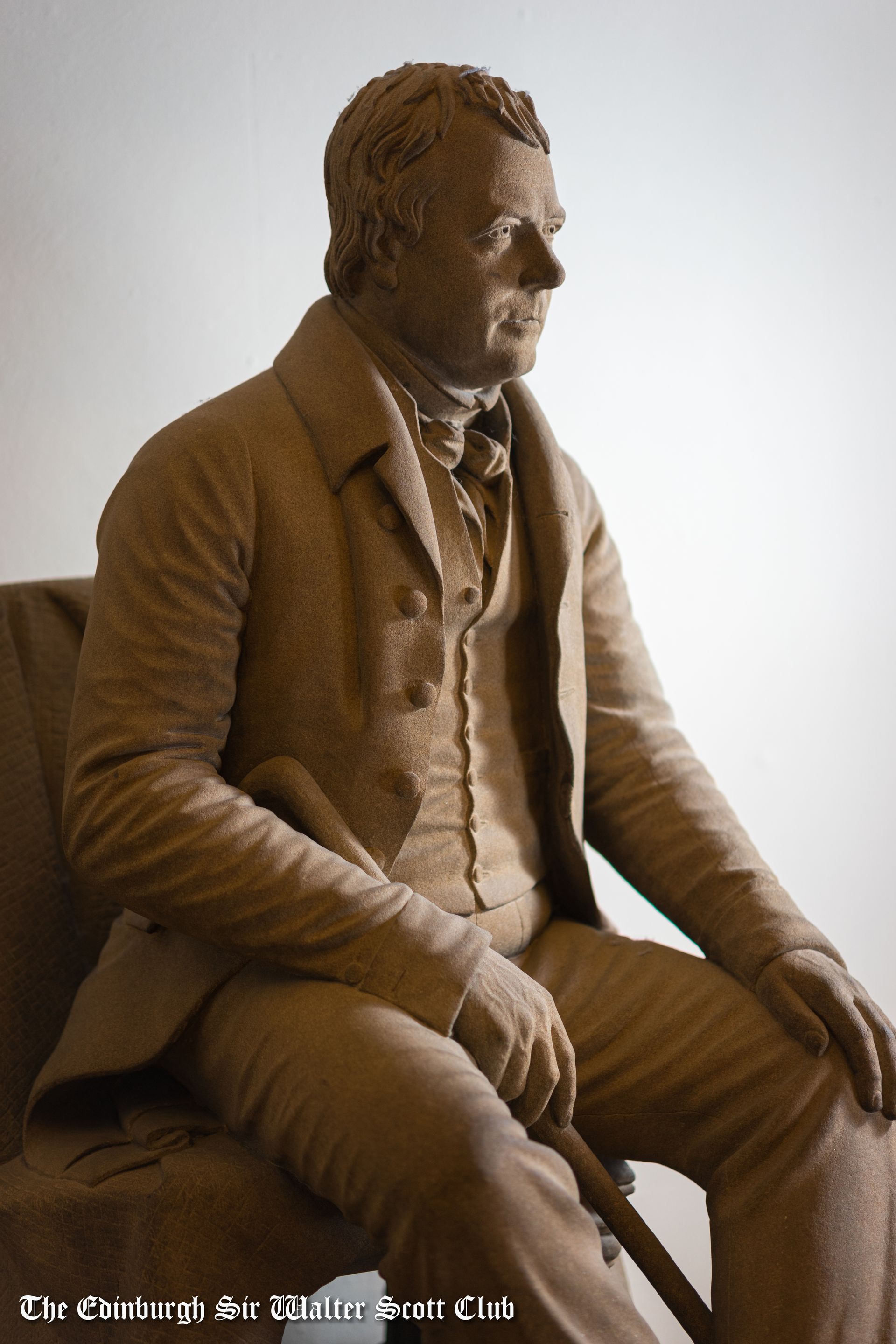
A further layer of meaning lies in the presence of John Greenshields’ statue of Scott, inscribed “Sic Sedebat” (“Thus he sat”). Originally positioned at the entrance to Robert Cadell’s publishing headquarters in St Andrew Square, the sculpture was later moved to Parliament Hall. Its relocation traces Scott’s journey from commercial literary enterprise to institutional commemoration within the civic-legal sphere. The seated pose recalls the working man of letters; its setting now situates him within the professional world that underpinned his career.
Historical Context
In the late eighteenth and early nineteenth centuries, the Court of Session was one of the busiest legal hubs in Britain. Parliament Hall spanned faceted functions: it was home to clerks, advocates, judges, litigants, petitioners, and the intervening public. Its long hours of business made it a place where legal training met civic encounter.
Unlike the cloistered law libraries of later eras, Parliament Hall was open, busy, noise-charged, and socially heterogeneous. Law here was not just judicial process but public performance — and Scott, as Clerk of Session, was both participant and observer. This social information system was rich with speech patterns, social negotiation, and institutional culture that would inform his later narrative strategies.
Scott Here
Scott was appointed early in his career to the post of Clerk of Session (a salaried legal position). He maintained this role throughout his literary rise — never abandoning his legal office even at the height of his fame. Lucy Wood’s analysis of Dr Lucy Wood’s Scenes from the Waverley Novels underscores how physical proximity to legal texts, oral argument, and civic disputation shaped Scott’s voice as a novelist.
In Parliament Hall, Scott sat through debates, recorded decisions, transcribed depositions, and encountered a rich theatre of civic personality. He absorbed language and conduct in professional life that would resurface in characters, dialogue, and moral complexity throughout his works.
The Hall was also a social hub where advocates, clerks, and others intermingled, exchanged stories, and built professional networks — a living archive beyond the printed statute.
Beneath the main hall lies the Laigh Parliament Hall, a vaulted lower chamber created by the steep slope on which Parliament House stands. In earlier centuries it served practical functions within the complex, including the storage of Scotland’s legal and parliamentary records before purpose-built register offices were created. The chamber also housed the Maiden, Edinburgh’s early guillotine, which was stored there between uses.
The Bigger Theme
Law as Social Archive
Scott’s fiction is often described as historical romance. But at its heart, it is a mediated archive — a reassembly of language, testimony, dispute, and narrative performance. Parliament Hall instantiates that archive in civic stone and oral exchange. Law, for Scott, was not just profession; it was archival method, narrative practice, and moral theatre.
Scott believed that law could not be separated from history and literature. As one of his own fictional lawyers (Counsellor Paul Pleydell in Guy Mannering) remarks: “A lawyer without history or literature is a mechanic… if he possesses some knowledge of these, he may venture to call himself an architect.”
His novels do not unfold in vacuum but in layered social contexts where legal culture shapes the texture of story.
Literary Connections
• The Tale of Old Mortality (1816) — Scott places a key scene in the Laigh Hall within Parliament House, describing it as an “ancient dark Gothic room” adjoining the House of Parliament. Drawing on his first-hand familiarity with the building, he uses the hall’s atmosphere to stage judicial severity and political menace, including Henry Morton’s sentence and the harsher fate of Ephraim Macbriar.
• The Heart of Midlothian — Scott’s representation of Edinburgh’s civic conscience, punishment, and legal spectacle reflects intimate knowledge of the city’s judicial culture and public moral theatre.
• The Antiquary — A recurring concern with testimony, documents, and contested interpretation parallels the habits of mind of legal procedure: evidence weighed, narratives tested, authority negotiated.
• Guy Mannering — Lawyers and intermediaries operate as social translators, reflecting the professional personas and rhetorical strategies Scott observed in the legal world.
What to Notice On Site
• The John Greenshields “Sic Sedebat” statue of Scott near the entrance to the Library — originally placed at Robert Cadell’s premises in St Andrew Square before being relocated to Parliament Hall.
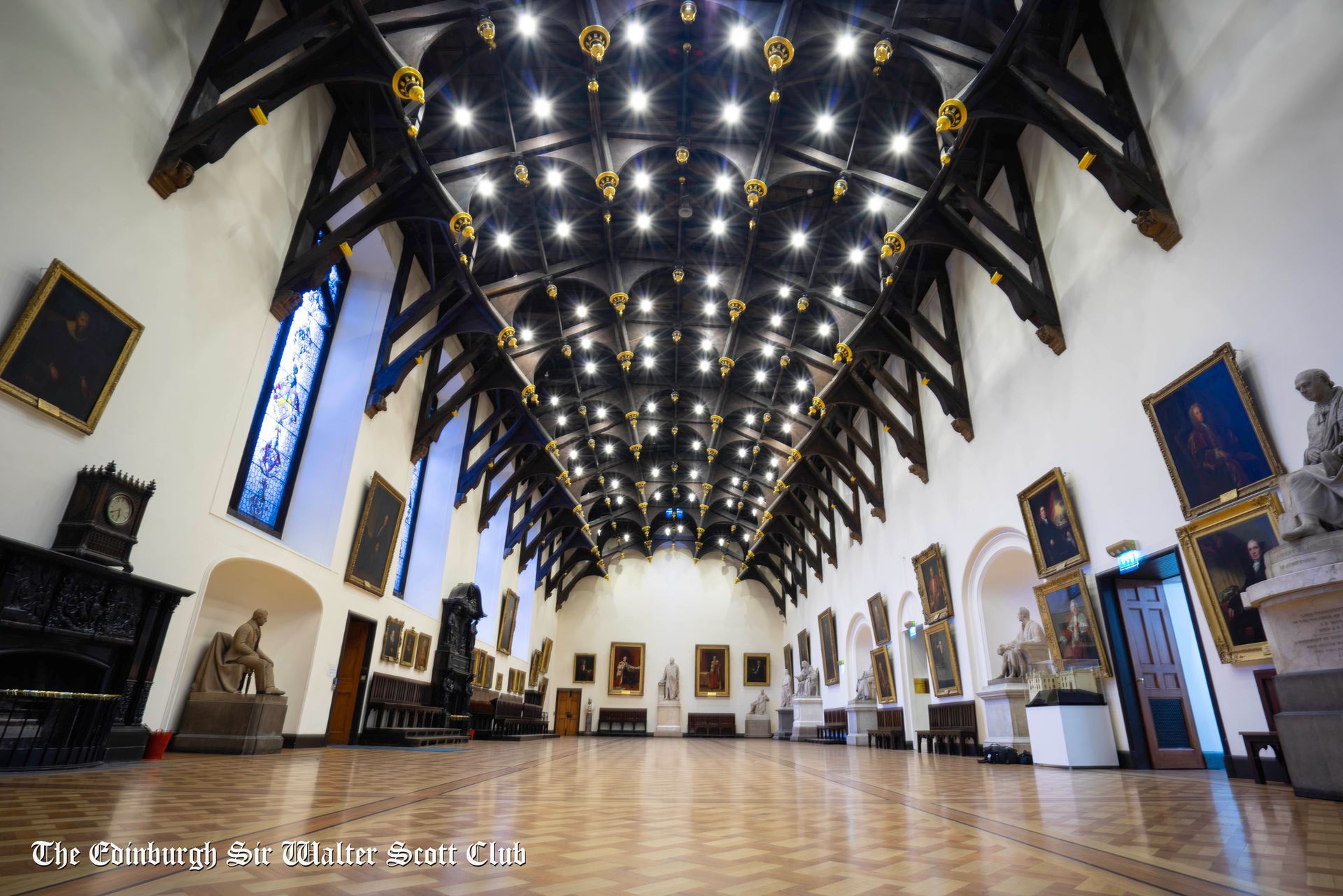
• The long central hall — a space of civic gathering and procedural performance.
• Acoustics and corridors — where voices moved and stories were performed.
• Close proximity to St Giles’ Cathedral — law and moral community side by side.
• The mixture of offices, benches, and corridors that structure contested social space.
Consider how physical architecture shapes debate and narrative.
Questions to Consider
• How does long exposure to legal procedure shape narrative imagination?
• How does the architecture of Parliament Hall refract civic memory into story?
• What might Scott have heard in these corridors that later appears in his characters’ speech and conduct?
Further Reading
• J.G. Lockhart,
Memoirs of the Life of Sir Walter Scott
• Walter Scott,Ashestiel Memoir (in David Hewitt (ed.),
Scott on Himself, 1981)
•Edinburgh Edition of the Waverley Novels(General Editor: David Hewitt)
•
Dr Lucy Wood,-
“Scenes from the Waverley Novels”
•
Peter Garside, -
“Edinburgh Locations and the Production of the Waverley Novels”
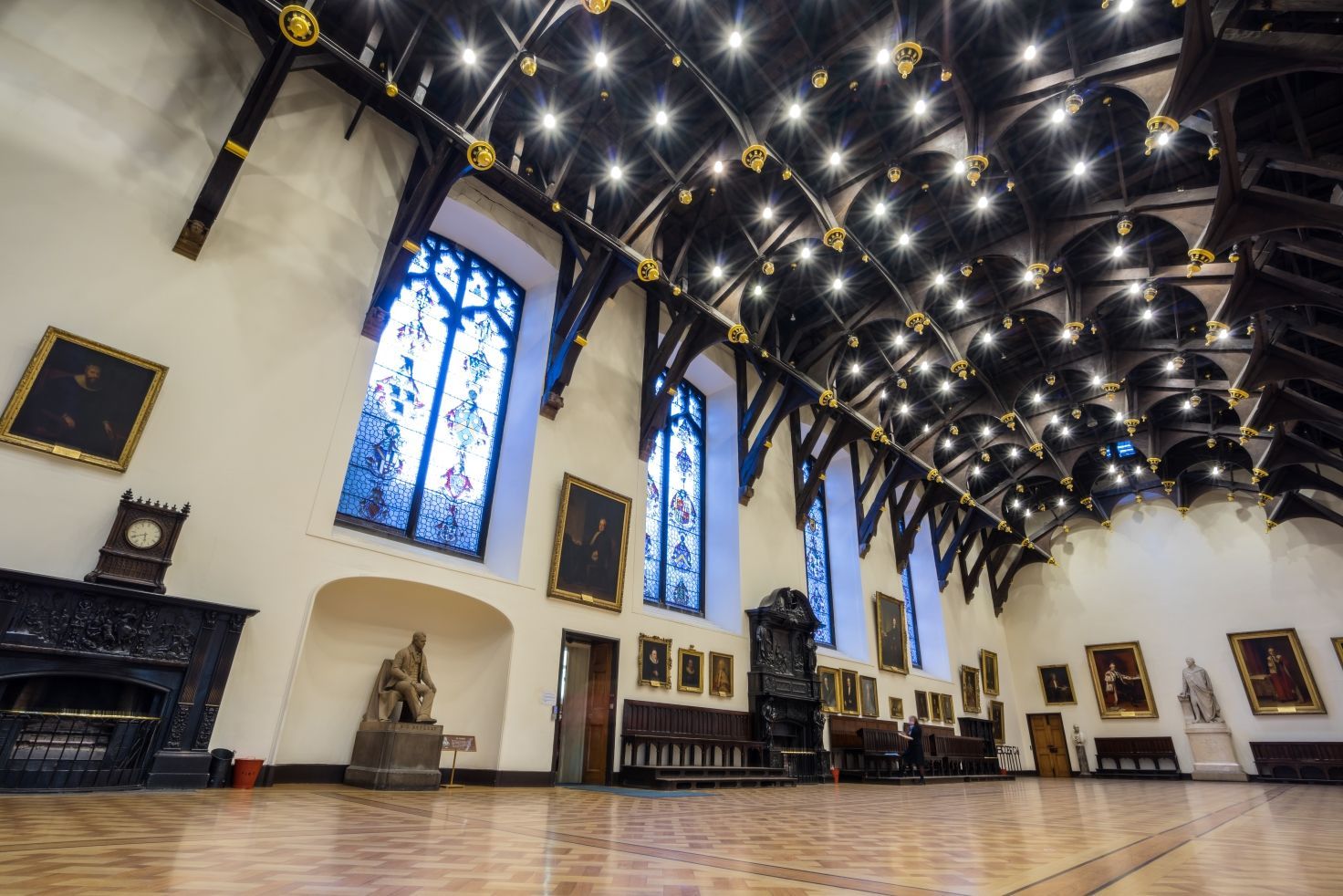
Theses photographs of Parliament Hall were taken with the permission of the Scottish Courts on behalf of The Edinburgh Sir Walter Scott Club by "Lee Live: Photographer". They cannot be used for commercial purposes.