
Walking Tour: Stop 10
The Mound
Edinburgh, EH1 1YZ

Link between Old Town and New Town during Scott’s Edinburgh life.
GPS Coordinates: 55°57'00.6"N 3°11'42.1"W
Scott Connection:
Artificial land bridge linking Old Town and New Town; emblematic of the urban duality central to Scott’s Edinburgh.
Date Range Relevant to Scott: Constructed 1780s–early 19th century; fully operational during Scott’s adult life.
Current Status:
Public roadway and pedestrian route connecting Princes Street to the Royal Mile.
Accessibility:
Open public thoroughfare at all times.
Audio guide narrated by Alasdair Hutton
Why This Place Matters
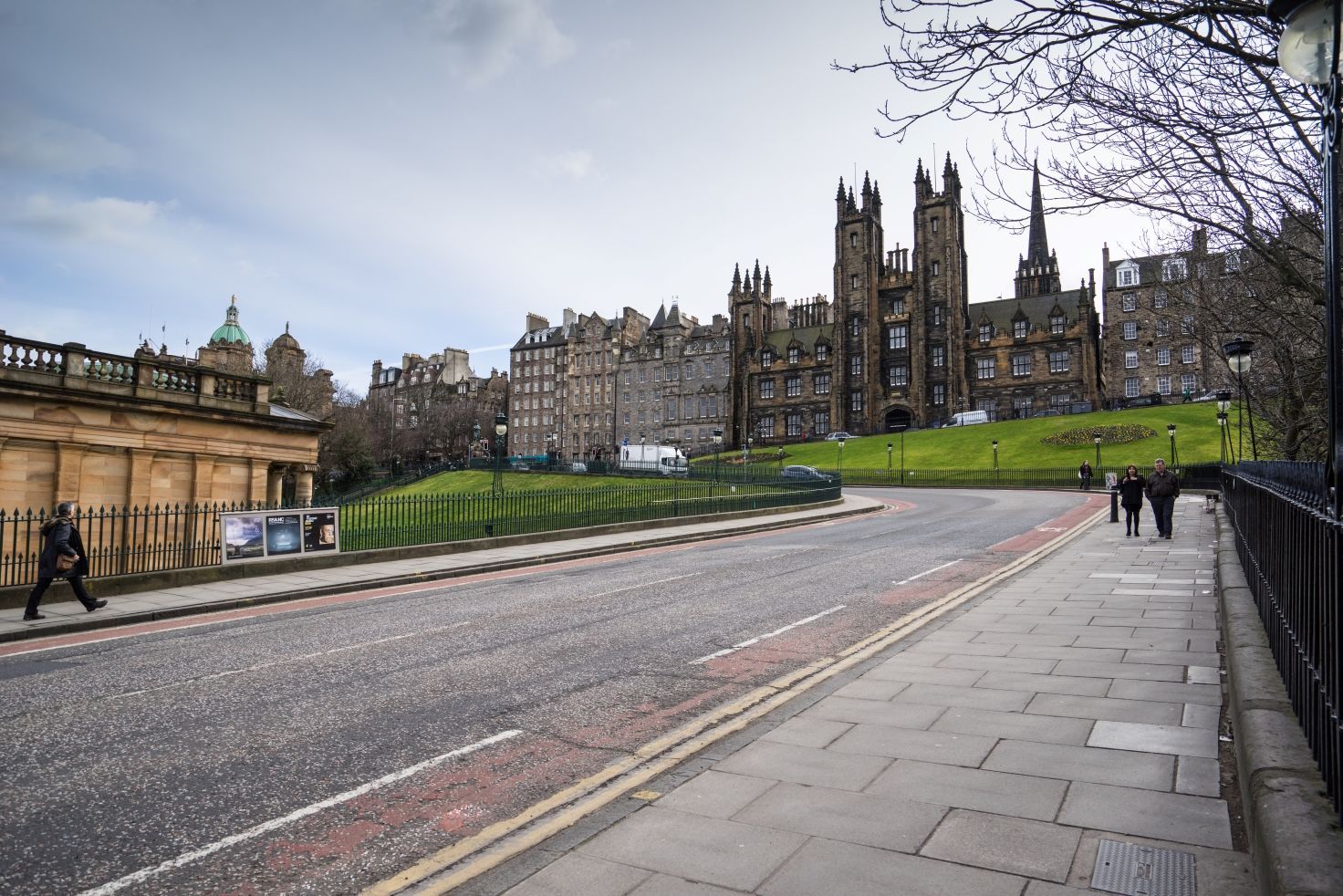
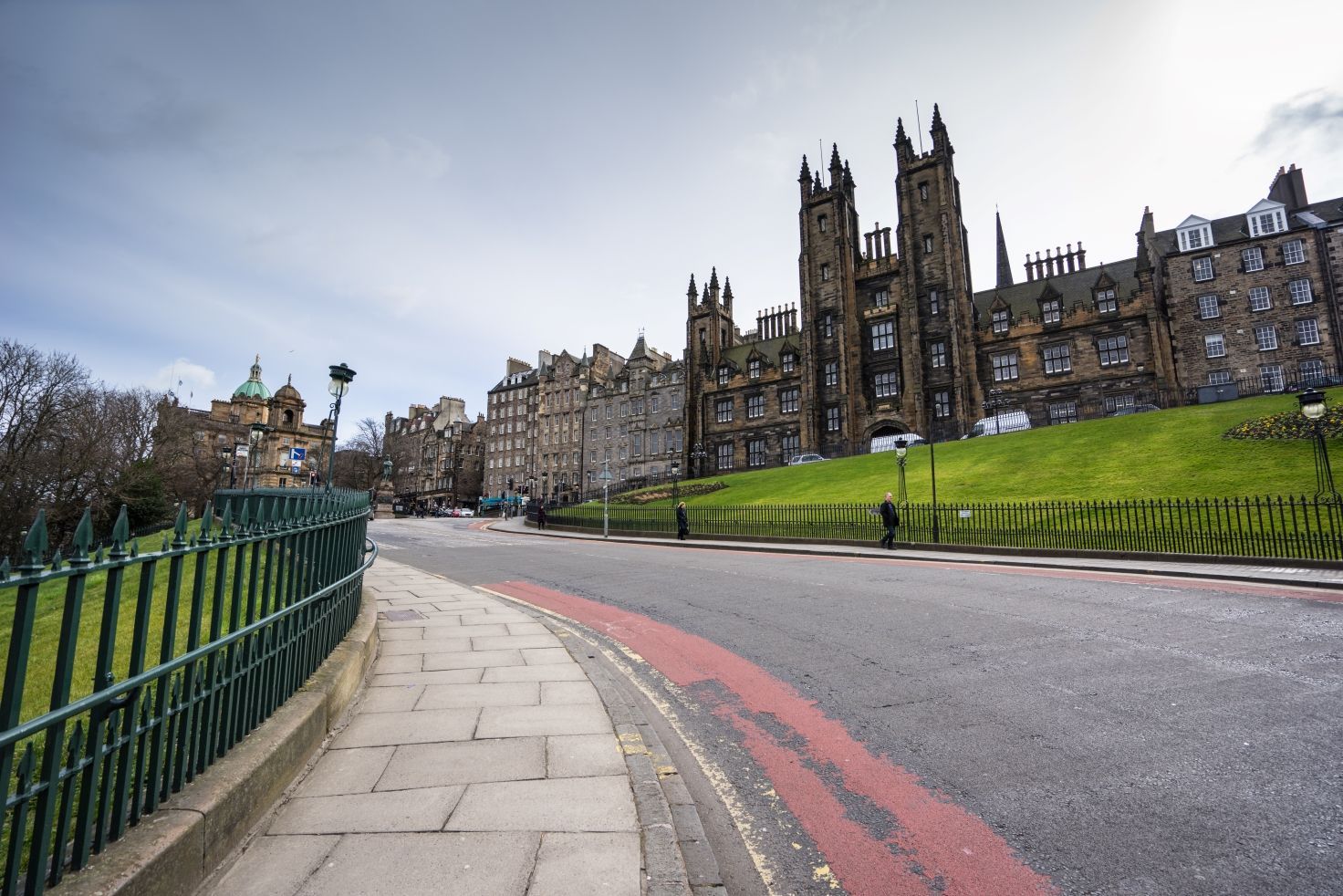
The Mound is not a residence, church, or office — yet it is one of the most symbolically important locations in Scott’s Edinburgh. Created from earth excavated during the construction of the New Town, it physically joined the medieval Old Town ridge to the ordered Georgian grid below.
For Scott, this junction embodied Scotland’s historical tension: the layered, dramatic, and feudal past rising behind St Giles and Parliament House, and the rational, Enlightenment modernity of Princes Street and Castle Street stretching westward.
Standing on The Mound, one sees precisely the city Scott learned to interpret — and helped readers across Europe to imagine.
Historical Context
Before the New Town was constructed, the Nor Loch (now Princes Street Gardens) separated the Old Town from the northern fields. The Mound was gradually formed between the 1780s and early nineteenth century, stabilised sufficiently to allow carriage traffic and eventually framed by major cultural institutions.
Lockhart records an episode in 1806 in which Scott, after a debate concerning proposed reforms to the Scottish legal system, was seen on The Mound by Francis Jeffrey visibly overcome and in tears — a reminder that the bridge between Old and New Town also witnessed moments of personal strain.
By Scott’s adulthood, The Mound had become a principal artery between the legal courts, the Advocates’ Library (later National Library), and the New Town residences of Edinburgh’s professional class. It was therefore not merely an engineering solution but a civic hinge — binding together Scotland’s medieval and Enlightenment identities.
Scott Here
Scott would have crossed The Mound frequently in the course of daily life:
• From Parliament House to Castle Street
• From the Advocates’ Library to New Town meetings
• Between Old Town institutions and New Town domestic space
The Mound formed the transitional corridor between his professional life in Parliament Square and his residence at 39 Castle Street.
It also offers the clearest physical demonstration of the “two Edinburghs” that permeate his fiction — the ancient and the modern, the feudal and the commercial.
The Bigger Theme:
Urban Duality — Past and Present in Tension
Scott did not invent Scotland’s historical consciousness, but he gave it narrative shape. The Mound physically stages that duality.
Behind: The High Street, closes, courts, kirkyards — compressed and medieval.
Ahead: Princes Street, axial symmetry, Georgian façades — ordered and modern.
Scott’s novels repeatedly mediate between these worlds. The Mound is the spatial metaphor for that mediation.
Literary Connections
•
The Heart of Midlothian— Old Town justice and civic space.
•Guy Mannering— movement between urban and rural settings.
•Waverley — negotiation between historical loyalty and modern identity.
The Mound itself does not appear directly in the novels, but it dramatises the urban contrast underlying many of Scott’s narrative tensions.
What to Notice On Site
• The elevation change between Old Town and Princes Street.
• The sightline to Edinburgh Castle from the north side.
• The proximity of the National Gallery and National Library.
• The abrupt architectural transition between Old Town stone and New Town symmetry.
Stand midway and turn slowly. The city divides and reunites around you.
Questions to Consider
- How does physical geography shape historical imagination?
- Would Scott’s fiction feel the same without this urban contrast?
- Does the Mound resolve the tension between old and new — or merely bridge it?
Further Reading
J. G. Lockhart,
Memoirs of the Life of Sir Walter Scott
David Hewitt (ed.),Scott on Himself
Richard Rodger,
The Transformation of Edinburgh: Land, Property and Trust in the Nineteenth Century
Charles McKean,Edinburgh: An Illustrated Architectural Guide
A. J. Youngson,The Making of Classical Edinburgh
1750–1840